





Eosinophilia is defined as a peripheral blood eosinophil count 500/mcL (> 0.5 × 10/L). Causes and associated disorders are myriad but often represent an allergic reaction or a parasitic infection. Eosinophilia can be reactive (secondary) or the primary manifestation of a hematologic disorder. Diagnosis involves selective testing directed at clinically suspected causes. Treatment is directed at the cause.
Eosinophilia has features of an immune response: an agent such as Trichinella spiralis invokes a primary response with relatively low levels of eosinophils, whereas repeated exposures result in an augmented or secondary eosinophilic response. Several compounds released by mast cells and basophils induce IgE-mediated eosinophil production. Such substances include eosinophil chemotactic factor of anaphylaxis, leukotriene B4, complement complex (C5-C6-C7), and histamine (over a narrow range of concentration).
Peripheral eosinophilia is characterized as
Mild: 500 to 1500/mcL (0.5 to 1.5 × 10⁹/L)
Moderate: 1500 to 5000/mcL (1.5 to 5 × 10⁹/L)
Severe: > 5000/mcL (> 5 × 10⁹/L)
Mild eosinophilia itself does not cause symptoms, but levels ≥ 1500/mcL (≥ 1.5 × 10⁹/L) may cause organ damage if they persist. Organ damage typically occurs because of tissue inflammation and reaction to the cytokines and chemokines released by the eosinophils as well as to immune cells that are recruited to the tissues. Although any organ may be involved, the heart, lungs, spleen, skin, and nervous system are typically affected (for manifestations, see table Abnormalities in Patients With Hypereosinophilic Syndrome).
Occasionally, patients with very severe eosinophilia (eg, eosinophil counts of > 100,000/mcL [> 100 × 109/L]), usually with eosinophilic leukemia, develop complications when eosinophils form aggregates that occlude small blood vessels, causing tissue ischemia and microinfarctions. Manifestations typically include those of brain or lung hypoxia (eg, encephalopathy, dyspnea, respiratory failure).

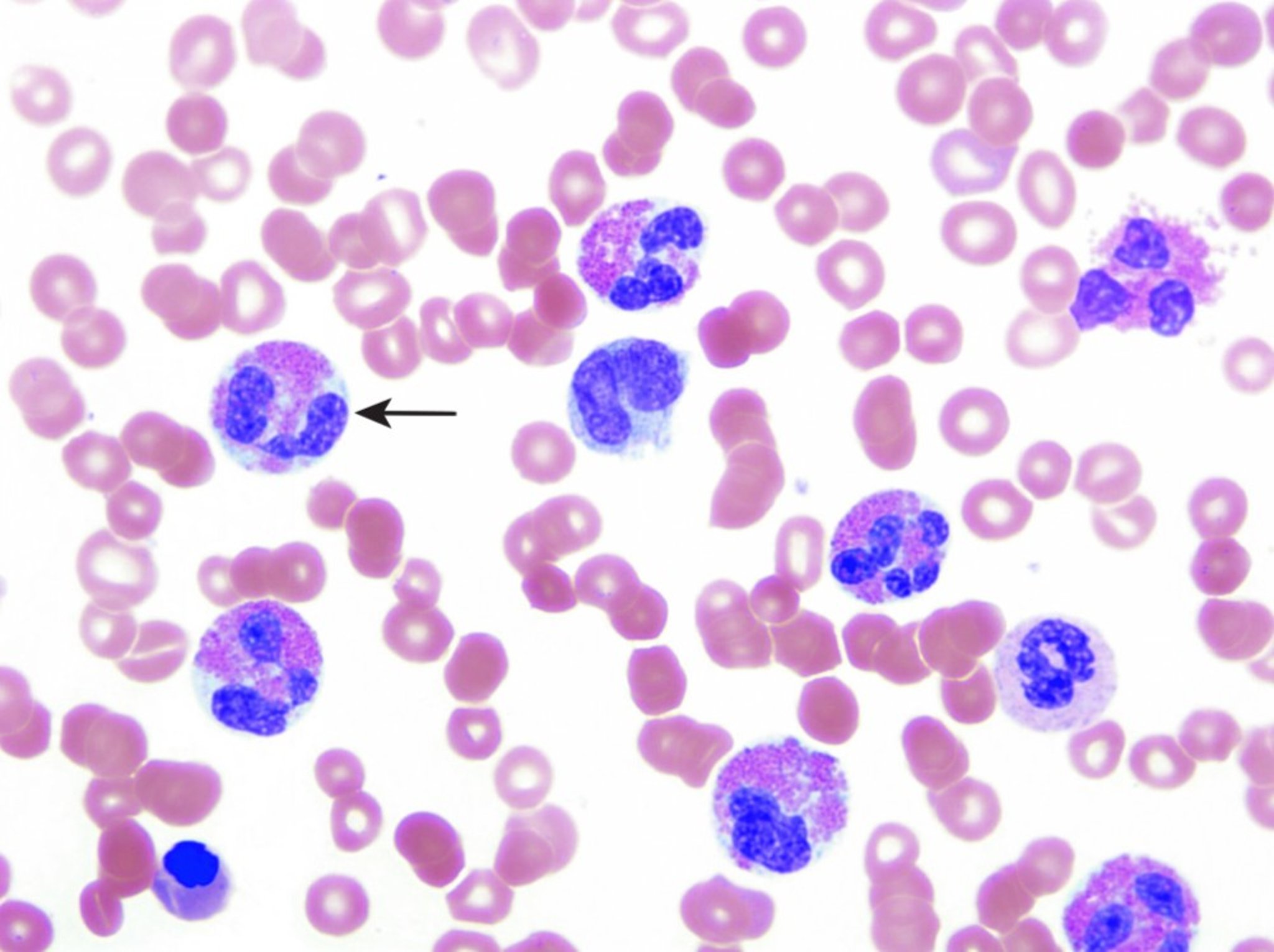
© Springer Science+Business Media
Idiopathic hypereosinophilic syndrome is a condition characterized by peripheral blood eosinophilia with manifestations of organ system involvement or dysfunction directly related to eosinophilia in patients who do not have a parasitic or allergic disorder, a clonal disorder of hematopoiesis, or another cause of eosinophilia.
Etiology of Eosinophilia
Eosinophilia may be
Primary: A clonal proliferation of eosinophils associated with hematologic disorders such as leukemias and myeloproliferative neoplasms
Secondary: Caused by or associated with nonhematologic disorders (see table Important Disorders and Treatments Associated With Eosinophilia)
Idiopathic: Cause cannot be identified
The most common cause of eosinophilia in the United States is
Allergic or atopic disorders (typically respiratory or dermatologic)
In cases caused by allergic or atopic disorders, eosinophilia is often mild to moderate (1).
Other common causes of eosinophilia include
Infections (typically parasitic)
Certain tumors (hematologic or solid, benign or malignant)
Almost any parasitic invasion of tissues can elicit eosinophilia, but protozoa (amoeba) and noninvasive metazoa usually do not.
Of hematologic tumors, Hodgkin lymphoma may elicit marked eosinophilia, whereas eosinophilia is less common in non-Hodgkin lymphoma, chronic myeloid leukemia, and acute lymphoblastic leukemia.
The pulmonary infiltrates that may occur with peripheral eosinophilia are part of a spectrum of clinical disorders, which can be infectious, autoimmune, or inflammatory in nature.
Patients with eosinophilic drug reactions may be asymptomatic or have various syndromes, including interstitial nephritis, serum sickness, cholestatic jaundice, hypersensitivity vasculitis, and immunoblastic lymphadenopathy.
L-tryptophan. The symptoms, including severe muscle pain, tenosynovitis, muscle edema, and rash, lasted weeks to months, and several deaths occurred.
Drug reaction with eosinophilia and systemic symptoms (DRESS) is a rare syndrome characterized by fever, rash, eosinophilia, atypical lymphocytosis, lymphadenopathy, and signs and symptoms related to end-organ involvement (typically, heart, lungs, spleen, skin, nervous system) (2, 3).
General references
1. Klion AD: Approach to the patient with suspected hypereosinophilic syndrome. Hematology Am Soc Hematol Educ Program 2022; 2022(1):47-54. doi: 10.1182/hematology.2022000367
2. Wei BM, Fox LP, Kaffenberger BH, et al. Drug-induced Hypersensitivity Syndrome / Drug Reaction with Eosinophilia and Systemic Symptoms. Part I. Epidemiology, Pathogenesis, Clinicopathological Features, and Prognosis [published online ahead of print, 2023 Jul 27]. J Am Acad Dermatol 2023;S0190-9622(23)02402-7. doi:10.1016/j.jaad.2023.02.072
3. Wei BM, Fox LP, Kaffenberger BH, et al. Drug-induced Hypersensitivity Syndrome / Drug Reaction with Eosinophilia and Systemic Symptoms. Part II. Diagnosis and Management [published online ahead of print, 2023 Jul 27]. J Am Acad Dermatol 2023;S0190-9622(23)02403-9. doi:10.1016/j.jaad.2023.02.073
4. Muir A, Falk GW: Eosinophilic esophagitis: a review. JAMA 326: 1310–1318, 2021. doi: 10.1001/jama.2021.14920
Evaluation of Eosinophilia
Numerous conditions can cause eosinophilia. Common causes (eg, allergic, infectious, or neoplastic disorders) should be considered first, but even they are often difficult to identify, so a thorough history and physical examination are always required.
History
The questions most likely to be helpful pertain to the following:
Travel (suggesting possible parasite exposure)
Allergies
Medication use
Systemic symptoms (eg, fever, weight loss, myalgias, arthralgias, rashes, lymphadenopathy)
Systemic symptoms suggest that a minor allergic or medication cause is less likely, and a detailed evaluation for an infectious, neoplastic, systemic rheumatic disease, or other systemic disorder should be done. Other important parts of the history include family history of blood disorders and a complete review of systems, including symptoms of allergies and pulmonary, cardiac, gastrointestinal (GI), and neurologic dysfunction.
Physical examination
A general physical examination should focus on the heart, skin, and neurologic and pulmonary systems. Certain physical findings may suggest causes or associated disorders. Examples include rash (allergic, dermatologic, or vasculitic disorders), abnormal lung findings (asthma, lung infections, or syndromes of pulmonary infiltration with eosinophilia), and generalized lymphadenopathy or splenomegaly (myeloproliferative disorders or cancer).
Testing
Eosinophilia is typically recognized when a complete blood count (CBC) is done for other reasons. Additional testing often includes the following (1):
Stool ova and parasite testing
Other tests to detect organ damage or for specific causes based on clinical findings
In general, if a medication or allergic cause is not suspected based on clinical findings, 3 stool specimens should be examined for ova and parasites; however, negative findings do not rule out a parasitic cause (eg, trichinosis requires a muscle biopsy; toxocariasis and filarial infections require other tissue biopsies; duodenal aspirates may be needed to exclude specific parasites, such as Strongyloides).
Other specific diagnostic tests are determined by the clinical findings (particularly travel history) and may include chest x-ray, urinalysis, liver and kidney tests, and serologic tests for parasitic and systemic rheumatic diseases. If patients have generalized lymphadenopathy, splenomegaly, or systemic symptoms, blood tests are done. An elevated serum vitamin B12 level or abnormalities on the peripheral blood smear suggest an underlying myeloproliferative neoplasm, and a bone marrow aspirate and biopsy with cytogenetic studies may be helpful.
If a routine evaluation does not reveal a cause, tests are done to detect organ damage. Testing can include some of the tests previously mentioned as well as lactate dehydrogenase (LDH) and liver tests (suggesting liver damage or possibly a myeloproliferative neoplasm). Echocardiography, serum troponin levels, and pulmonary function tests are performed when hypereosinophilic syndrome is suspected.
Evaluation reference
1. Klion AD: Approach to the patient with suspected hypereosinophilic syndrome. Hematology Am Soc Hematol Educ Program 2022; 2022(1):47-54. doi: 10.1182/hematology.2022000367
Treatment of Eosinophilia
Sometimes corticosteroids
Corticosteroid treatment of hypereosinophilic syndrome is discussed elsewhere (see Treatment of Hypereosinophilic Syndrome)..
If no cause is detected, the patient is followed for complications. A brief trial with low-dose corticosteroids may lower the eosinophil count if eosinophilia is secondary (eg, to allergy, systemic rheumatic disease, or parasitic infection) rather than primary. Such a trial is indicated if eosinophilia is persistent and progressive in the absence of a treatable cause. Because eosinophilia can involve multiple organ systems or may be a manifestation of a systemic disorder, multiple specialists may be needed for diagnostic and therapeutic input (3).
Treatment references
1. Pelaia C, Calabrese C, Vatrell A, et al: Benralizumab: from the basic mechanism of action to the potential use in the biological therapy of severe eosinophilic asthma. Biomed Res Int 2018;2018:4839230. doi:10.1155/2018/4839230
2. Eldaabossi SAM, Awad A, Anshasi N: Meprolizumab and dupliumab as a replacement to systemic glucocorticoids for the treatment of chronic eosinophilic pneumonia and allergic bronchopulmonary aspergillus-Case series, Almoosa specialist hospital. Respir Med Case Rep 34:201520, 2021. doi: 10.1016/j.rmcr.2021.101520
3. Thomsen GN, Christoffersen MN, Lindegaard HM, et al: The multidisciplinary approach to eosinophilia. Front Oncol 13:1193730, 2023. doi:10.3389/fonc.2023.1193730


