





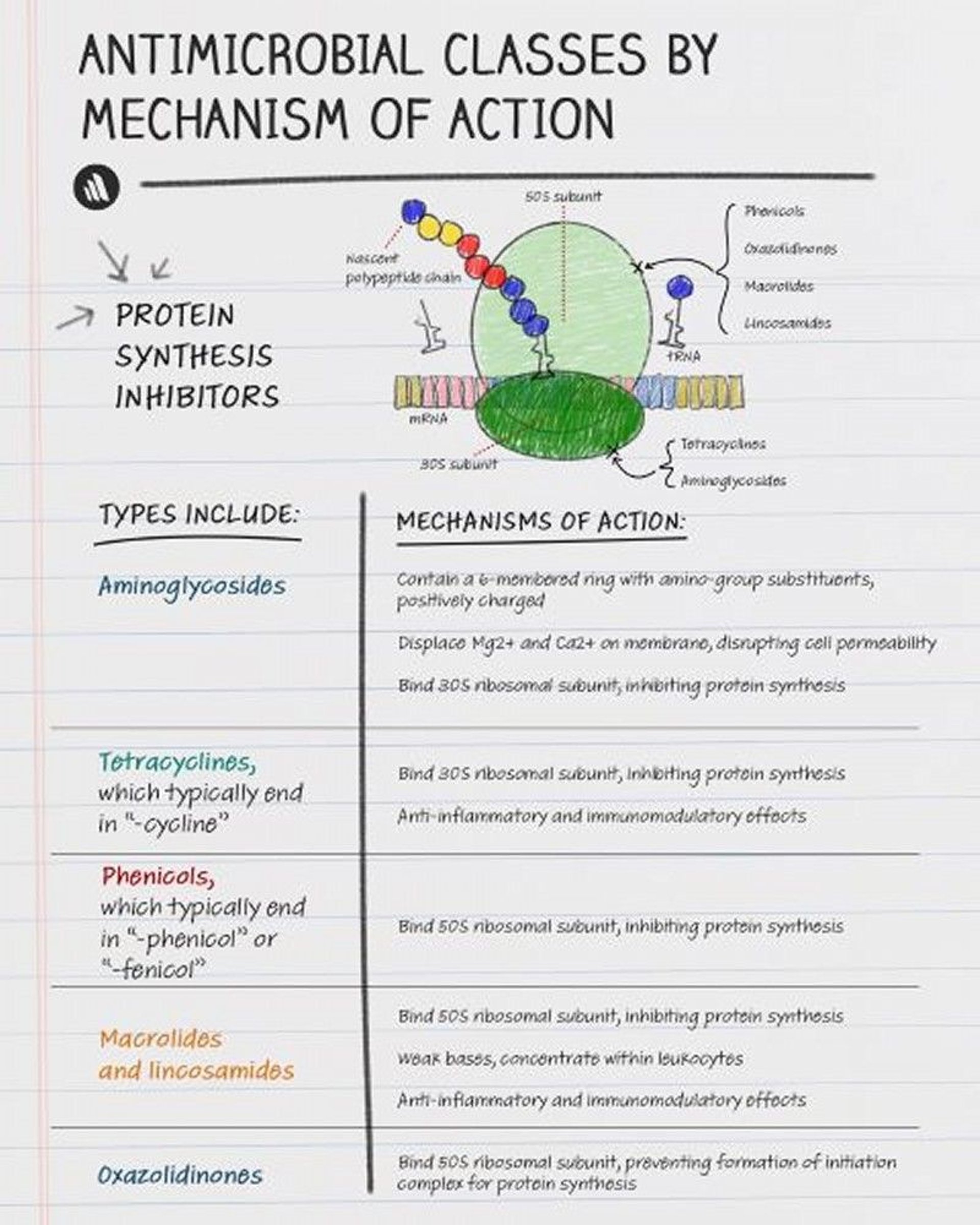
Tetracyclines are bacteriostatic antibiotics that bind to the 30S subunit of the ribosome, thus inhibiting bacterial protein synthesis. Specific tetracyclines are

Copyright © 2023 Merck & Co., Inc., Rahway, NJ, USA and its affiliates. All rights reserved.
Pharmacokinetics
≥
Indications for Tetracyclines
Tetracyclines are active against infections caused by the following:
Spirochetes (eg, Treponema pallidum, Borrelia burgdorferi)
Vibrio species
Brucella species
Plasmodium falciparum
Mycoplasma species
Chlamydia and Chlamydophila species
Some methicillin-resistant Staphylococcus aureus
About 5 to 10% of pneumococcal strains and many group A beta-hemolytic streptococci, many gram-negative bacillary uropathogens, and penicillinase-producing gonococci are resistant.
S. aureus infections.
for all of the following because it is better tolerated and can be given twice a day:
Infections caused by rickettsiae or Anaplasma, Chlamydia, Chlamydophila, Ehrlichia, Mycoplasma, or Vibrio species
Acute exacerbations of chronic bronchitis
Prophylaxis of malariaP. falciparum
Contraindications to Tetracyclines
Tetracyclines are contraindicated in
Patients who have had an allergic reaction to them
Children < 8 years of age (except sometimes for inhalational anthrax or other severe illnesses, such as Rocky Mountain spotted fever, when the benefit outweighs the potential risk of tooth staining)
1).
Contraindications reference
1. Todd SR, Dahlgren FS, Traeger MS, et alJ Pediatr 166(5):1246–1251, 2015. doi: 10.1016/j.jpeds.2015.02.015
Use During Pregnancy and Breastfeeding
Tetracyclines cross the placenta, enter fetal circulation, accumulate in fetal bones, and, if used during the 2nd or 3rd trimester, may cause permanent discoloration of the fetus's teeth.
Hepatotoxicity may occur in pregnant women, particularly after IV administration and in those with azotemia or pyelonephritis. Taking high doses during pregnancy can lead to fatty degeneration of the liver, which may be fatal.
Adverse Effects of Tetracyclines
Adverse effects of tetracyclines include
Gastrointestinal disturbances
Clostridioides (formerly Clostridium) difficile–induced diarrhea (pseudomembranous colitis)
Candidiasis
Photosensitivity
Bone and dental effects in children
Fatty liver
All oral tetracyclines cause nausea, vomiting, and diarrhea and can cause C. difficile–induced diarrhea (pseudomembranous colitis) and candidal superinfections. If not swallowed with water, tetracyclines can cause esophageal erosions.
Photosensitivity due to tetracyclines may manifest as an exaggerated sunburn reaction.
Bone and dental effects include staining of teeth, hypoplasia of dental enamel, and abnormal bone growth in children < 8 years and in fetuses. In infants, tetracyclines may cause idiopathic intracranial hypertension and bulging fontanelles.
Excessive blood levels due to use of high doses or renal insufficiency may lead to fatal acute fatty degeneration of the liver, especially during pregnancy.
Fanconi syndrome. Patients should be instructed to discard the drugs when they expire.
Dosing Considerations for Tetracyclines
Tetracyclines may decrease the effectiveness of oral contraceptives and potentiate the effects of oral anticoagulants.


