





Herpangina is a febrile disorder caused by numerous group A coxsackieviruses and occasionally other enteroviruses. Infection causes oropharyngeal, mucosal, vesicular, and ulcerative lesions.
Herpangina tends to occur in epidemics, most commonly in infants and children. (See also Overview of Enterovirus Infections.)
Symptoms of Herpangina
Herpangina is characterized by sudden onset of fever with sore throat, headache, anorexia, and frequently neck pain. Infants may vomit.
Within 2 days after onset, up to 20 (mean, 4 to 5) 1- to 2-mm diameter grayish papules develop and become vesicles with erythematous areolae. They occur most frequently on the tonsillar pillars but also on the soft palate, tonsils, uvula, or tongue. During the next 24 hours, the lesions become shallow ulcers, seldom > 5 mm in diameter, and heal in 1 to 7 days.

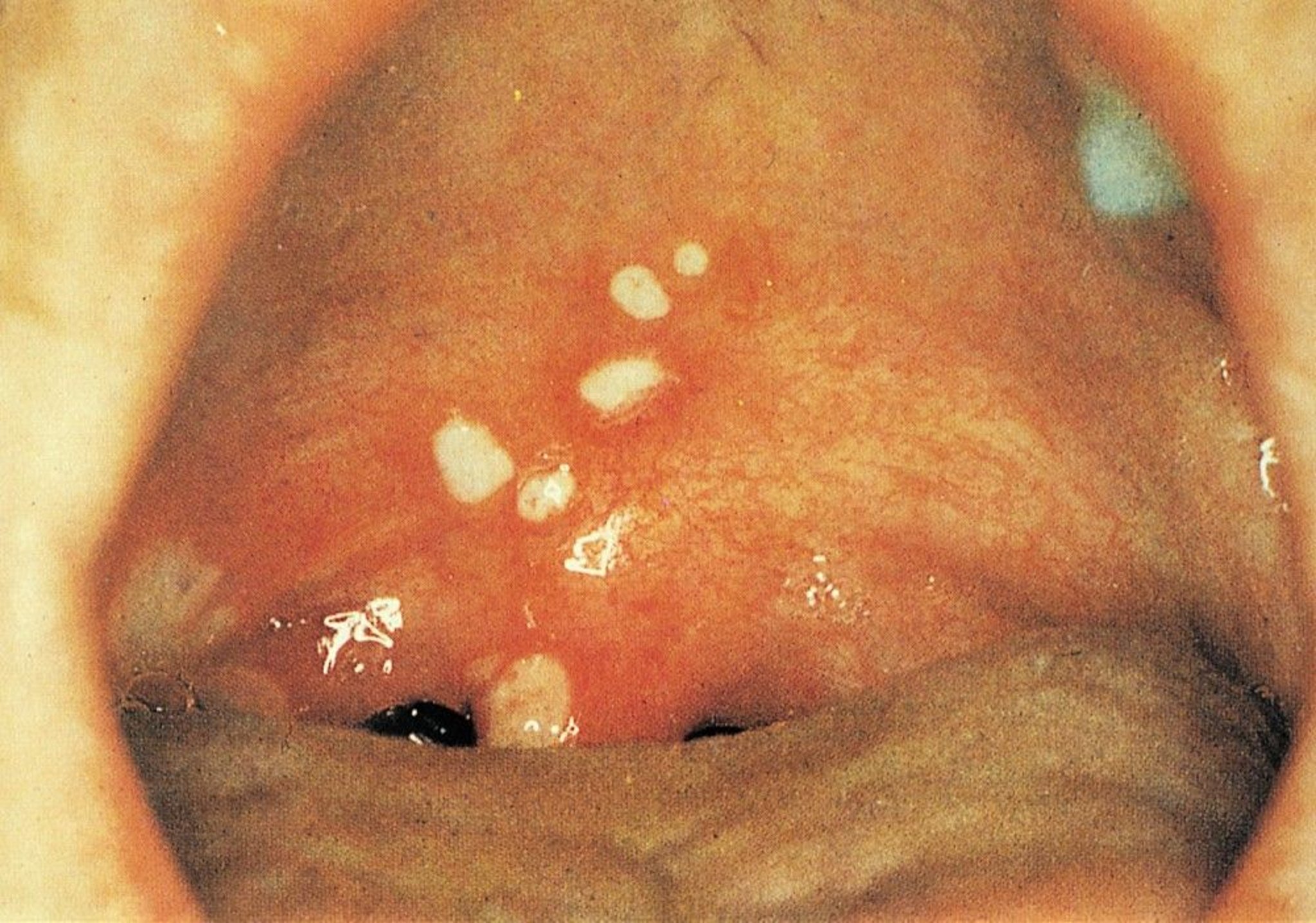
© Springer Science+Business Media
Complications of herpangina are unusual.
Lasting immunity to the infecting strain follows, but repeated episodes caused by other group A coxsackieviruses or other enteroviruses are possible.
Diagnosis of Herpangina
History and physical examination
Diagnosis of herpangina is based on symptoms and characteristic oral lesions.
Confirmatory testing is not usually required but can be done by
Isolating the virus from the lesions
Detecting virus by reverse transcriptase–polymerase chain reaction
Demonstrating a rise in specific antibody titer
Recurrent aphthous ulcers may appear similar but, unlike with herpangina, rarely occur in the pharynx and are not typically accompanied by systemic symptoms. Herpetic stomatitis occurs sporadically and causes larger, more persistent, and more numerous ulcers throughout the oropharynx than herpangina. Coxsackievirus A10 causes lymphonodular pharyngitis, which is similar except that the papules become 2- to 3-mm whitish to yellowish nodules instead of vesicles and ulcers.
Treatment of Herpangina
Symptom relief
Treatment of herpangina is symptomatic. It includes meticulous oral hygiene (using a soft toothbrush and salt-water rinses), a soft diet that does not include acidic or salty foods, and topical measures (see treatment of stomatitis).


