





Mpox (monkeypox)is caused by the monkeypox virus, an orthopoxvirus structurally related to the smallpox virus. Patients present with a vesicular or pustular rash that may be painful and often with fever, malaise, and lymphadenopathy. Diagnosis is by polymerase chain reaction (PCR). Treatment is generally supportive and potentially with antiviral drugs. Prevention involves vaccination.
Monkeypox virus, like smallpox, is a member of the Orthopoxvirus group. There are 2 distinct clades (groups of similar organisms descended from a common ancestor): the West African clade and the Congo Basin clade. Despite its name, nonhuman primates are not monkeypox virus reservoirs. Although the reservoir is unknown, the leading candidates are small rodents (eg, squirrels) in the rain forests of Africa, mostly in western and central Africa. The disease caused by the monkeypox virus was also originally called "monkeypox," but in November 2022 the World Health Organization introduced the name “mpox” for the disease caused by the virus (see WHO recommends new name for monkeypox disease).
Prior to 2022, cases outside of Africa were directly linked to travel to western and central Africa or animals imported from the region. A notable outbreak of mpox occurred in the United States in 2003, when infected rodents imported as pets from Africa spread the virus to pet prairie dogs, which then infected people in the Midwest. The outbreak involved 37 confirmed and 10 probable cases in 6 states, but there were no deaths (1).
Since May 2022, cases of mpox have been reported in approximately 70 countries where the disease is not endemic. Sustained person-to-person transmission outside of Africa has been demonstrated. The World Health Organization (WHO) declared the 2022 mpox outbreak a public health emergency of international concern (see WHO: Monkeypox (Mpox) Outbreak 2022). The majority of confirmed cases in nonendemic countries are in Europe and North America (see Centers for Disease Control and Prevention [CDC]: 2022 Mpox Outbreak Global Map). Over 30,000 cases have been reported in the United States as of March 2023 (see CDC: 2022 US Map & Case Count). The number of new cases has dramatically decreased since the peak in August 2022. All cases associated with the 2022 global outbreak have been the West African clade. Cases have been reported primarily in men who have sex with men, but mpox should be considered in anyone who presents with a rash consistent with mpox (2, 3).
In animal-to-person transmission, mpox is probably transmitted via body fluids, including salivary or respiratory droplets or contact with wound exudate. This can occur through bites or scratches from an animal or through preparation and consumption of infected animal meat.
Person-to-person transmission occurs through prolonged close contact. Routes of transmission include respiratory droplets via prolonged face-to-face or intimate physical contact, direct contact with infectious lesions or other bodily fluids, and fomites via contact with clothing or linens contaminated with lesion crusts or bodily fluids. Maternal-fetal transmission can occur via the placenta. It is currently unknown whether transmission can occur through semen or vaginal fluids. In the 2022 outbreak, many cases appear due to transmission during sexual or intimate encounters, but this is likely through direct contact with infectious lesions or respiratory secretions.
The incubation period is 1 to 2 weeks but can be as long as 3 weeks. People are infectious from the time symptoms start until all lesions have crusted and scabs have fallen off to reveal healthy skin. This typically takes 2 to 4 weeks.
Based on a transmission study in Africa, the overall secondary attack rate following contact with a known human source is 3%, and attack rates up to 50% have been reported in people living with a mpox-infected person (4). Transmission in hospital settings has been documented in an endemic setting. One case of transmission to a healthcare worker has been reported (5). Case fatality rate is ≤ 10% with the Congo Basin clade, but is < 1% with the West African clade.
References
1. Reynolds MG, Yorita KL, Kuehnert MJ, et al: Clinical manifestations of human monkeypox influenced by route of infection. J Infect Dis 194(6):773-80, 2006. doi: 10.1086/505880. Epub 2006 Aug 8. PMID: 16941343.
2. Centers for Disease Control and Prevention (CDC): Newsroom release: CDC and health partners responding to monkeypox case in the U.S, May 2022. Accessed July 26, 2022.
3. CDC: Case Definitions for Use in the 2022 Monkeypox Response. Accessed July 26, 2022.
4. Nolen LD, Osadebe L, Katomba J, et al: Extended human-to-human transmission during a monkeypox outbreak in the Democratic Republic of the Congo. Emerg Infect Dis 22 (6):1014–1021, 2016. doi: 10.3201/eid2206.150579
5. Zachary KC, Shenoy ES: Monkeypox transmission following exposure in healthcare facilities in nonendemic settings: Low risk but limited literature. Infect Control Hosp Epidemiol 43(7):920-924, 2022. doi: 10.1017/ice.2022.152. Epub 2022 Jun 9. PMID: 35676244; PMCID: PMC9272466.
Symptoms and Signs of Mpox
Clinically, mpox is similar to smallpox. A prodrome of fever, headache, and malaise is followed by a rash that progresses from macules and papules to firm, deep-seated vesicles or pustules that umbilicate, scab, and fall off over time. Lymphadenopathy occurs in mpox but not in smallpox.
However, atypical clinical presentations have been reported in the 2022 global outbreak; therefore, diagnosis may be delayed. In the 2022 outbreak, rashes are often reported to have started in the genital, perianal, or oral regions and do not always disseminate or progress through the typical stages. Pain at lesion sites, specifically proctitis or oral pain, may be the presenting complaint. Systemic prodromal symptoms may also be mild, absent, or appear concurrent with rash. Secondary bacterial infection of the skin and lungs may occur.
Clinical differentiation of mpox from smallpox and herpesviruses such as chickenpox or herpes simplex virus (HSV) may be difficult. Additionally, the diagnosis of HSV or another sexually transmitted infection does not exclude coinfection with mpox.
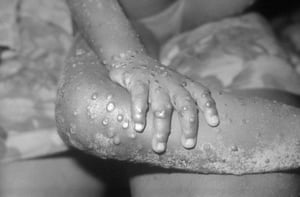
Image courtesy of the Public Health Image Library of the Centers for Disease Control and Prevention.
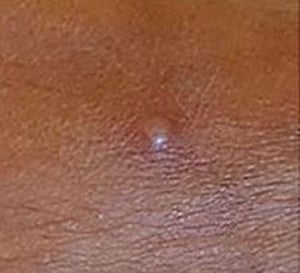
Image from U.K. Health Security Agency.
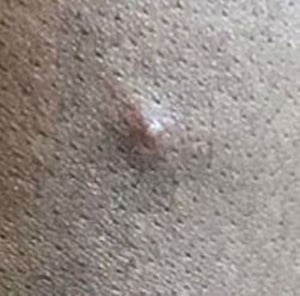
Image from U.K. Health Security Agency.
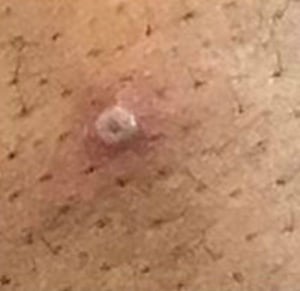
Image from U.K. Health Security Agency.
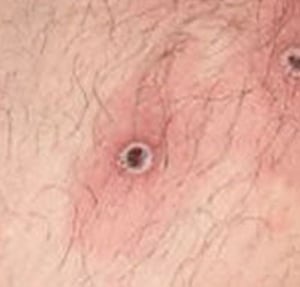
Image from U.K. Health Security Agency.
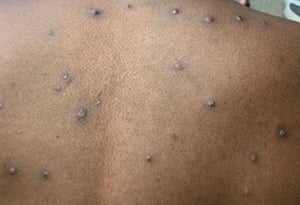
Image from NHS England High Consequence Infectious Disease Network.
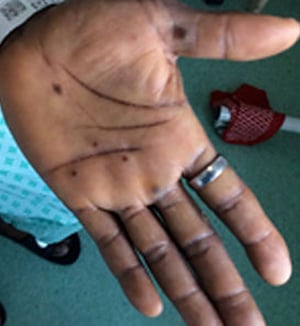
Image from NHS England High Consequence Infectious Disease Network.
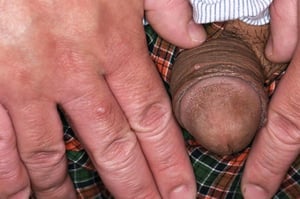
RICHARD USATINE MD / SCIENCE PHOTO LIBRARY


Image courtesy of the Public Health Image Library of the Centers for Disease Control and Prevention.


Image from U.K. Health Security Agency.


Image from U.K. Health Security Agency.


Image from U.K. Health Security Agency.


Image from U.K. Health Security Agency.


Image from NHS England High Consequence Infectious Disease Network.


Image from NHS England High Consequence Infectious Disease Network.


RICHARD USATINE MD / SCIENCE PHOTO LIBRARY
Diagnosis of Mpox
Polymerase chain reaction (PCR)
Diagnosis of mpox is by culture, polymerase chain reaction (PCR), immunohistochemistry, or electron microscopy, depending on which tests are available.
PCR assays using skin lesions (roof or fluid from vesicles and pustules and/or dry crusts) are the optimal sample. Blood PCR is limited by the short duration of viremia and is not recommended. In the United States, PCR testing is available through public health laboratories and commercial laboratories.
Testing should be considered in patients with clinically compatible lesions and an epidemiologic risk factor as well as any patient with a characteristic lesion (deep-seated vesicle or pustule with central umbilication). (See also CDC: Case Definitions for Use in the 2022 Mpox Response.)
Treatment of Mpox
Most patients with mpox have mild, self-limited disease. This is particularly true for the West African clade responsible for the current global outbreak. Treatment is supportive with analgesics, fluids, and wound care.
Patients with severe disease, complications, or who are at risk for severe disease should be considered for antiviral treatment. This includes patients with hemorrhagic or confluent lesions, mucosal or genital involvement, or other complications requiring hospitalization; immunocompromised, pediatric, pregnant or breastfeeding patients; and patients with active exfoliative skin conditions. There is no proven, safe treatment specifically for mpox virus infection. However, the following treatment options are available:
All of these drugs have activity against mpox in vitro and in experimental models, but there are no data available yet that demonstrate clinical effectiveness. They have been used extensively during the current outbreak, and clinical trials are ongoing. The CDC developed a treatment consideration algorithm in March 2023 based on the available evidence and experience (1). (See also CDC: Information for Healthcare Providers on Obtaining and Using TPOXX [Tecovirimat] for Treatment of Mpox and CDC: Mpox: Treatment Information for Healthcare Professionals.)
Treatment reference
1. Rao AK, Schrodt CA, Minhaj FS, et al: Interim Clinical Treatment Considerations for Severe Manifestations of Mpox — United States, February 2023. MMWR Morb Mortal Wkly Rep 72:232–243, 2023. doi: 10.15585/mmwr.mm7209a4
Prevention of Mpox
Vaccination
Past observational data from Africa suggests that the is at least 85% effective in preventing mpox, because mpox virus is closely related to the virus that causes smallpox (1). However, previous smallpox vaccination does not always provide lifelong immunity but likely reduces illness severity. Two smallpox vaccines may be used for the prevention of mpox disease: JYNNEOS (MVA-BN) and ACAM2000 (see WHO: Vaccines and immunization for monkeypox: Interim guidance, 16 November 2022).
The JYNNEOS vaccine is a live but weakened (attenuated) vaccinia virus that does not reproduce in the person who receives it. It is indicated for the prevention of mpox (and smallpox) in adults 18 years of age and older who are at high risk of mpox (or smallpox). It is the main vaccine used in the United States in the current outbreak. The CDC recommends the JYNNEOS vaccine for people at high risk of exposure to mpox or after a recent known or presumed exposure to mpox. If used as post-exposure prophylaxis (PEP), ideally it should be given within 4 days of the exposure, but may have benefit up to 14 days after exposure (see CDC: Mpox Vaccination Basics). The vaccine is given as a series of 2 injections intradermally or subcutaneously given 4 weeks apart.
Limited data on the effectiveness of the JYNNEOS vaccine in the current outbreak are becoming available. Across 32 United States jurisdictions, among males aged 18 to 49 years eligible for JYNNEOS vaccination, mpox incidence was 14 times as high among unvaccinated males compared with those who had received a first vaccine dose ≥ 14 days earlier (see CDC: Rates of Mpox Cases by Vaccination Status). People who have a weakened immune system may receive the JYNNEOS vaccine (unlike ACAM2000) but may have a diminished response.
The ACAM2000 vaccine contains live vaccinia virus, which is related to the smallpox virus and provides cross-immunity to the monkeypox and smallpox viruses. It is indicated for people who are at high risk of mpox (or smallpox). It is available for use against mpox in the United States under an Expanded Access Investigational New Drug protocol. ACAM2000 is given by rapidly jabbing a small area 15 times with a specially designed needle that has been dipped in the vaccine. This is considered one dose. Then the vaccine site is covered with a dressing to prevent the vaccina virus from spreading to other body sites or to other people. Vaccination is considered successful if a small blister develops about 7 days later. If it does not appear, people are given another dose.
Vaccination with ACAM2000 is dangerous and not recommended for some people, especially those with the following risk factors:
Weakened immune system (such as those who have AIDS or who take medications that suppress the immune system)
Skin disorders (particularly atopic dermatitis [eczema])
Eye inflammation
Heart condition
Age under 1 year
Pregnancy
Infection control
Non-hospitalized patients with mpox should
Isolate at home until the lesions have resolved and scabs have fallen off and a fresh layer of intact skin has formed
Avoid direct physical contact with other people and animals
Not share potentially contaminated items, such as bed linens, towels, clothing, drinking glasses, or eating utensils, and should clean and disinfect commonly touched surfaces and items
Wear a mask if close contact with others in the home is necessary
Infection control measures in the hospital include having patients in a private room with the door closed. Special air handling is not required unless procedures likely to spread infectious oral secretions are performed (eg, intubation, extubation). Activities that may result in dried materials being distributed in the air or on surfaces (eg, use of fans, shaking of dirty linens) should be avoided. Appropriate personal protective equipment (PPE) includes gown, gloves, N95 level mask (or equivalent), and eye protection. EPA-registered hospital-grade disinfectants with an emerging viral pathogen claim should be used for standard disinfection. For patients with the West African clade, waste may be handled according to usual guidelines for infectious medical waste. For patients with the Congo Basin clade, medical waste is classified as Category A under the US Department of Transportation (DOT) Hazardous Materials Regulations and should be managed accordingly (see CDC: Infection Prevention and Control of Mpox in Healthcare Settings).
All healthcare personnel caring for patients with mpox should monitor for symptoms at least twice daily for 21 days from their last encounter. People with high-risk exposures (see CDC: Mpox: Monitoring and Risk Assessment for Persons Exposed in the Community) should be offered postexposure prophylaxis via vaccination with JYNNEOS or ACAM2000. Vaccination should ideally occur within 4 days of exposure but can be effective up to 14 days after exposure.
Prevention reference
1. Jezek Z, Grab B, Szczeniowski MV, et al: Human monkeypox: secondary attack rates. Bull World Health Organ 66(4):465-70, 1988. PMID: 2844429; PMCID: PMC2491159.
More Information
The following English-language resources may be useful. Please note that THE MANUAL is not responsible for the content of these resources.


