





Polycystic ovary syndrome is a clinical syndrome typically characterized by anovulation or oligo-ovulation, signs of androgen excess (eg, hirsutism, acne), and multiple ovarian cysts in the ovaries. Insulin resistance and obesity are often present. Diagnosis is by clinical criteria, hormone measurement, and imaging to exclude a virilizing tumor. Treatment is symptomatic.
Polycystic ovary syndrome (PCOS) occurs in 5 to 10% of women (1). In the US, it is the most common cause of infertility.
PCOS is usually defined as a clinical syndrome, not by the presence of ovarian cysts. But typically, ovaries contain many 2- to 6-mm follicular cysts and sometimes larger cysts containing atretic cells. Ovaries may be enlarged with smooth, thickened capsules or may be normal in size.

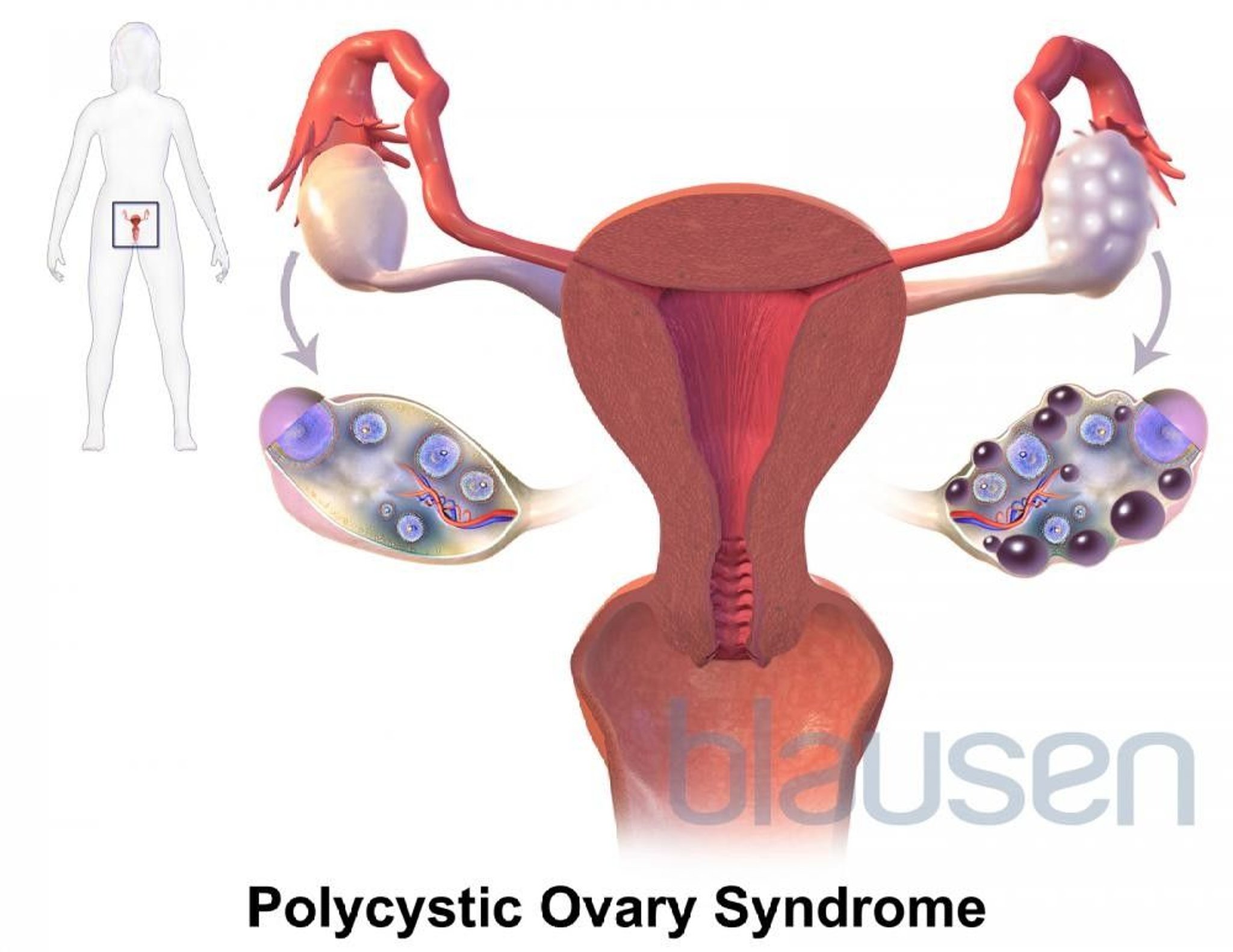
This syndrome involves anovulation or ovulatory dysfunction and androgen excess of unclear etiology. However, some evidence suggests that patients have a functional abnormality of cytochrome P450c17 affecting 17-hydroxylase (the rate-limiting enzyme in androgen production); as a result, androgen production increases. Pathogenesis appears to involve environmental and hereditary factors.
General reference
1. Dumesic DA, Oberfield SE, Stener-Victorin E, et al: Scientific statement on the diagnostic criteria, epidemiology, pathophysiology, and molecular genetics of polycystic ovary syndrome. Endocr Rev 36 (5):487–525, 2015. doi: 10.1210/er.2015-1018
Complications
Polycystic ovary syndrome has several significant potential complications.
Infertility is related to ovulatory dysfunction.
Estrogen levels are elevated, increasing risk of endometrial hyperplasia and, potentially, endometrial cancer.
Androgen levels are often elevated, increasing the risk of metabolic syndrome and obesity and causing hirsutism. Hyperinsulinemia due to insulin resistance may be present and may contribute to increased ovarian production of androgens. Over the long term, androgen excess increases the risk of cardiovascular disorders, including hypertension and hyperlipidemia. Risk of androgen excess and its complications may be just as high in women who are not overweight as in those who are.
Calcification of coronary arteries and thickening of the carotid intima media is more common among women with PCOS, suggesting possible subclinical atherosclerosis.
Type 2 diabetes mellitus and impaired glucose tolerance are more common, and risk of obstructive sleep apnea is increased.
Studies indicate that PCOS is associated with low-grade chronic inflammation and that women with PCOS are at increased risk of nonalcoholic fatty liver disease (1).
Complications reference
1. Rocha AL, Oliveira FR, Azevedo RC, et al: Recent advances in the understanding and management of polycystic ovary syndrome. F1000Res 26;8, 2019. pii: F1000 Faculty Rev-565. doi: 10.12688/f1000research.15318.1 eCollection 2019.
Symptoms and Signs of PCOS
Symptoms of polycystic ovary syndrome typically begin during puberty and worsen with time. Ovulatory dysfunction is usually present at puberty, resulting in primary amenorrhea; thus, polycystic ovary syndrome is unlikely if regular menses occurred for a time after menarche. Premature adrenarche is common, caused by excess dehydroepiandrosterone sulfate (DHEAS) and often characterized by early growth of axillary hair, body odor, and microcomedonal acne.
Typical symptoms include irregular menses, usually oligomenorrhea, amenorrhea, mild obesity, and mild hirsutism. However, in up to half of women with PCOS, weight is normal, and some women are underweight. Body hair may grow in a male pattern (eg, on the upper lip, chin, back, thumbs, and toes; around the nipples; and along the linea alba of the lower abdomen). Some women have acne, and some have signs of virilization, such as temporal hair thinning.
Other symptoms may include weight gain (sometimes seemingly hard to control), fatigue, low energy, sleep-related problems (including sleep apnea), mood swings, depression, anxiety, and headaches. In some women, fertility is impaired. Symptoms vary from woman to woman.
Areas of thickened, darkened skin (acanthosis nigricans) may appear in the axillae, on the nape of the neck, in skinfolds, and on knuckles and/or elbows; the cause is high insulin levels due to insulin resistance.

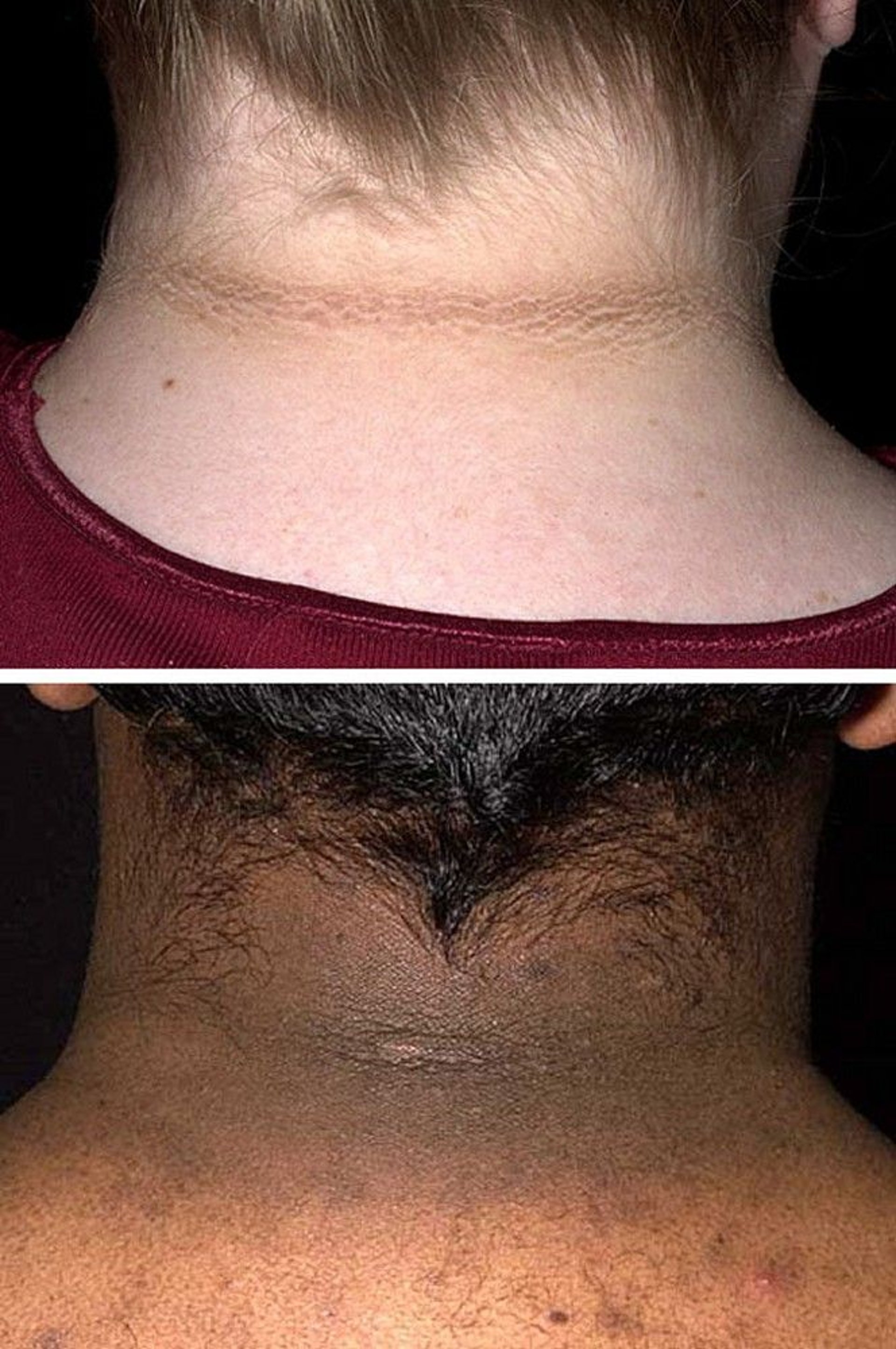
Images provided by Thomas Habif, MD.
If women with PCOS become pregnant and if obesity is present, risk of pregnancy complications is increased. These complications include gestational diabetes, preterm delivery, and preeclampsia.
Diagnosis of PCOS
Clinical criteria
Pelvic ultrasonography
Tests to exclude other endocrinologic disorders, such as measurement of serum testosterone, follicle-stimulating hormone (FSH), prolactin, and thyroid-stimulating hormone (TSH) levels
PCOS is suspected if women have at least two typical symptoms (eg, irregular menses, hirsutism).
The diagnosis requires at least 2 of the following 3 criteria:
Ovulatory dysfunction causing menstrual irregularity
Clinical or biochemical evidence of hyperandrogenism
> 10 follicles per ovary (detected by pelvic ultrasonography), usually occurring in the periphery and resembling a string of pearls
Testing includes pregnancy testing and measurement of FSH, prolactin, and TSH to exclude other possible causes of symptoms.
Transvaginal ultrasonography is done to detect polycystic ovaries and exclude other possible causes of symptoms. However, transvaginal ultrasonography is not done in adolescent girls (see below).
The diagnosis is not based on measurement of serum androgens. For patients who meet diagnostic criteria, other causes of hirsutism or virilization (eg, androgen-secreting tumors) should be excluded by measuring serum androgens including
Total testosterone
DHEAS, if abnormal, women are evaluated as for amenorrhea
Serum free testosterone is more sensitive than total testosterone but is technically more difficult to measure (see algorithm Diagnosis of primary and secondary hypogonadism). Normal to mildly increased testosterone and normal to mildly decreased FSH levels suggest PCOS.
Also, serum cortisol is measured to exclude Cushing syndrome.
Pearls & Pitfalls
|
Diagnosing PCOS in adolescent girls
Diagnosing PCOS in adolescents is complicated because physiologic changes during puberty (eg, hyperandrogenism, menstrual irregularity) are similar to features of PCOS. Thus, separate criteria for diagnosis of PCOS in adolescents (1) have been suggested: however, no consensus has been reached. These criteria require that both of the following conditions be present:
Abnormal uterine bleeding pattern (abnormal for age or gynecologic age or symptoms that persist for 1 to 2 years)
congenital adrenal hyperplasia.
Pelvic ultrasonography is usually indicated only if serum androgen levels or degree of virilization suggests an ovarian tumor. Transvaginal ultrasonography is usually not used to diagnose PCOS in adolescent girls because it detects polycystic morphology in < 40% of girls and, used alone, does not predict the presence or development of PCOS.
Diagnosis reference
1. Tehrani FR, Amiri M: Polycystic ovary syndrome in adolescents: Challenges in diagnosis and treatment. Int J Endocrinol Metab 17 (3): e91554, 2019. doi: 10.5812/ijem.91554
Treatment of PCOS
Usually estrogen/progestin contraceptives or progestins
Management of hirsutism and, in adult women, long-term risks of hormonal abnormalities
Infertility treatments in women who desire pregnancy
Treatment of polycystic ovary syndrome aims to
Manage hormonal and metabolic abnormalities and thus reduce risks of estrogen excess (eg, endometrial hyperplasia) and androgen excess (eg, diabetes, cardiovascular disorders)
Relieve symptoms
Treat infertility
If obesity is present, weight loss and regular exercise are encouraged. These measures may help induce ovulation, make menstrual cycles more regular, increase insulin sensitivity, and reduce acanthosis nigricans and hirsutism. Weight loss may also help improve fertility. Bariatric surgery may be an option for some women with PCOS (1). However, weight loss is unlikely to benefit normal-weight women with PCOS.
insulin sensitivity in women with PCOS, irregular menses, and diabetes or insulintestosterone
2). Other studies are evaluating the role of microbiota treatments for PCOS (3).
Many patients with PCOS have infertility, and those who desire pregnancy should be referred to infertility specialists. Infertility treatments
Because women with PCOS-associated obesity have a higher risk of pregnancy complications (including gestational diabetes, preterm delivery, and preeclampsia), preconception assessment of body mass index, blood pressure, and oral glucose tolerance is recommended.
For hirsutism, physical measures (eg, bleaching, electrolysis, plucking, waxing, depilation) can be used (4
GnRH agonists and antagonists are being studied as treatment for unwanted body hair. Both types of medications inhibit the production of sex hormones by the ovaries. But both can cause bone loss and lead to osteoporosis.
Management of comorbidities
Because risk of depression and anxiety is increased in PCOS, women and adolescents with PCOS should be screened for these problems based on history, and if a problem is identified, they should be referred to a mental health care practitioner and/or treated as needed.
Adolescents and women who have PCOS and overweight or obesity should be screened for symptoms of obstructive sleep apnea using polysomnography and treated as needed.
Because PCOS can increase the risk of cardiovascular disorders, referral to a cardiovascular specialist for prevention of cardiovascular disorders is necessary if women with PCOS have any of the following:
A family history of early-onset cardiovascular disorders
Cigarette smoking
Diabetes mellitus
Hypertension
Dyslipidemia
Sleep apnea
Abdominal obesity (as for metabolic syndrome)
Clinicians should evaluate cardiovascular risk by determining body mass index (BMI), measuring fasting lipid and lipoprotein levels, and identifying risk factors for metabolic syndrome.
Adult women with PCOS are evaluated for metabolic syndrome by measuring blood pressure and usually serum glucose and lipids (lipid profile).
Tests for coronary artery calcification and thickened carotid intima media should be done to check for subclinical atherosclerosis.
Women with abnormal vaginal bleeding should be screened for endometrial hyperplasia or carcinoma using endometrial biopsy and/or transvaginal ultrasonography or office hysteroscopy.
Treatment references
1. Yue W, Huang X, Zhang W, et al: Metabolic surgery on patients with polycystic ovary syndrome: A systematic review and meta-analysis. Front Endocrinol (Lausanne) 13:848947, 2022. doi: 10.3389/fendo.2022.848947
2. Xing C, Li C, He BJ Clin Endocrinol Metab 10 5(9):2950–2963, 2020.
3. Batra M, Bhatnager R, Kumar A, et al: Interplay between PCOS and microbiome: The road less travelled. Am J Reprod Immunol 88 (2):e13580, 2022. doi: 10.1111/aji.13580 Epub 2022 May 29.
4. Martin KA, Chang RJ, Ehrmann,DA, et al: Evaluation and treatment of hirsutism in premenopausal women: An Endocrine Society Clinical Practice Guideline. J Clin Endocrinol Metab 93 (4):1105–1120, 2008. doi: 10.1210/jc.2007-2437 Epub 2008 Feb 5.
Key Points
Polycystic ovary syndrome (PCOS) is a common cause of ovulatory dysfunction.
Suspect PCOS in women who have irregular menses, are mildly obese, and are slightly hirsute, but be aware that weight is normal or low in many women with PCOS.
Test for serious disorders (eg, Cushing syndrome, tumors) that can cause similar symptoms and for complications (eg, metabolic syndrome)
insulin sensitizers.
If women with PCOS are infertile and desire pregnancy, refer them to reproductive infertility specialists.
Screen for comorbidities, such as endometrial cancer, mood and anxiety disorders, obstructive sleep apnea, diabetes, and cardiovascular risk factors (including hypertension and hyperlipidemia).
More Information
The following English-language resources may be useful. Please note that THE MANUAL is not responsible for the content of these resources.
Legro RS, Arslanian SA, Ehrmann DA, et al: Diagnosis and treatment of polycystic ovary syndrome: An Endocrine Society clinical practice guideline. J Clin Endocrinol Metab 98(12):4565–4592, 2013. doi: 10.1210/jc.2013-2350: This evidence-based guideline uses the Grading of Recommendations, Assessment, Development, and Evaluation (GRADE) system to describe the strength of recommendations and the quality of evidence.
Goodman NF, Cobin RH, Futterweit W, et al: American Association of Clinical Endocrinologists, American College of Endocrinology, and Androgen Excess and PCOS Society Disease State Clinical Review: Guide to the best practices in the evaluation and treatment of polycystic ovary syndrome–Part 1. Endocr Pract 21(11):1291–300, 2015. doi: 10.4158/EP15748.DSC: This article summarizes the best practices of 2015.
Hoeger KM, Dokras A, Piltonen T: Update on PCOS: Consequences, challenges and guiding treatment. J Clin Endocrinol Metab 106 (3):e1071-e1083, 2021. doi: 10.1210/clinem/dgaa839: This review summarizes key points for diagnosis and treatment of PCOS from an evidence-based guidelines published in 2018 and updates the information based on recent developments. The diagnostic criteria for PCOS are reviewed, and the remaining controversies and challenges for making a clear diagnosis are discussed.


