





Bladder cancer is usually transitional cell (urothelial) carcinoma. Patients usually present with hematuria (most commonly) or irritative voiding symptoms such as frequency and/or urgency; later, urinary obstruction can cause pain. Diagnosis is by cystoscopy and biopsy. Treatment is with fulguration, transurethral resection, intravesical instillations, radical surgery, chemotherapy, external beam radiation, or a combination.
In the United States, about 82,290 new cases of bladder cancer and about 16,710 deaths (2023 estimates) occur each year (1). Bladder cancer is the 4th most common cancer among men and is less common among women; male:female incidence is about 3:1. Bladder cancer is more common among White people than Black people, and incidence increases with age.
Risk factors include the following:
Smoking (the most common risk factor, causing ≥ 50% of new cases)
Chronic irritation (eg, in schistosomiasis, by chronic catheterization, or by bladder calculi)
Types of bladder cancer include
Transitional cell carcinomas (urothelial carcinoma), which account for > 90% of bladder cancers. Most are papillary carcinomas, which tend to be superficial and well-differentiated and to grow outward; sessile tumors are more insidious, tending to invade early and metastasize.
Squamous cell carcinomas, which are less common and usually occur in patients with parasitic bladder infestation or chronic mucosal irritation.
Adenocarcinomas, which may occur as primary tumors or rarely reflect metastasis from intestinal carcinoma. Metastasis should be ruled out.
In > 40% of patients, tumors recur at the same or another site in the bladder, particularly if tumors are large or poorly differentiated or if several tumors are present. Bladder cancer tends to metastasize to the lymph nodes, lungs, liver, and bone. Expression of mutations in tumor gene p53 may be associated with both progression and resistance to chemotherapy.
In the bladder, carcinoma in situ is high grade but noninvasive and usually multifocal; it tends to recur.
General reference
1. American Cancer Society: Key statistics for bladder cancer. Accessed September 10, 2023.
Symptoms and Signs of Bladder Cancer
Most patients present with unexplained hematuria (gross or microscopic). Some patients present with anemia, and hematuria is detected during evaluation. Irritative voiding symptoms (dysuria, burning, frequency) and pyuria are also common at presentation. Pelvic pain occurs with advanced cancer, when a pelvic mass may be palpable.
Diagnosis of Bladder Cancer
Cystoscopy with biopsy
Urine cytology
Bladder cancer is suspected clinically. If patients present with hematuria, work-up is risk-stratified and involves a combination of diagnostic cystoscopy and imaging (CT urogram or renal ultrasound [1]). Urine cytology, which can detect malignant cells, should also be done. Cystoscopy and biopsy of abnormal areas or resection of tumors are required for diagnosis and clinical staging. Urinary antigen tests are available but are not routinely recommended for use in diagnosis. They are used sometimes if cancer is suspected but cytology results are negative.
Cystoscopy with blue light after intravesical instillation of hexyl-aminolevulinate can improve initial detection of bladder cancer as well as recurrence-free survival. Higher detection rates are expected to improve clinical outcomes by reducing future recurrences and by facilitating earlier recognition that certain tumors are unresponsive to therapy (thus, sparing some patients unnecessary treatments).
For nonmuscle-invasive bladder cancer (carcinoma in situ, Ta, T1) tumors, which comprise 70 to 80% of bladder cancers, cystoscopy with biopsy (with simultaneous complete resection) is sufficient for staging. However, if biopsy shows the tumor is more invasive than a superficial flat tumor, then resection should be repeated, taking care to include muscle tissue. If a tumor is found to invade the detrusor muscle (≥ stage T2), blood tests, abdominal and pelvic CT, and chest x-ray are done to determine tumor extent and evaluate for metastases. MRI can be considered for local staging. Patients with invasive tumors undergo bimanual examination (rectal examination in men, rectovaginal examination in women) while under anesthesia for cystoscopy and biopsy. The standard TNM (tumor, node, metastasis) staging system is used (see table AJCC/TNM Staging of Bladder Cancer and table TNM Definitions for Bladder Cancer).

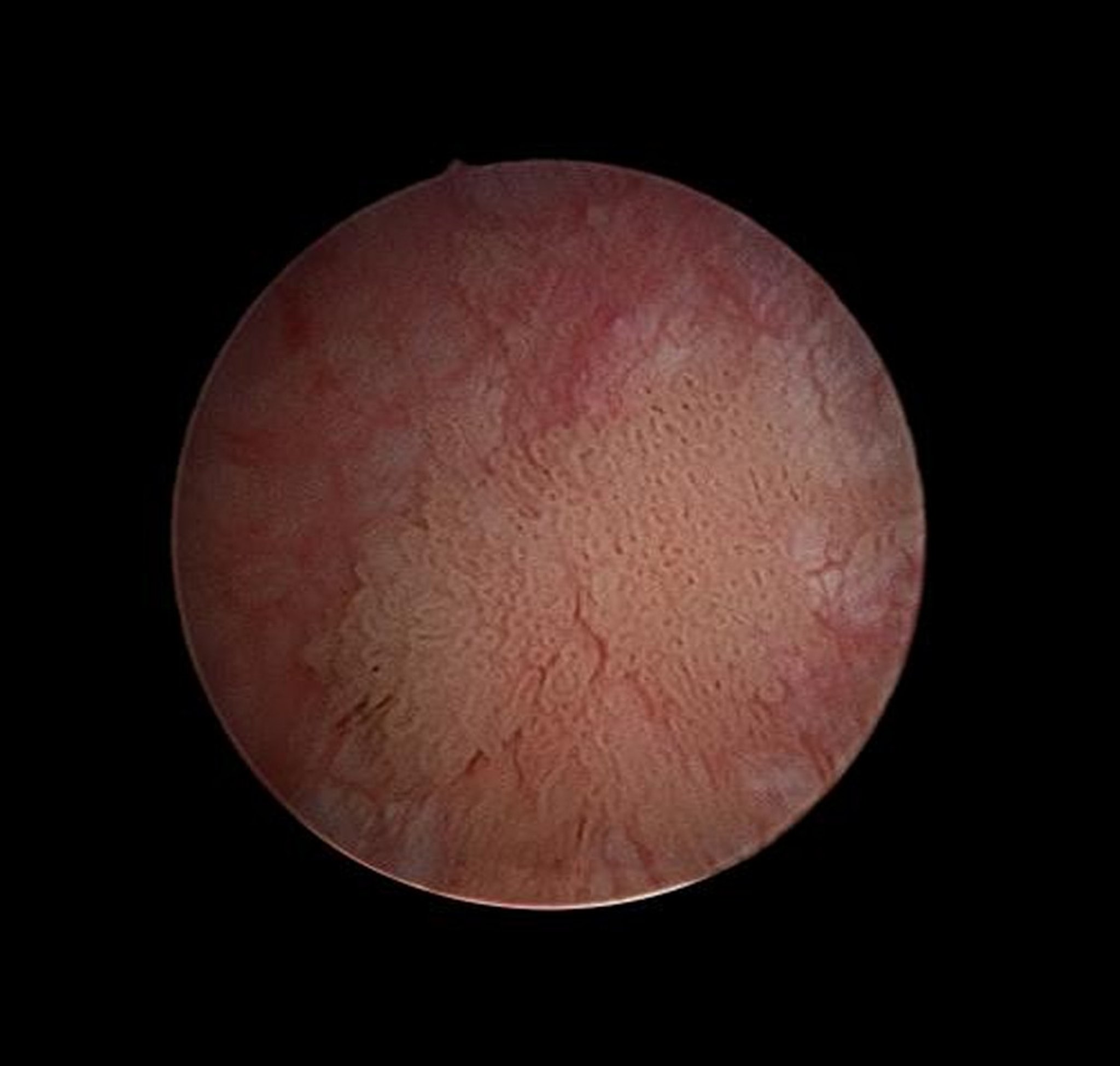
DR P. MARAZZI/SCIENCE PHOTO LIBRARY

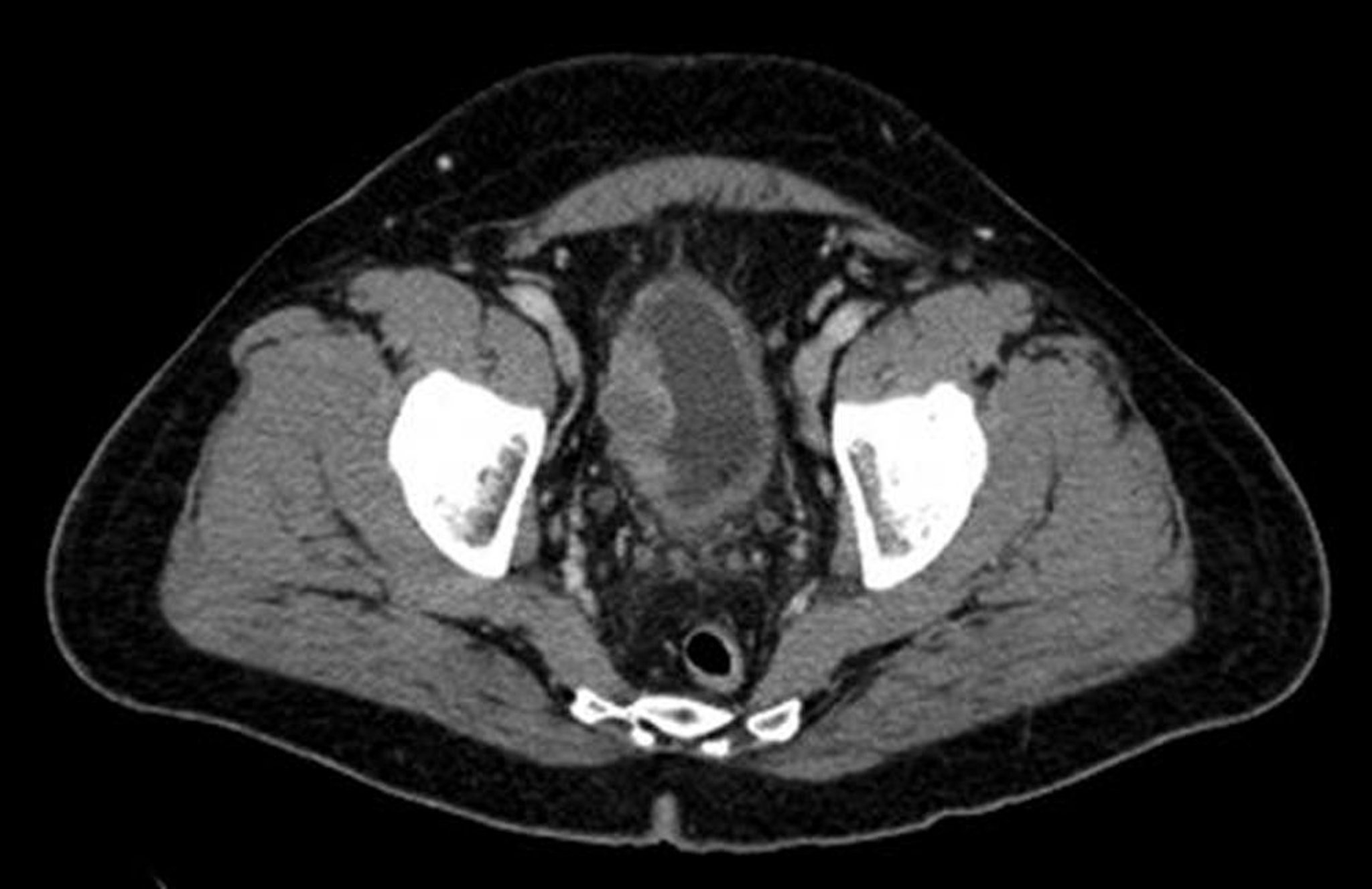
© Springer Science+Business Media
Diagnosis reference
1. Barocas DA, Boorjian SA, Alvarez RD, et al: AUA/SUFU Guideline. J Urol 204(4):778-786, 2020. doi: 10.1097/JU.0000000000001297
Treatment of Bladder Cancer
Transurethral resection and intravesical immunotherapy or chemotherapy (for nonmuscle-invasive bladder cancers)
Cystectomy or radiation with chemotherapy (for cancers that invade muscle)
Superficial cancers
Invasive cancers
Tumors that penetrate the muscle (ie, ≥ stage T2) usually require radical cystectomy (removal of bladder and adjacent structures) with concomitant urinary diversion; partial cystectomy is possible for <
Urinary diversion following cystectomy traditionally involves routing urine through an ileal conduit to an abdominal stoma and collecting it in an external drainage bag. Alternatives such as orthotopic neobladder or continent cutaneous diversion are becoming common and are appropriate for many patients. For both procedures, an internal reservoir is constructed from the intestine. For the orthotopic neobladder, the reservoir is connected to the urethra. Patients empty the reservoir by relaxing the pelvic floor muscles and increasing abdominal pressure, so that urine passes through the urethra almost naturally. Most patients maintain urinary control during the day, but some incontinence may occur at night. For continent cutaneous urinary diversion, the reservoir is connected to a continent abdominal stoma. Patients empty the reservoir by self-catheterization at regular intervals throughout the day.
Bladder-preservation protocols that combine chemotherapy and radiation therapy may be appropriate for a subset of patients, including those who are older or those who refuse more aggressive surgery. These protocols may provide 5-year survival rates of 36 to 74% with 10 to 20% of patients requiring salvage cystectomy.
Patients should be monitored every 3 to 6 months for progression or recurrence.
Metastatic and recurrent cancers
FGFR3 and FGFR2 mutations who have failed treatment with chemotherapy.
Treatment of recurrent cancer depends on clinical stage and site of recurrence and previous treatment. Recurrence after transurethral resection of superficial tumors is usually treated with a second resection or fulguration. Early cystectomy is recommended for recurrent high-grade superficial bladder cancers.
Treatment reference
1. Lenis AT, Lec PM, Chamie K, et al: Bladder cancer: A review. JAMA 324(19):1980-1991, 2020. doi:10.1001/jama.2020.17598
Prognosis for Bladder Cancer
Nonmuscle-invasive bladder cancers (stage Ta, Tis, or T1) have a high rate of local recurrence, but a subset of patients progress to more advanced cancer. Low-grade and stage Ta tumors rarely cause death. High-grade and stage T1 tumors may progress to muscle-invasive bladder cancer. Carcinoma in situ (stage Tis) may be more aggressive than comparable papillary tumors and should be treated as high-grade tumors. For patients with invasion of the bladder musculature, the 5-year survival rate is about 50%, but neoadjuvant chemotherapy improves these results in chemosensitive patients.
Generally, prognosis for patients with progressive or metastatic invasive bladder cancer is poor. Prognosis for patients with squamous cell carcinoma or adenocarcinoma of the bladder is also poor because these cancers are usually highly infiltrative and often detected at an advanced stage.
Key Points
Transitional (urothelial) cell carcinoma is > 90% of bladder cancers.
Suspect bladder cancer in patients with unexplained hematuria or other urinary symptoms (particularly in middle-aged or older men).
Diagnose bladder cancer via cystoscopic biopsy and, if there is muscle invasion, do imaging studies for staging.
Remove superficial cancers by transurethral resection or fulguration, followed by repeated bladder instillations of drugs.


