





Piriformis syndrome is compression of the sciatic nerve by the piriformis muscle in the posterior pelvis, causing pain in the buttocks and occasionally sciatica. Diagnosis is by examination. Treatment is symptomatic.
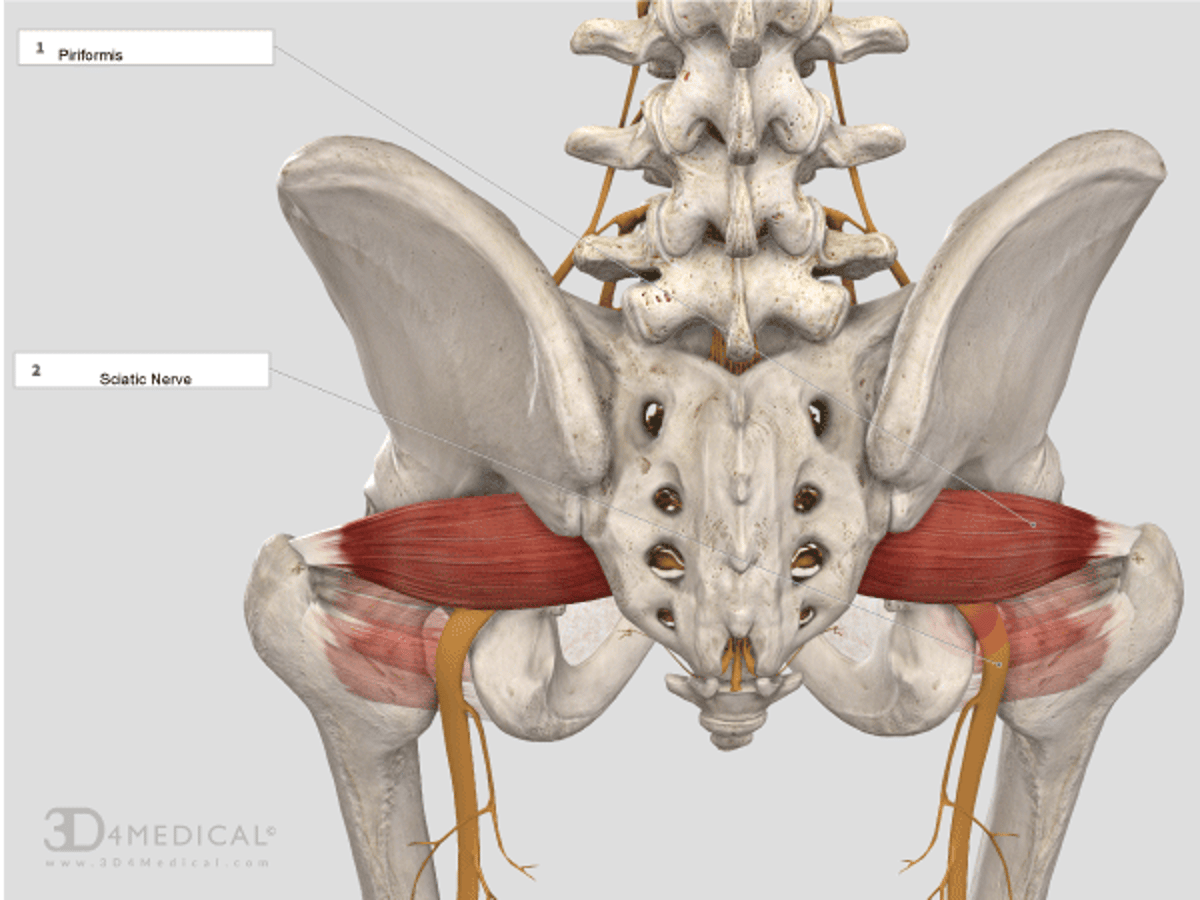
The piriformis muscle extends from the pelvic surface of the sacrum to the upper border of the greater trochanter of the femur. During running or sitting, this muscle can compress the sciatic nerve at the site where it emerges from under the piriformis to pass over the hip rotator muscles. Piriformis syndrome is uncommon.
Piriformis Syndrome
In piriformis syndrome, the sciatic nerve is compressed by the piriformis muscle in the posterior pelvis. |

Symptoms and Signs of Piriformis Syndrome
A chronic nagging ache, pain, tingling, or numbness starts in the buttocks and can extend along the course of the sciatic nerve, down the entire back of the thigh and calf, and sometimes into the foot. Pain worsens when the piriformis is pressed against the sciatic nerve (eg, while sitting on a toilet, a car seat, or a narrow bicycle seat or while running).
Diagnosis of Piriformis Syndrome
Physical examination and provocative testing
Diagnosis is by physical examination. Pain with forceful internal rotation of the flexed thigh (Freiberg maneuver), abduction of the affected leg while sitting (Pace maneuver), raising of the knee several centimeters off the table while lying on a table on the side of the unaffected leg (Beatty maneuver), or pressure into the buttocks where the sciatic nerve crosses the piriformis muscle while the patient slowly bends to the floor (Mirkin test) is diagnostic. Imaging is not useful except to rule out other causes of sciatic compression. Lumbar disk compression of the sciatic nerve (sciatica) also can result in radiation of pain down the lower extremity below the knee and often is associated with back pain. However, differentiation from a lumbar disk disorder can be difficult, and referral to a specialist may be needed.
Treatment of Piriformis Syndrome
Modification of activity
Stretches
Patients should temporarily stop running, bicycling, or doing any activity that elicits pain. Patients whose pain is aggravated by sitting should stand or, if unable to do so, change positions to remove the source of pressure around the buttock. Specific stretching exercises for the posterior hip and piriformis can be beneficial. Surgery is rarely warranted. A carefully directed corticosteroid injection near the site where the piriformis muscle crosses the sciatic nerve often helps temporarily. Nonsteroidal anti-inflammatory drugs (NSAIDs) can also provide temporary pain relief.

Courtesy of Tomah Memorial Hospital, Department of Physical Therapy, Tomah, WI; Elizabeth C.K. Bender, MSPT, ATC, CSCS; and Whitney Gnewikow, DPT, ATC.

Courtesy of Tomah Memorial Hospital, Department of Physical Therapy, Tomah, WI; Elizabeth C.K. Bender, MSPT, ATC, CSCS; and Whitney Gnewikow, DPT, ATC.


Courtesy of Tomah Memorial Hospital, Department of Physical Therapy, Tomah, WI; Elizabeth C.K. Bender, MSPT, ATC, CSCS; and Whitney Gnewikow, DPT, ATC.

Courtesy of Tomah Memorial Hospital, Department of Physical Therapy, Tomah, WI; Elizabeth C.K. Bender, MSPT, ATC, CSCS; and Whitney Gnewikow, DPT, ATC.


