





Genetic disorders determined by a single gene (Mendelian disorders) are easiest to analyze and the most well understood. If expression of a trait requires only one copy of a gene (one allele), that trait is considered dominant. If expression of a trait requires 2 copies of a gene (2 alleles), that trait is considered recessive. One exception is X-linked disorders. Because males usually have no paired allele to offset the effects of most alleles on the X chromosome, the X chromosome allele is expressed in males even if the trait is recessive. Other exceptions, such as mitochondrial disorders, exist as well. Mitochondrial genes are typically inherited only from the maternal oocyte. Proteins active in mitochondrial structure and function originate both from mitochondrial genes and also from nuclear genes. (See also Overview of Genetics.)
Many specific single-gene disorders have been described.
Examples of Genetic Disorders With Mendelian Inheritance
Gene | Dominant | Recessive |
|---|---|---|
Non–X-linked | ||
X-linked | Red–green color blindness |
Autosomal Dominant
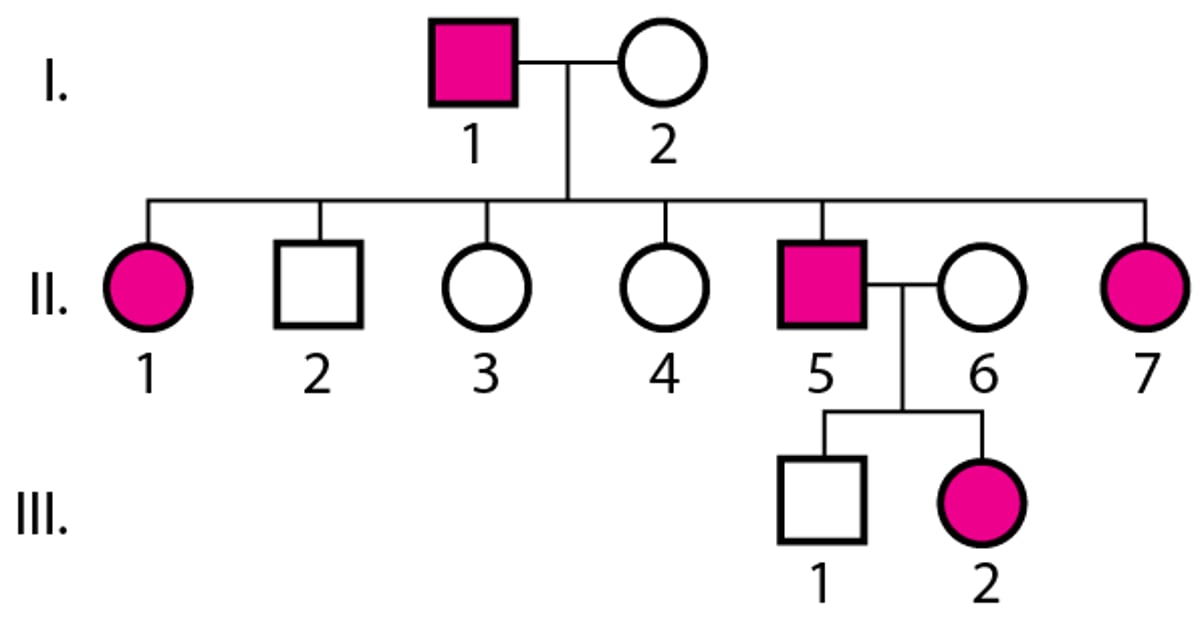
Only one abnormal allele of a gene is needed to express an autosomal dominant trait; ie, both heterozygotes and homozygotes for the abnormal gene are affected. A typical pedigree of an autosomal dominant trait is shown in figure Autosomal dominant inheritance.
In general, the following rules apply:
An affected person has an affected parent.
A heterozygous affected parent and an unaffected parent have, on average, an equal number of affected and unaffected children; ie, risk of occurrence for each child of an affected parent is 50%.
Unaffected children of an affected parent do not transmit the trait to their descendants.
Males and females are equally likely to be affected.
Autosomal dominant inheritance

Autosomal Recessive
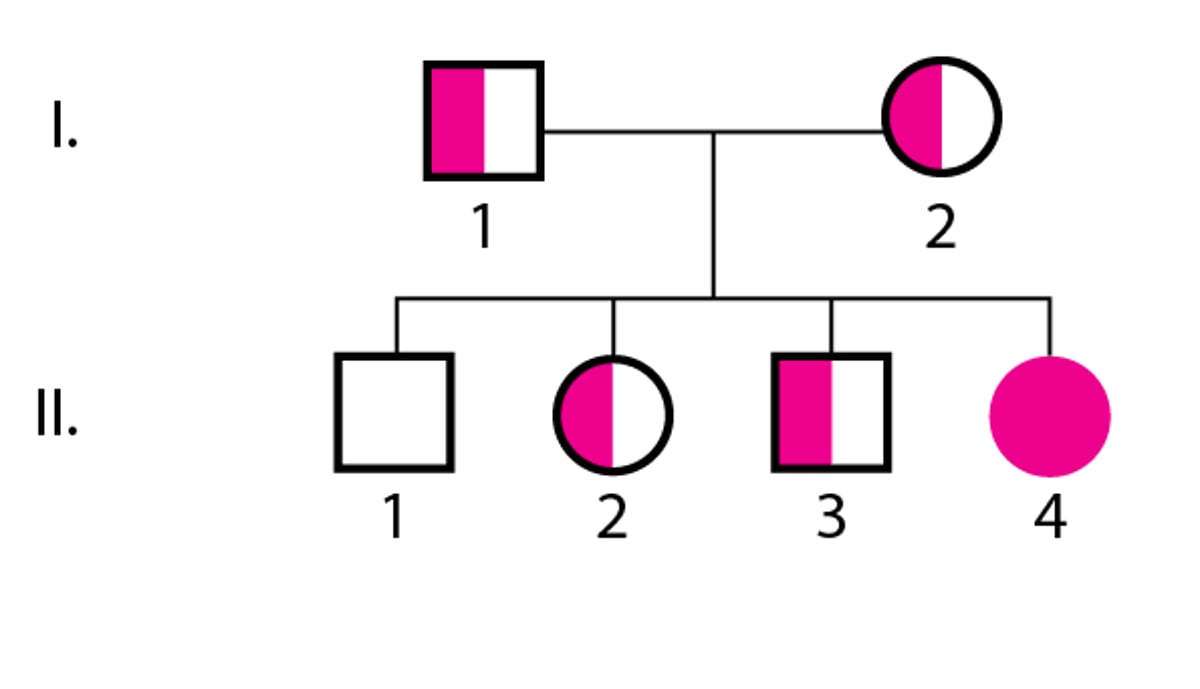
Two copies of an abnormal allele are needed to express an autosomal recessive trait. An example of a pedigree is shown in figure Autosomal recessive inheritance.
In general, the following rules of inheritance apply:
Heterozygotes are unaffected but carry the abnormal gene.
Males and females are equally likely to be affected.
If unaffected (phenotypically normal) parents have an affected child, both parents are heterozygotes. On average, one fourth of their children are affected, half are heterozygotes, and one fourth are neither affected nor carriers (genotypically normal). Therefore, among the children, the chance of being unaffected (that is, either being a carrier or being genotypically normal) is three fourths, and among the unaffected children, the chance of being a carrier is two thirds.
All children of an affected parent and a parent who is not a carrier are unaffected heterozygotes.
On average, half the children of an affected parent and a heterozygote are affected, and half are heterozygotes.
All children of 2 affected parents are affected.
An unaffected (phenotypically normal) person with unaffected parents but affected siblings has a 66% chance of being a carrier of the abnormal gene.
Autosomal recessive inheritance

Relatives are more likely to carry the same mutant allele, so mating between close relatives (consanguinity) increases the likelihood of having affected children. In parent-child or brother-sister unions (incest), the risk of having abnormal children is increased because so much of their genetic material is the same. In certain populations, the percentage of heterozygotes (carriers) is high because of a founder effect (ie, the group started with few members, one of whom was a carrier) or because carriers have a selective advantage (eg, heterozygosity for sickle cell trait protects against malaria).
If the trait results in a defect of a specific protein (eg, an enzyme), heterozygotes usually have a reduced amount of that protein. If the mutation is known, molecular genetic techniques can identify heterozygous phenotypically normal people (eg, most of the time, people with cystic fibrosis).
X-Linked Dominant
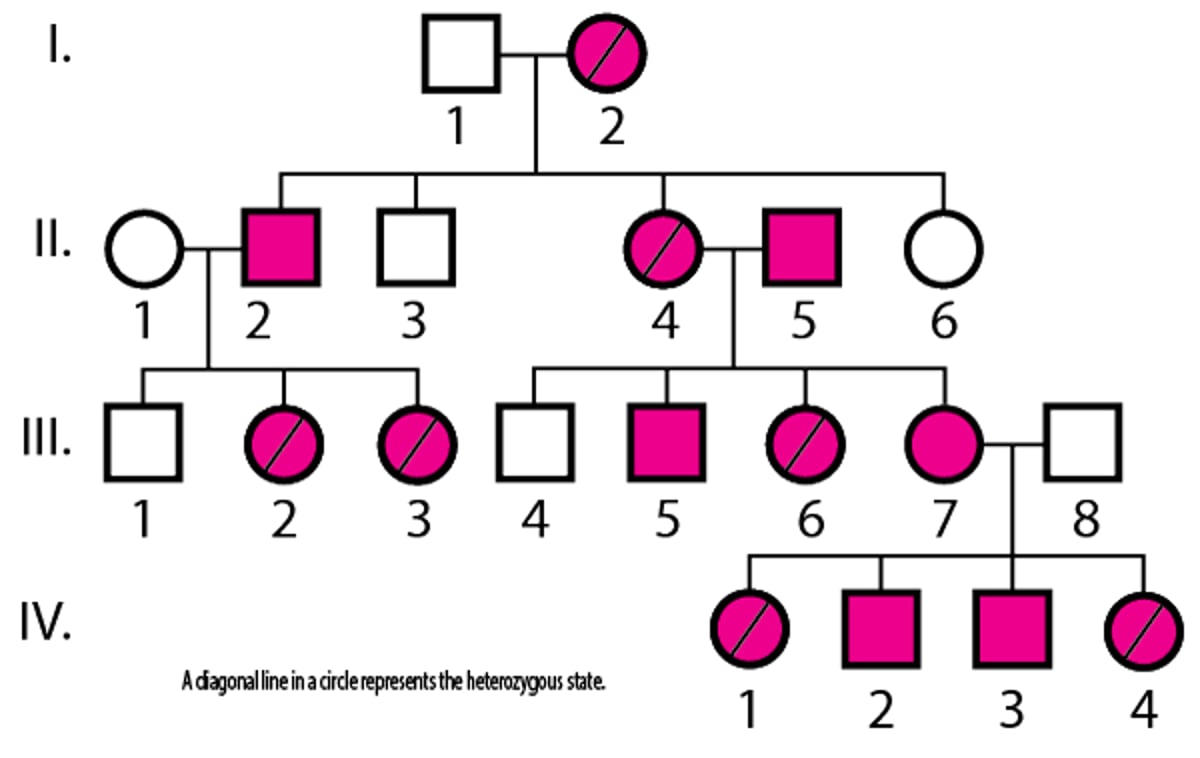
X-linked dominant traits are carried on the X chromosome. Most are rare. Usually, males are more severely affected; some X-linked dominant disorders are often lethal in males. Females who carry only one abnormal allele are affected but less severely. A typical pedigree is shown in figure X-linked dominant inheritance.
In general, the following rules of inheritance apply:
Affected males transmit the trait to all of their daughters but to none of their sons.
Heterozygous females transmit the trait to half of their children, regardless of sex.
Homozygous females transmit the trait to all of their children.
Heterozygous females are also affected, albeit less severely.
Because females can be heterozygous or homozygous, more females have the trait than males. The difference between the sexes is even larger if the disorder is lethal in males.
X-linked dominant inheritance

X-linked dominant inheritance may be difficult to differentiate from autosomal dominant inheritance by studying only inheritance patterns. Large pedigrees are required, with particular attention to children of affected males because male-to-male transmission rules out X-linkage (males pass only their Y chromosomes to their sons).
X-Linked Recessive
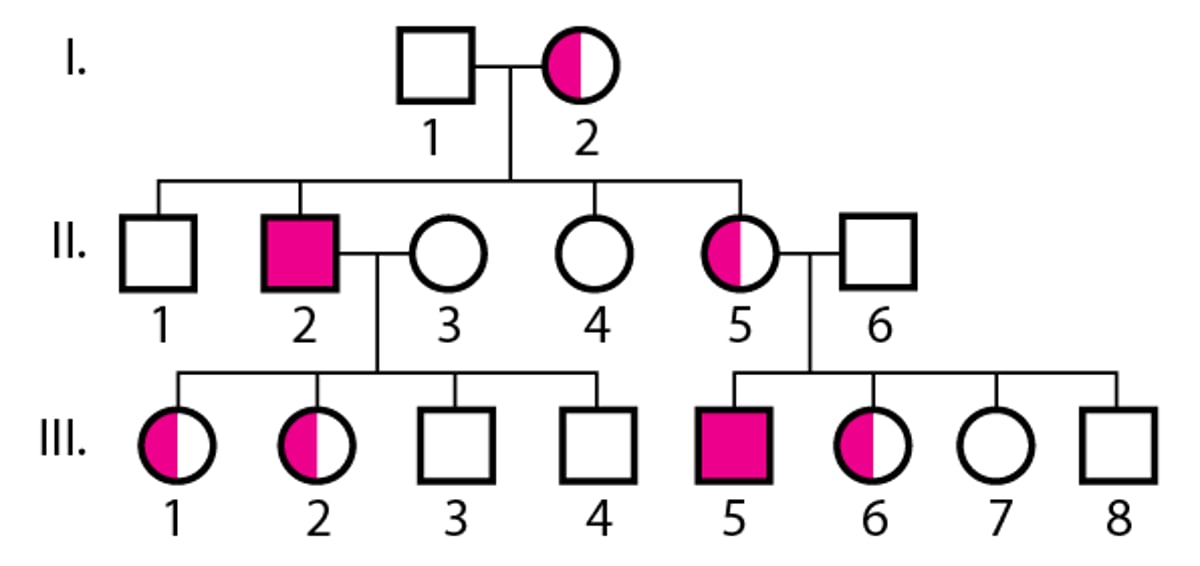
X-linked recessive traits are carried on the X chromosome. Thus, nearly all affected people are male because most females have one normal copy of the involved gene (ie, they are heterozygous). A typical pedigree is shown in figure X-linked recessive inheritance.
In general, the following rules of inheritance apply:
Nearly all affected people are male.
Heterozygous females are usually unaffected (phenotypically normal) but, as carriers, transmit the abnormal gene to half of their children.
Half the sons of a carrier female are affected, and half the daughters are carriers.
An affected male never transmits the trait to his sons.
All daughters of an affected male are carriers.
No daughters of a carrier female and an unaffected father who is not a carrier are affected, but half are carriers.
X-linked recessive inheritance

Occasionally, females who are heterozygous for X-linked mutations show some expression, but they are rarely affected as severely as affected males.


