Exploring the potential use of PET tracers in neurodegenerative disease research
Merck scientists are researching the potential of an investigational alpha-synuclein PET tracer in early identification of Parkinson’s disease
December 9, 2025
Parkinson’s disease (PD) is a progressive neurodegenerative disease caused by the loss of certain brain cells that are involved with the control of movement. Globally, the prevalence of Parkinson’s has doubled in the past 25 years with global estimates in 2019 showing over 8.5 million individuals living with PD. Most patients with Parkinson’s are diagnosed after experiencing worsening symptoms such as tremors, slow movements and gait abnormalities.
Unfortunately, by the time symptoms become apparent, a large proportion of affected brain cells have already been irreversibly damaged, making therapeutic intervention difficult. Researchers at Merck, along with the broader scientific community, are focused on exploring new ways to identify people with PD earlier in the course of their disease and to measure changes in disease progression.
Alpha-synuclein: A biomarker for Parkinson’s disease
Research evaluating the brains of people with PD has shown that abnormal clumps of a protein called alpha-synuclein form as the disease progresses. Historically, the only way to evaluate the accumulation of alpha-synuclein is by analyzing brain tissue collected after a person dies.
Our scientists then asked: What if there was a way to detect the first signs of these abnormal protein deposits in the brain as a potential way to identify the early signs of PD before symptoms appear? Could we then also evaluate the potential of investigational therapies to slow disease progression?
Exploring noninvasive early detection for neurodegenerative disease
Advanced imaging technologies have helped evolve our understanding of neurodegenerative diseases, in some instances leading to a better understanding of the disease and potential therapeutic options.
In PD, similar imaging techniques offer the potential of early detection and the ability to monitor disease progression. A PET tracer may offer a noninvasive method of detecting alpha-synuclein.
Our scientists are working to evaluate the potential of a PET tracer as a noninvasive way to visualize and measure alpha-synuclein, with the hope that it could lead to earlier detections of Parkinson’s disease.
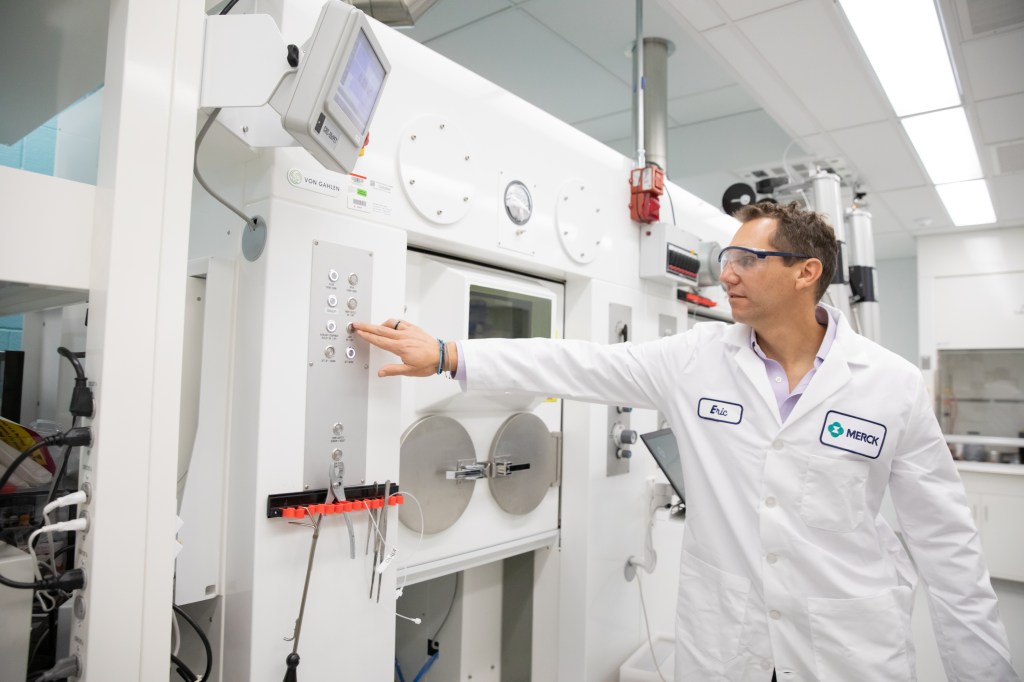
“A selective PET tracer for alpha-synuclein could have a significant impact on ongoing research by providing a window into what’s happening in the brain in real time,” said Dr. Eric D. Hostetler, executive director and head of translational imaging biomarkers at Merck. “We see the potential for an advanced imaging tool that could contribute to the development of novel treatments by potentially making it easier and more effective to test whether an investigational therapy that targets alpha-synuclein in the brain is working in clinical trials.”
Our research in this area was recognized by the Michael J. Fox Foundation for Parkinson’s Research Ken Griffin Alpha-synuclein Imaging Competition in 2023, and our scientists are continuing important research in multiple investigational PET tracers in the central nervous system space.
“We’re evaluating the potential of this investigational PET tracer to serve as a biomarker to measure disease progression and determine whether investigational therapies are able to slow the progression of Parkinson’s disease,” said Dr. Jason Uslaner, vice president and head of neuroscience discovery at Merck. “It’s all about identifying the right patient at the right time for the right medicine.”
Learn more about our research in neuroscience.