
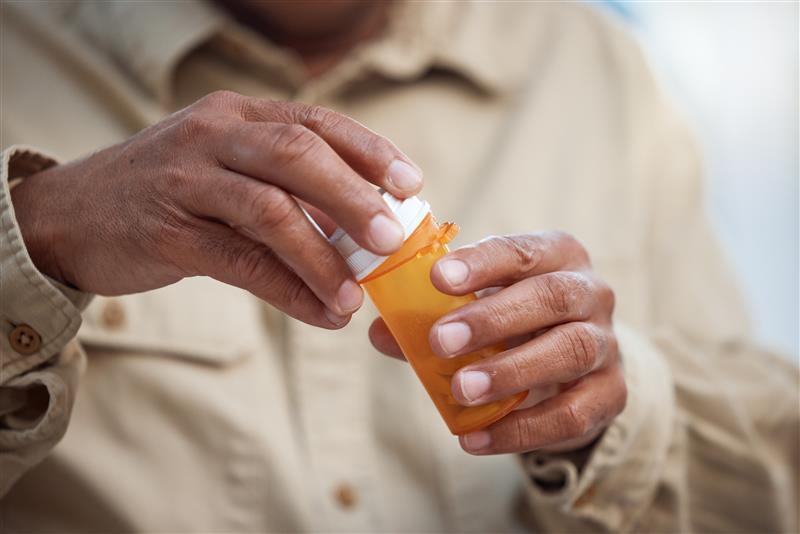
Fighting counterfeit medicine
Counterfeit — or fake — medicines are a significant global health problem and can jeopardize a patient’s treatment and well–being. We’re actively addressing the challenge of counterfeit medicines to help keep patients safe.
Protecting people from fake medicines
Every day millions of people rely on our medicines and vaccines, so we work to ensure the products they receive are genuine, safe and effective. We focus on three core areas in our fight against counterfeit medicines: securing the supply chain, investigating and enforcing against illegal activity, and raising awareness about this dangerous crime.
What is a counterfeit medicine?
A counterfeit medicine is a fake or altered prescription drug that looks like the real thing. Some fake medicines have no active ingredient, so they won’t treat your illness, allowing it to progress unchecked. Others have the wrong ingredients or dangerous contaminants that can make you sick, or even worse.
The global impact of counterfeit medical products

Websites selling illicit medical products removed in 2021 by Interpol, the world's largest international police organization

Pharmaceutical crime incidents reported globally in 2024
Different medicines involved in pharmaceutical crime incidents in 2024
How we help protect patients
We cooperate with governments, law enforcement, industry peers, wholesalers, distributors, health care professionals, consumer groups and academia to keep counterfeit medicine from reaching patients.
Our three core priorities:
Securing our supply chain
Our supply chain integrity program protects patients by preventing fake, diverted or tampered medicines from entering the legitimate supply chain. We use secure packaging, digital checks, regular audits, real-time tracking and global intelligence to find threats quickly and support regulators and law enforcement.
Investigations and enforcement
Our investigators work to find and stop groups that make, sell or distribute fake, diverted or tampered Merck medicines. Every reported incident associated with our products is thoroughly reviewed. We prioritize patient safety by identifying and removing these illicit products from the market through proactive operations that focus on the highest patient safety risks. We collaborate with law enforcement and regularly share evidence to secure criminal and civil outcomes.
Raising stakeholder awareness

We educate the public and key stakeholders about the risks of counterfeit, diverted and tampered medicines so people can spot and avoid dangerous fake products. Through targeted training, public campaigns, media outreach and web resources, we help the public, health care professionals and authorities recognize suspect products and escalate concerns. We also advocate for stronger policies and regulations to better protect patients and disrupt illicit trade.
Our product integrity efforts by the numbers*
* 2024 data
New product incidents we've investigated across 95 countries
Online listings for suspicious products we got removed
Unique samples for testing received by our forensic laboratories
Health, regulatory and enforcement professionals we trained
Tips to help you avoid counterfeit medicine
-
- Buy only from trusted sellers — Purchase medicines from licensed pharmacies or verified sellers with clear return policies; avoid social media sellers, informal markets and unverified third-party online listings.
- Use only reputable, authorized pharmacy websites or official pharmacy apps, if buying online.
- Inspect the product — Tablets, capsules, liquids, vials or ointments should look uniform and show no stains, cracks, particles, bubbles, unusual odors or other anomalies. There should be no unexpected particles in liquids.
- Inspect the packaging — Boxes should be intact, with seals and clear, legible labeling in your local language. Notice low-quality printing and misspellings on the box or label.
- Match batch and expiration date — Confirm the batch or lot number, and the expiration date on the box, exactly match those on the product inside.
- Prescription medicines require a prescription — Prescription medicines should only be obtained with a valid prescription from a licensed health care professional.
- Ask your pharmacist or health care provider if you’re unsure about a medicine.
What to do if you suspect a fake medicine
Stop using the product immediately.
Preserve the product and all original packaging, as well as any receipts you have.

Seek medical help if you have experienced any adverse effects.

If it's one of our products, report it to us at the phone number below so our team can investigate.

How to ask questions or submit a report
We’re here to answer your questions and/or investigate any potential counterfeit medicine reports.
1-800-444-2080
Monday – Friday, 8 a.m. – 7 p.m. ET