Acting early in cancer detection
Diagnosing cancer early, before it has spread, may potentially lead to better outcomes
December 10, 2025
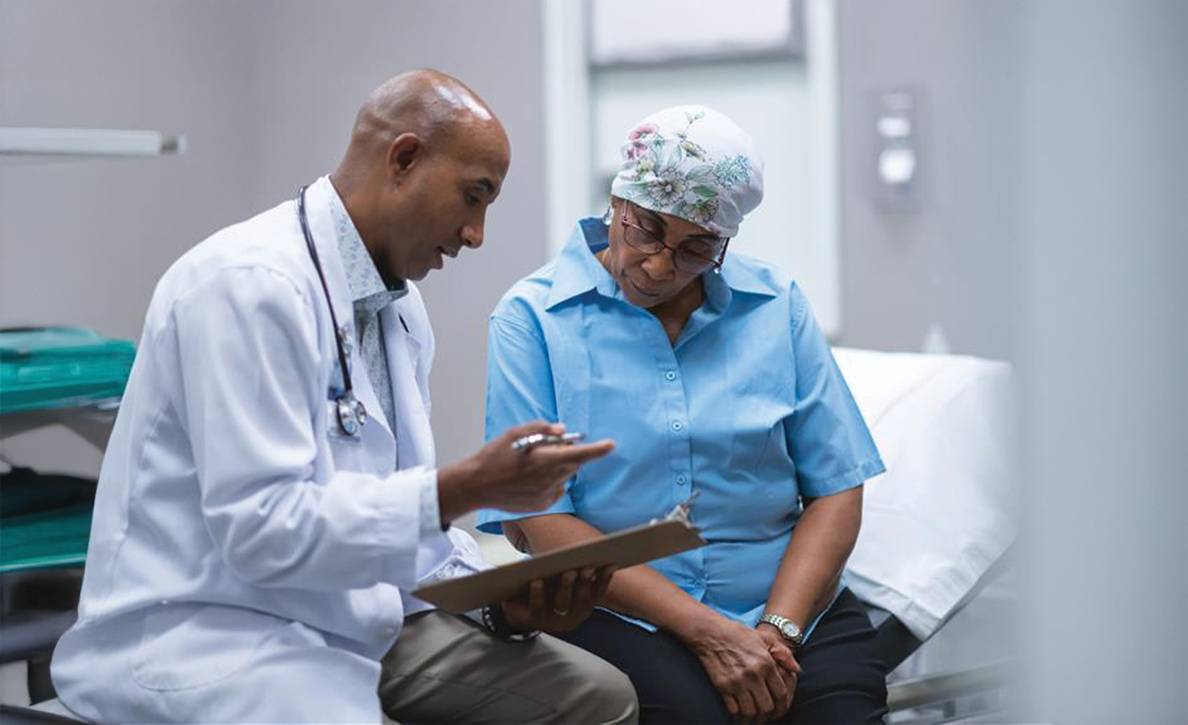
Time is important with a cancer diagnosis. People with cancer may have the opportunity for better outcomes when the disease is detected early. And with increases in routine cancer screening (e.g., mammograms, colonoscopies, lung cancer screenings, Pap smears, etc.), more cancer cases can be diagnosed before metastasis — before the disease has spread to other parts of the body.
“We’ve seen incredible progress in the fight against cancer in recent decades, driven by advances in early detection and the availability of new treatment options,” said Dr. Gregory Lubiniecki, vice president, oncology clinical research. “This progress makes me optimistic for a future where cancer is detected and treated as early as possible, giving patients the greatest chance to live cancer-free. We can’t rest now — I’m hopeful that we’ll continue to build on what we’ve learned about helping people with earlier stages of disease.”
But important work remains to continue to improve care and diagnose cancer early.
What is early-stage cancer?
After someone is diagnosed with cancer, doctors will try to figure out how much cancer is in the body and if their disease has spread — this process is called staging, which can help guide treatment decisions. Different cancer stages have different treatments and possible outcomes, and they’re associated with different odds of recurrence.
The stages of cancer

- Stage 0: Cancer is localized to where it started.
- Stage 1: Cancer has not grown deeply into nearby tissues.
- Stage 2 and 3: Cancer has grown more deeply into nearby tissues and may involve lymph nodes, but has not spread to distant parts of the body.
- Stage 4: Tumor cells have spread to other organs or distant parts of the body.
Early-stage is a term that can be used to describe cancer that’s early in its growth, before it has spread to other parts of the body. However, each person’s experience with cancer is unique, and what doctors may define as early-stage can vary by the type of cancer.
When cancer is diagnosed, the goals of treatments are to slow, stop and possibly eliminate tumor growth.
Treatment may be more likely to be successful if it’s started before the cancer has spread, when surgery is a potential option. However, even after surgery, there’s a risk that the cancer may spread to other parts of the body. Additional treatment may help lower that risk. In certain instances, other treatment options can be used before surgery (neoadjuvant) to help to reduce the size of the tumor, and/or after surgery (adjuvant) to lower the chance of the cancer from potentially coming back.
Detecting and treating cancer early may help reduce the risk of recurrence and increase the potential for survival.