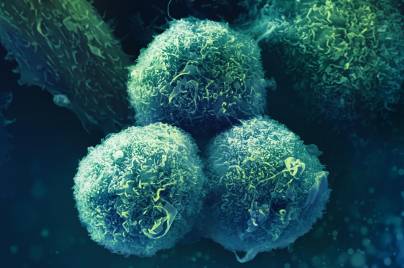
Building on our understanding of gynecologic cancers
How we’re driving research forward for women with common types of gynecologic cancer
September 3, 2026

Despite meaningful progress in recent years, millions of women with gynecologic cancers still face significant challenges. Together, these cancers were responsible for more than 1.4 million new cases and over 610,000 deaths worldwide in 2024.
At Merck, we’re dedicated to advancing gynecologic cancer research by evaluating novel approaches and combinations, and leading clinical trials designed to find solutions that may address unmet needs. Our commitment is anchored in our goal to help more people impacted by these diseases through encouraging earlier diagnosis and advancing science that may ultimately lead to improved outcomes.
What are gynecologic cancers?
Gynecologic cancers begin in the reproductive organs, including the:
- Uterus (endometrial cancer)
- Ovaries/fallopian tubes (ovarian cancer)
- Cervix (cervical cancer)
- Vagina (vaginal cancer)
- Vulva (vulvar cancer)
Despite advancements, common gynecologic cancers like endometrial, ovarian and cervical continue to present distinct challenges, from delayed diagnosis to timely access to care.
- Endometrial cancer is the most common cancer of the female reproductive organs in the U.S., and incidence rates continue to increase among certain demographics.
- While less common than endometrial cancer, ovarian cancer remains the deadliest gynecologic cancer in the U.S., largely because it is often diagnosed at a later stage.
- Advances in screening have helped reduce cervical cancer rates in many developed nations; however, the disease continues to be a leading cause of cancer-related death among women in multiple countries.
“While gynecologic cancer rates vary from country to country, endometrial cancer is an increasingly urgent area of focus,” said Dr. Gursel Aktan, vice president, global clinical development.
To learn more about common symptoms of endometrial cancer, visit Don’t go with the “flow”.
How screening and biomarker testing are advancing gynecologic cancer care
Screening approaches and biomarker testing are playing a growing role in identifying cancer earlier and with greater precision, helping researchers and clinicians better understand who may be at risk and how a specific cancer might behave.
A cancer biomarker is a gene, protein or substance that can be tested to define a tumor’s characteristics and provide valuable insights into the disease and potential care options.
Some biomarkers in gynecologic cancers, like programmed death-ligand 1 (PD-L1), deficient mismatch repair (dMMR) and microsatellite instability-high (MSI-H), will signal that a tumor is more visible to the immune system. Others, such as BRCA mutations and homologous recombination deficiency (HRD), indicate impaired DNA repair pathways, which may make tumors more susceptible to therapies that target these deficiencies. And biomarkers like HER2 and TROP2 identify specific proteins on cancer cells that may be targeted directly.

“The better we understand how we can use these insights to further cancer care, the closer we move toward our ultimate goal of supporting women touched by cancer.”
- Dr. Gursel Aktan
Vice president, global clinical development, Merck
As research continues to advance, so does our understanding of how these diseases develop, how they vary from person to person and how early intervention may be possible.
Read more about Merck’s broader work in oncology.

Beyond the science: strategic partnerships
Merck is also dedicated to pursuing strategic partnerships to improve screening awareness and timely access to diagnosis and care around the world.