Notes of resilience: A musician’s journey with head and neck cancer
One singer-songwriter found the strength to keep going after his head and neck squamous cell carcinoma diagnosis by accepting help and embracing love and music
March 10, 2026
In 2023, Jon Michaels was happily balancing the joys and routines of life – from his publishing job and his passion for music as a singer-songwriter to cherishing moments with his wife, Jeannie, and their daughter, Jennings.
One day, Michaels noticed a painless lump in his neck. Since it didn’t affect his ability to sing, talk, eat or drink, he initially dismissed it. When the lump persisted, he was urged to see a doctor who conducted a biopsy and surgically removed the lump. Then came the news that changed his life forever – Michaels was diagnosed with head and neck cancer. He now had to face the impact of this diagnosis on his life, his loved ones – and his music.
“I was wondering, ‘How would I react if I were to be diagnosed with cancer?’” he said. “That day, I found out.”
What is head and neck cancer?
Head and neck cancer describes tumors that develop in or around the throat, larynx, nose, sinuses and mouth. In 2022, there were more than 947,000 cases of head and neck cancer worldwide. These data include cancers of the salivary glands, hypopharynx, oropharynx, nasopharynx, larynx, lip and oral cavity. Michaels’ diagnosis, squamous cell carcinoma of the head and neck, is the most common type of head and neck cancer and begins in the flat, squamous cells that make up the thin mucosal lining of the head and neck.
Michaels’ painless lump is a common symptom of this disease. Other symptoms may include a sore in the mouth that won’t heal, coughing up blood and pain when swallowing.
The power of support in Michaels’ cancer fight
After his diagnosis, Michaels and his wife discussed a treatment plan with the doctor.
“He started by saying, ‘I have good news and bad news. The good news was that we can treat your cancer, with surgery, radiation and chemotherapy. The bad news is that it will be tough,’” Michaels said. “That was hard to process.”
As Michaels started treatment, he was concerned about how it may affect his ability to pursue music.
“That worried me, as music was so much a part of my life,” he said.
Michaels faced both physical and emotional challenges during his treatment, reaching a point where he almost wanted to give up.
However, his wife refused to let him. She inspired him to remain strong and encouraged him to accept help during this difficult time. Even his therapist advised him: “Let the people who love you, love you.” Those words taught Michaels to accept support from his neighbors, friends and family.
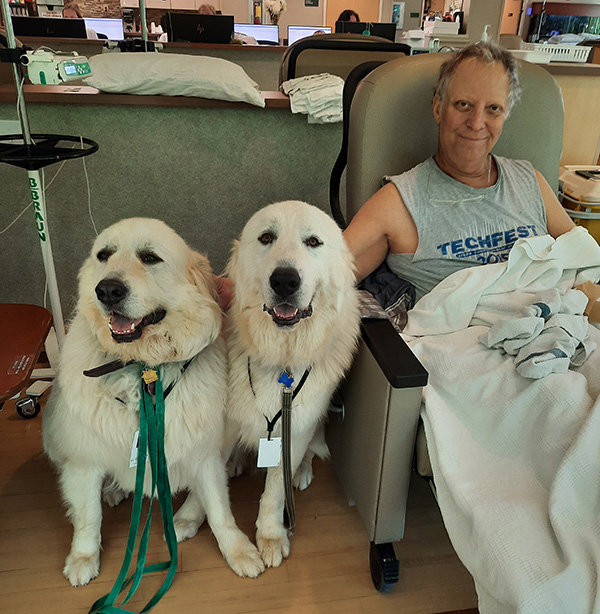
“My support group were the real heroes in this experience,” he said.
While others handled life’s daily tasks for him, such as sending meals, mowing the lawn, helping with chores and transportation to appointments, Michaels focused on fighting this disease.
These acts of kindness got him through his toughest days, allowing him to recover and channel his emotions into music, even writing a song to reflect on his cancer experience.
Strengthening our commitment to patients with cancer

Stories of support, like Michaels’, underscore why patients are our inspiration as we continue to pursue the fight against cancer. His journey is an important reminder to turn to a supportive network during trying times.
“The most rewarding part was the overwhelming love shown by my family, friends and strangers,” he said. “Trust in the care and fight when they tell you to fight.”