Living with pulmonary arterial hypertension
From struggling to breathe to advocating for others, one woman with pulmonary arterial hypertension (PAH) shares her story
October 7, 2026
Over a decade ago, Nola Martin started having trouble breathing and gaining weight. She assumed it was simple: She started to focus on improving her diet and getting more exercise, but she wasn’t seeing results.
“Little did I know the situation was a lot more serious than that,” she said.
Nola was diagnosed with pulmonary arterial hypertension, or PAH, and scleroderma.
PAH is a rare and life-threatening condition that progressively worsens. It’s a type of high blood pressure in the small arteries of the lungs. This condition occurs when these vessels thicken, narrowing the space for blood to flow and leading to increased pressure in the pulmonary circulation. As a result, the right side of the heart must work harder to pump blood through these arteries. Over time, the right side of the heart can become weakened and lose function.
Nola’s PAH is associated with scleroderma, a connective tissue disease that can affect the skin, blood vessels and organs. In some people, scleroderma can contribute to the development of PAH.
“I had two illnesses, and I had no idea what they were from. How did I get them? I was hearing all these terms I’d never heard of before.”
- Nola Martin
Person living with PAH
Finding the right care
Nola said that the confusion and complexity of having two chronic diseases made the beginning of her journey the most challenging. Through her experience with PAH, she said she learned that “you must find a facility that is familiar with your disease.” She recommends the Pulmonary Hypertension Association as a great place to start learning about PAH.
While she knows PAH is a progressive disease, she chooses to stay positive.
“What I learned about advocating for myself with PAH is that no one is going to fight as hard for me as I will,” Nola said. “I know my body. I know when something is different, but I also know that my doctors are not mind readers. If I don’t share with them what is going on, including the smallest details, they can’t give me the proper treatment I need.”
Staying hopeful through connection
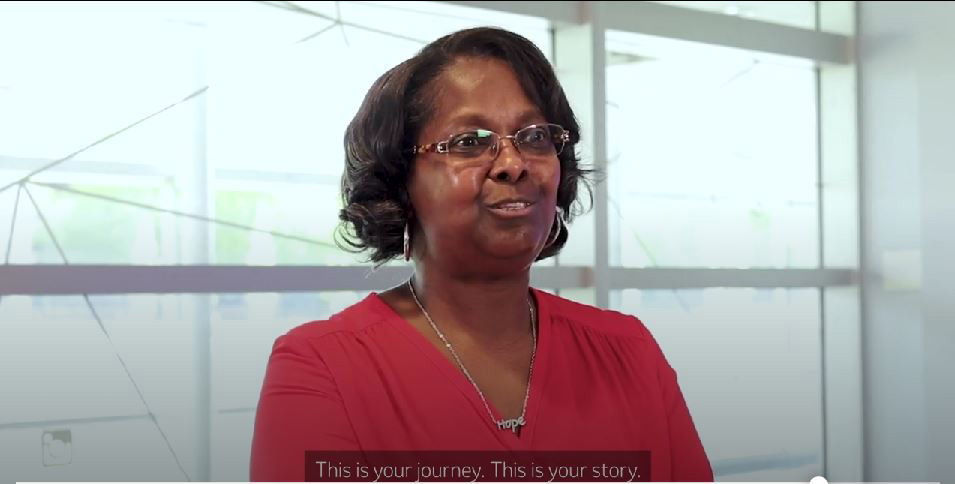
For Nola, connecting with other people living with PAH and educating others about the disease are important parts of her journey.
Since her diagnosis, she’s educated numerous people about PAH and scleroderma. She believes in the importance of raising awareness and telling her story. She serves as a co-leader of a monthly PAH support group, continuing to build community for others navigating the disease. It’s sometimes hard for her to explain to people that even if she doesn’t appear sick, she may still be dealing with difficult symptoms.
“PAH has affected so much of my daily life — simple things like vacuuming, doing the laundry, taking a shower and going to the grocery store,” Nola said. “I encourage others to be understanding and avoid making assumptions about a person with PAH based on their outward appearance.”
Living with PAH has also shaped how she sets boundaries and paces herself each day. Over time, she has learned to listen to her body and adjust her plans accordingly.
“I had to adjust my expectations because when you have this disease, it feels like your independence is being taken away from you. I’ve learned that living with PAH requires taking things one day at a time, and there are ways to celebrate the small things,” Nola said.