Innovation

5 historical designations highlight groundbreaking scientific achievements

The American Chemical Society Landmark program recognizes important contributions to modern life through chemical sciences

November 19, 2025

Share this article

Facebook icon

.st0{fill:#00857C;} X icon

Linkedin icon

Email icon

Employees Packaging Penicillin

Scientific achievements can significantly alter the course of history — for individuals, families and communities as well as for future scientific developments. We’re proud to have been recognized for our own contributions to science by the American Chemical Society (ACS), which has granted Merck five National Historic Chemical Landmarks (NHCL) designations since 1999.

This ACS program recognizes seminal achievements in the history of the chemical sciences and provides a record of the contributions to chemistry and society in the U.S. Our headquarters in Rahway, New Jersey, has been recognized four times. Our West Point, Pennsylvania, site has been recognized twice for our important work there.

Learn more about these groundbreaking landmark achievements:

01.

A landmark event in cardiovascular medicine

Cardiovascular disease is the leading cause of death in the U.S. and worldwide, driven largely by atherosclerosis, the build-up of cholesterol-rich plaques both in and on the arteries. Beginning in the late 20th century, a new class of medicines transformed prevention and treatment by helping to lower low-density lipoprotein (LDL) cholesterol.

As scientists in the 1950s and 60s learned more about the body’s ability to synthesize cholesterol, it became apparent that a potential key to help address high LDL cholesterol was to interrupt the body’s ability to synthesize cholesterol. Building on that idea, a team of biochemists at Merck isolated a compound from fungal cultures that reduced plasma LDL cholesterol.

It was approved by the U.S. FDA in 1987 as the first commercially available statin. Subsequent research produced a series of semisynthetic and fully synthetic follow-on medicines, including a close analogue introduced by Merck in 1991 that offered improved potency.

ACS honored the discovery of this treatment that helped reduce the risk of cardiovascular events with the NHCL designation in 2025 at our sites in Rahway, New Jersey and West Point, Pennsylvania.

Learn more about our work in cardiovascular disease.

Julie Chen and Al Alberts

02.

Discovery and development of medicines for the treatment of HIV

In the early 1980s, as AIDS began to be perceived as a potential epidemic, scientists at Merck embarked on an urgent mission to understand the virus. They were among the first to discover and develop medicines for the treatment of HIV. Our company’s work in this space ultimately led to the development of a treatment that was important in helping to make HIV a survivable infection.

ACS honored the discovery of this life-saving treatment with the NHCL designation in 2022 at our site in West Point, Pennsylvania.

Learn more about our commitment to HIV treatments and prevention through the years.

Members of the HIV protease research team

03.

Development of a treatment against a debilitating infectious disease transmitted by parasites

Transmitted through the bite of black flies — which live and breed near fast-flowing streams and rivers — river blindness (onchocerciasis) is one of the leading causes of preventable blindness worldwide. In 1978, Dr. William Campbell of Merck Research Laboratories suggested the use of Mectizan (ivermectin) against river blindness in humans. In the early 1980s, Dr. Mohammed Aziz collaborated with WHO to successfully design and implement field studies in West Africa on the disease. 

In 1987, Merck CEO Dr. Roy Vagelos announced our company’s commitment to donate Mectizan to treat river blindness — as much as needed, for as long as needed — and the Mectizan Donation Program was formed. Through the MDP, the work of Dr. Campbell and other Merck scientists continues to touch more than 300 million lives each year. In 2015, Dr. Campbell shared the Nobel Prize in Physiology or Medicine for his role in developing ivermectin.

ACS honored the discovery of ivermectin with the NHCL designation in 2016 at our site in Rahway, New Jersey.

Learn more about 35 Years: The Mectizan® Donation Program.

young boy leading older blind man with a stick

04.

Addressing vitamin deficiencies through the synthesis and mass production of vitamin B

In the 1930s and 1940s, Merck scientists reported a series of advances in the study of the vitamin B complex, a group of nutrients that is essential to cell functioning. Availability of these vitamins resulted in dietary supplements and vitamin-enriched foods that encouraged healthy growth and development, as well as treatments for diseases caused by nutritional deficiencies.

These achievements were outstanding examples of the rapid advances occurring in the fields of biochemistry and organic chemistry during this era and led to notable improvements in human and animal health and nutrition.

ACS honored our research on the vitamin B complex with the NHCL designation in 2016 at our site in Rahway, New Jersey.

Historic photo of vitamin production at Merck's Rahway, NJ site

05.

Producing large-scale quantities of penicillin, a much-needed antibiotic during WWII

Alexander Fleming discovered penicillin in 1928, but it was very difficult to produce in large quantities. With the outbreak of World War II, the need for life-saving penicillin skyrocketed, and the mass production problem had to be solved quickly. At the request of the U.S. government, Merck and other pharmaceutical companies expanded research in the hopes of producing adequate supplies of this vital antibiotic. In cooperation with competitors, our research team helped develop a submerged fermentation process that sped production of penicillin for both the war effort and civilian use.

ACS honored the discovery of this life-saving treatment with the NHCL designation in 1999 at our site in Rahway, New Jersey.

Our history

For over 130 years, we’ve been guided by the view that great medicines and vaccines change the world.

“We try never to forget that medicine is for the people. It is not for the profits.”

  • George Merck

Explore our history
George Merck
Patients

This red chair is a reminder that patients can’t wait

Colleagues rally around a red chair as a reminder to work urgently for the people who need lifesaving medicines and vaccines

November 14, 2025

Share this article

Facebook icon

.st0{fill:#00857C;} X icon

Linkedin icon

Email icon

When his close colleague’s father passed away in 2021, it was a stark reminder to Prashant Nikam: Patients can’t wait for lifesaving medicines and vaccines. Spurred by this loss, Nikam and his colleagues in Australia and New Zealand created a visual reminder of the people we’re working for: They put a red chair in their meeting room and asked, “What if the patient was sitting right here with us?” 

“Every day, someone’s relying on us. We need to make sure we’re doing everything possible so they can have access to our products in a timely manner.”

  • Prashant Nikam
    Managing director, Japan

“When we see that red chair in our workspace, when we envision that patient being in the room listening to us, we make decisions that are truly focused on doing what’s best for them,” said Nikam, now managing director, Japan.

The red chair: an urgent reminder to elevate the patient voice 

What started as a simple but powerful concept in Australia and New Zealand has now grown into a rallying cry at our sites around the world, due in part to support from Linda Kollmar, AVP of our patient innovation and engagement team. 

“People are urgently waiting for us to get our drugs and vaccines approved where they live, for access, for a prescription,” said Kollmar. “So, it’s more than just a red chair; it’s a mindset. And it transforms the way we work to ensure we’re keeping patients front and center.”  

The initiative now spans more than 40 of our global locations, where colleagues across the company have placed a chair representing the patient in boardrooms, conference rooms, labs, cafeterias and other workspaces.  

“When I’m thinking about a decision I’m making or work I’m doing, I think, ‘What if the patient was sitting right next to me? What would they be thinking and how would they want me to work with urgency for them?’”

  • Linda Kollmar
    AVP, patient innovation and engagement
Red chair in a spotlight

It’s an initiative that complements the work of her team, which engages with patients, patient advocates and communities to learn more about their perspectives, challenges and needs. The team brings that patient voice into the work we do — from discovery and clinical development to manufacturing and beyond. The chair is an additional, physical reminder to always think of the patient. 

A growing grassroots effort inspires new ways to put patients first 

Collage of red chairs in different locations including lab, conference room, lobby etc.

“As we started spreading the word about the red chair and hearing success stories from different teams, we realized that this is really a movement at a grassroots level that people can embrace to inspire them to put patients first,” Nikam said.

One of those first success stories came from the market access team in Australia, who wanted to help speed up the long approval process for a new medicine.

“Envisioning the patient in the room with them, the team brainstormed ways to highlight the urgency of the situation. They decided that in addition to bringing the safety, efficacy and economic data into their health technology assessment submissions, they would also bring the patient voice to the health authorities,” said Nikam. “So, they collected patient commentaries — inspiring and emotional stories of what it means to be a patient and without timely access to innovative medicines — and included these with our new submissions. These patient stories were overwhelmingly powerful firsthand accounts that authorities couldn’t ignore.”

A history and a future of putting patients first

This longstanding commitment to patients can be traced back to our company’s beginnings more than 130 years ago. In 1950, then-president George W. Merck said, “We try never to forget that medicine is for the people. It is not for the profits.”

That ethos continues to inspire us today. The red chair is one way we maintain our focus, but it’s a sentiment that’s important for all who serve patients to embrace.

“It’s not just for us. It’s bigger than us,” said Kollmar. “I would love to see more red chairs representing patients all over the globe. That would be incredible.”

Sustainability

We’re helping build a brighter future for maternal health in America

Our Merck for Mothers initiative is partnering to drive change across the country for women who are pregnant through postpartum

November 6, 2025

Share this article

Facebook icon

.st0{fill:#00857C;} X icon

Linkedin icon

Email icon

collage of women with babies

Maternal health is a vital sign of a society’s well-being — one that reflects the strength of our health systems, equity in access and the dignity afforded to every woman in her care journey. Yet with the highest maternal mortality rate among high-income nations and more than 80% of these deaths deemed preventable, the U.S. lags significantly behind.

Prenatal care
1 in 6

Infants in the U.S. were born to mothers receiving inadequate prenatal care in 2023

Postpartum depression
1 in 8

Women in the U.S. with a recent live birth reported symptoms of postpartum depression in 2018

Pregnancy-related deaths
669

Women died of maternal causes in the U.S. in 2023

Too many women face obstacles at each stage of the pregnancy journey — but hope is on the horizon

“Local and community-led initiatives are emerging as powerful catalysts for creating a healthier future for all,” said Kalahn Taylor-Clark, Ph.D., MPH, Merck’s VP and head of Social Impact and Sustainability.

Taylor-Clark and other leaders at Merck for Mothers, our company’s global initiative to help create a world where no woman has to die while giving life, recently weighed in on “the essential work that remains to drive transformative improvements in maternal health,” in a series for Health Affairs. Below, find key points from each stage of the pregnancy journey — and learn how their approach to partner with community organizations is making a difference.

Pregnancy: Laying the foundation for healthier outcomes

Access to quality prenatal care from the start is crucial. Without early and regular visits, women face higher complication risks, and their babies are more susceptible to low birth weight and increased infant mortality.  Merck for Mothers, which has reached more than 34 million women worldwide through programs promoting safe, high-quality, respectful care, created the Safer Childbirth Cities initiative to address this. The initiative helps 20 city-based coalitions across the U.S. implement strategies to support pregnant people.

For example, in New Jersey, where our company is headquartered, the Trenton Health Team  provides safe transportation to clinics so women can access crucial prenatal care. In San Francisco, SisterWeb doulas are empowering mothers to advocate for themselves and access necessary care. These initiatives are part of a growing national movement setting a precedent for broader, transformative change.

Safe delivery: Vital solutions for improving maternal health

More than half of pregnancy-related maternal deaths occur after delivery, often because of latent co-morbidities like hypertension and diabetes.

A significant challenge is lack of awareness about postpartum risks and warning signs. To combat this, the Association of Women’s Health, Obstetric and Neonatal Nurses, supported by Merck for Mothers, has launched the Post-Birth Warning Signs education program, equipping health care providers, parents and families with crucial knowledge about post-delivery complications, empowering them to act swiftly.

Simultaneously, efforts like the Hear Her campaign are amplifying women’s voices, raising awareness about the importance of speaking up.

Postpartum: Navigating challenges with comprehensive support

The postpartum period, especially in the first 12 weeks — also coined the “fourth trimester” — is a time of not only physical recovery but also substantial emotional and social adjustment. The needs of mothers during this period are often overlooked, with limited access to mental health resources exacerbating the problem.

Efforts are being made to strengthen screening for perinatal mood disorders. For instance, the University of Massachusetts Chan Medical School, in part through support from Merck for Mothers, developed The Lifeline for Moms Perinatal Mental Health Tool Kit, a comprehensive resource with actionable information, algorithms and clinical insights to help obstetric providers effectively address perinatal mental health conditions.

Economic factors can further intensify postpartum challenges. With support from Merck for Mothers, Baby2Baby is expanding its maternal health and newborn supply kit program, providing essential items like diapers and breastfeeding supplies. By easing financial burdens, the organization helps enable mothers to focus on their health and their baby’s well-being.

The path forward

Transforming maternal health requires more than medical intervention — it requires a cultural and systemic shift toward wraparound, person-centered care at every stage, plus collective action.

“Working together, we can create a system that truly values and helps protect the health of all mothers. It’s essential to focus not only on supporting health care providers but also on supporting friends, family, and the broader community—the entire village of care surrounding pregnant women.”

  • Jacquelyn Caglia
    Head of Merck for Mothers

Learn more about Merck for Mothers.

Health awareness

Understanding the health risks of high LDL cholesterol

Our scientists are investigating a potential new approach to reduce low-density lipoprotein (LDL) cholesterol in order to help lower the risk of heart attacks and strokes

October 30, 2025

Share this article

Facebook icon

.st0{fill:#00857C;} X icon

Linkedin icon

Email icon

What does high cholesterol mean?

Cholesterol is obtained from food and produced by the liver. It carries out several important functions in our body, including the synthesis of new cells, some hormones and substances that help digest food. There are two kinds of cholesterol: high-density lipids (HDL) and low-density lipids (LDL). Too much LDL cholesterol can pose a problem.

LDL-C, also known as “bad cholesterol,” is known to combine with fats and other substances leading to the buildup over time of fatty deposits, known as atherosclerotic plaques, on and within the inner walls of arteries. This may increase an individual’s risk of heart attack or stroke. People with elevated LDL-C levels in their blood have a condition called hypercholesterolemia.

Certain health conditions like type 2 diabetes and obesity, as well as behavior and lifestyle factors like smoking, eating a diet high in saturated and trans fats and lack of exercise, have been shown to increase a person’s risk for hypercholesterolemia. Other factors that increase risk include a family history of cardiovascular disease, older age and gender (women tend to have lower LDL levels than men until ~55 years of age or until menopause).

SEE ONE PATIENT’S JOURNEY: A call to action: Lowering LDL cholesterol

Hypercholesterolemia: a major causal risk factor for cardiovascular disease

Hypercholesterolemia is a leading contributor to atherosclerotic cardiovascular disease (ASCVD), a condition caused by the buildup of plaque within arteries, leading to narrowed or blocked blood vessels. This may result in cardiovascular events such as heart attack or stroke and continues to pose a significant health burden.

The CV epidemic

~24.1%

Adults live with hypercholesterolemia; ~86M adults in the U.S. are affected

~500M

People worldwide are affected by cardiovascular disease

~20.5M

Deaths from cardiovascular disease in 2021; ~900K deaths in the U.S. in 2023

Despite widespread availability of therapeutic interventions, 70% of the patients treated with lipid-lowering therapies are not achieving guideline recommended reductions in LDL cholesterol and, as a result, remain at risk for serious cardiovascular events.

“Millions of people are impacted by hypercholesterolemia and struggle to meet their recommended LDL cholesterol level,” said Dr. Puja Banka, associate vice president, clinical research and global clinical development.

Photo of Puja Banka

“Cardiovascular disease is a serious global public health threat, and we’re investigating an established biological mechanism coupled with the potential of an innovative modality to help support patients who continue to have high LDL cholesterol levels.”

  • Dr. Puja Banka

Our PCSK9 research

Over two decades ago, researchers identified the connection between proprotein convertase subtilisin/kexin type 9 (PCSK9) and cholesterol when a genetic mutation in the PCSK9 gene was observed in a family with familial hypercholesterolemia. PCSK9 plays a role in controlling the level of LDL-C in the blood by regulating the number of LDL receptors on the surface of cells, which are responsible for the binding and removing of cholesterol from the blood stream.

Today, Merck scientists are building on these findings to research different ways to target PCSK9 as a potential approach to help reduce LDL-C levels in the blood.

“For nearly 70 years, our company has been developing medicines to help address the burden of cardiovascular disease,” said Banka. “And we’re combining our deep expertise in cardiovascular disease and our strong medicinal chemistry capabilities to help advance PCSK9 research.”

Learn more about our commitment to cardiovascular health.

Innovation

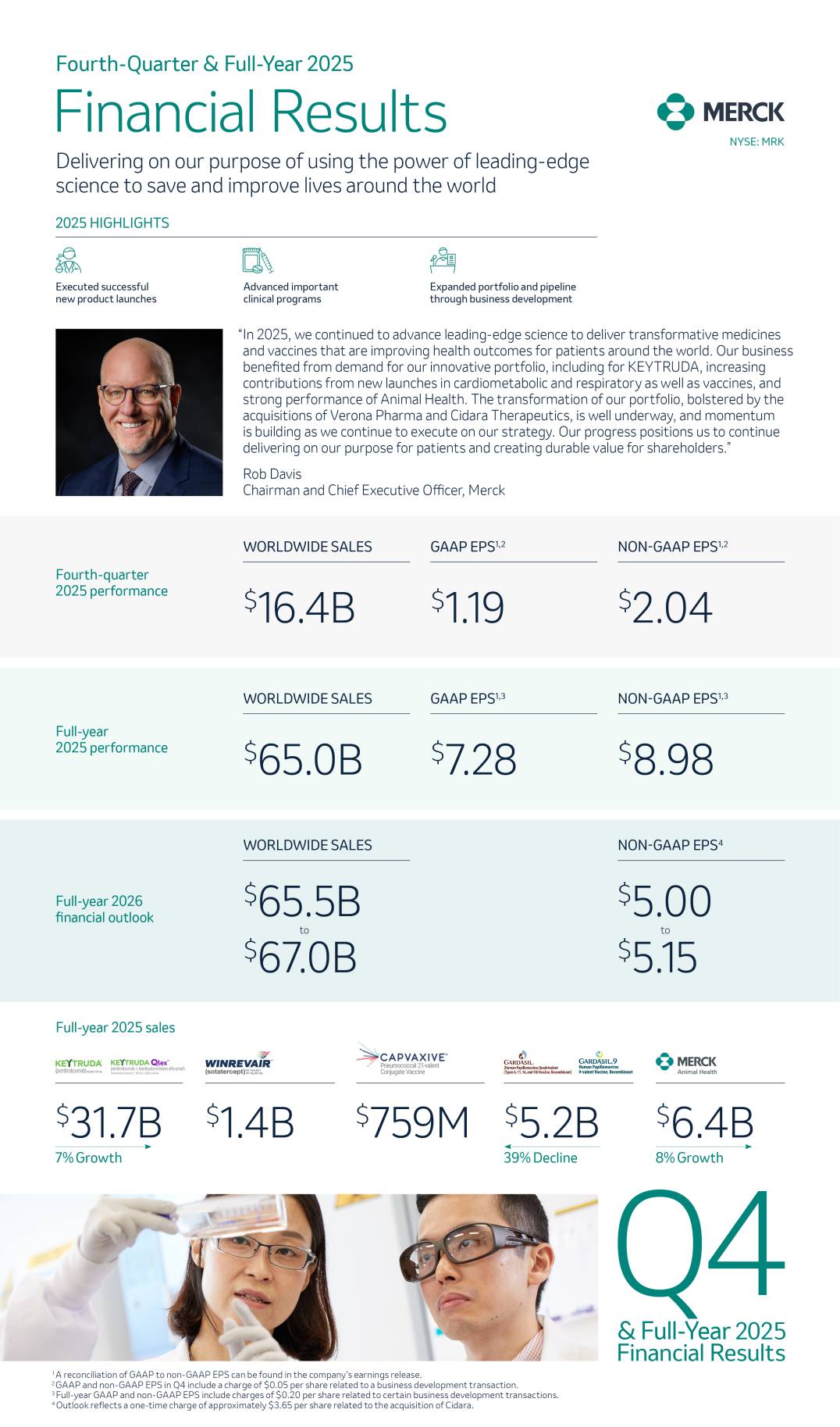
Our Q3 2025 financial results

October 30, 2025

Share this article

Facebook icon

.st0{fill:#00857C;} X icon

Linkedin icon

Email icon

two scientists wearing lab coats working in a lab

Merck’s (NYSE: MRK) Q3 2025 sales performance reflects strength across oncology and animal health, as well as increasing contributions from new launches. Our company announced Q3 worldwide sales of $17.3 billion.​​

“In the third quarter, we continued to execute on our strategy with important pipeline advancements, significant approvals and successful new product launches,” said Rob Davis, chairman and CEO. “We’re delivering value to patients and customers through our innovative portfolio of medicines and vaccines, and we’re securing our future by making important investments in our pipeline — including through compelling, strategic business development like our completed acquisition of Verona Pharma and expanded U.S. manufacturing and R&D spending. With each milestone we achieve, my conviction that we’re well-positioned to drive the next chapter of success for our company increases.”​​

Merck anticipates full-year 2025 worldwide sales to be between $64.5 billion and $65.0 billion.​​

Take a look at the infographic below for more details on Q3 2025 results.

primary article image

Download infographic

Patients

More treatment options mean more flexibility for people with cancer

Additional treatment options can help patients make time for their health and their priorities

October 28, 2025

Share this article

Facebook icon

.st0{fill:#00857C;} X icon

Linkedin icon

Email icon

younger woman in the kitchen with her arm around an older woman and a young man nearby smiling

Every person diagnosed with cancer is unique. That’s why it’s so important for patients to have more treatment options, including ones that for some patients could be given in different care settings that are closer to home. This may give them flexibility and potentially allows them to have more time to care for their health.

Understand cancer treatment options

Advances in cancer treatment are happening every day and therapeutic options are continuously expanding. The right cancer treatment for a given patient depends on many factors including the type of cancer they have, the stage of their cancer and their overall health. Some common options include:

  • Radiation therapy
  • Chemotherapy
  • Hormone therapy
  • Targeted therapy
  • Immunotherapy
  • Surgery

Each of these types of cancer treatment work in a unique way to help treat the disease. Certain treatments also can be delivered in different ways, including but not limited to:

  • Orally: Via a pill or something taken by mouth
  • Topically: Applied to the surface of the skin
  • Intravenously: Administered through a needle or tube inserted into a vein (also called an infusion, when the medication is delivered over a specified period of time)
  • Subcutaneous injection: Via a needle inserted directly into the fatty tissue layer between the skin and muscle — or right under your skin

As additional treatment options become available, patients and caregivers are more likely to be able to consider which treatment option works best for their condition, lifestyle and preferences.

Researchers are exploring how to make treatment more flexible

Traditionally, some therapies have been administered only in hospitals and infusion clinics, often requiring patients to travel for their care, which can be time-consuming and burdensome. Once patients arrive, there are multiple steps health care providers must take in preparing for and administering treatment and observing the patient afterwards. A treatment day can be long when you consider the time from when patients leave their homes to the time they return from treatment.

Recent research has led to options that may allow for treatment to be administered subcutaneously rather than intravenously, making it possible for patients to receive treatment in more health care settings such as a doctor’s office or a community-based care center. With more choices available, patients have options that may allow them to personalize their treatment approach based on their specific lifestyle needs, so they can focus on other things that matter to them. These options may also provide additional flexibility and time savings for health care providers and systems.

Dr. M. Catherine Pietanza

“Time is one of the most valuable resources we all have, and at Merck we believe in prioritizing health so we can embrace every moment.”

  • Dr. M. Catherine Pietanza
    Vice president of global clinical development, Merck

“Cancer is not a one-size-fits-all disease, so it’s important that health care providers are able to offer treatment options that allow patients more flexibility,” said Pietanza.

Make time for your health — and the other parts of your life, too

Roz Faulhaber, a school counselor who had colorectal cancer, discovered firsthand the challenges of finding enough hours in the day to make time for everything following a cancer diagnosis.

“Receiving cancer treatment while trying to maintain a sense of normalcy in my life has been very challenging at times. I commute several hours to my treatment center and once I get there, the treatment itself can take hours. I want to spend more of my day with my grandchildren or relaxing at our beach home,” said Faulhaber.

Roz Faulhaber

“Discussing my treatment options with my doctor has been crucial — they’ve helped me select a care plan that best meets my needs, and we continue to discuss options that could give me time back in my day and flexibility.”

  • Roz Faulhaber

Patients should talk to their health care provider about treatment options, including methods of administration and dosing schedules, that fit their needs and may provide them with more flexibility.

Learn about our oncology research.

Health awareness

A call to action: Lowering LDL cholesterol

See how a grandfather's heart attack sparked a journey toward lowering his LDL cholesterol level

October 28, 2025

Share this article

Facebook icon

.st0{fill:#00857C;} X icon

Linkedin icon

Email icon

“Life is short. It can change any second,” John Bald said he realized when his ski trip ended in the hospital.

While on the slopes several years ago, Bald, a father of three and grandfather of three, started to feel chest pain. What he thought was heartburn kept getting worse with each run.

“When I finally got to the hospital, I ran to the emergency window, and by the time I got to the window, I almost collapsed,” Bald said.

His doctors discovered he was having a heart attack. They found a 95% blockage of his right coronary artery, a common sign of atherosclerotic cardiovascular disease (ASCVD), and he later learned he had high levels of LDL cholesterol, also known as bad cholesterol.

The blockage was cleared, and Bald received a stent in his heart to keep his artery open and improve blood flow to the rest of his body. As someone who had been active and relatively healthy, he was surprised by his diagnosis.

What is atherosclerotic cardiovascular disease (ASCVD)?

ASCVD is a condition caused by the buildup of plaque (bad cholesterol, fats and other substances) within the arteries, leading to narrowed or blocked blood vessels that can result in serious cardiovascular events such as heart attacks or strokes. ASCVD includes diseases that can narrow or block arteries in your heart, legs, and/or brain.

The risks of high cholesterol

Bald learned his high LDL cholesterol put him at an increased risk of a future heart attack or stroke.

A high level of low-density lipoprotein cholesterol (LDL-C) is one of several risk factors that can contribute to the development of ASCVD. Plaques can silently build up in arteries over time, which may increase the risk of a heart attack or stroke.

John Bald in a swimming pool and holding hands with small grandchild

Bald and his doctor came up with a treatment plan to manage his cholesterol. These conversations with his doctor, in addition to medication and lifestyle changes, helped Bald lower his risk of future cardiovascular events. It also prompted his adult family members to understand their own cardiovascular risk.

Today, Bald savors every minute splashing in the pool with his three grandchildren.

Watch above to learn more about John Bald’s journey to lowering his LDL cholesterol.

Innovation

The new manufacturing facilities powering our US growth

It's been a groundbreaking year at new and augmented facilities focusing on biologics, vaccines, animal health and more

October 24, 2025

Share this article

Facebook icon

.st0{fill:#00857C;} X icon

Linkedin icon

Email icon

6 people wearing hardhats and holding shovels

We’re breaking ground and cutting ribbons across the country as part of our ongoing manufacturing expansion in the U.S.   

2025 marked a year of significant growth for our U.S. manufacturing footprint, with multiple projects that expand capacity in pharmaceuticals, vaccines, biologics and animal health. 

With new manufacturing investments across Delaware, Kansas and Virginia, the expansions announced this year are part of a more than $70 billion investment, excluding any future business development investments in R&D, to augment our domestic manufacturing and research and development over the next several years.  

“These milestones underscore our longstanding commitment to American manufacturing and, most importantly, our goal of providing new, innovative treatment options for people facing serious health challenges in the U.S. and around the world,” said Rob Davis, chairman and CEO.

Here’s where we’re growing:  

Center of Excellence for Pharmaceutical Manufacturing — Elkton, Virginia 
Start of construction: October 2025

Our company has a long history in Elkton, where we’ve been manufacturing since 1941. In October, we broke ground on a $3 billion, 400,000-square-foot manufacturing facility that will include both active pharmaceutical ingredient and drug product investment supporting small molecule manufacturing and testing, with the potential to create more than 500 full-time roles as well as 8,000 construction jobs. 

“For almost 85 years, our Elkton site has been a beacon of innovation in our proud legacy of delivering leading-edge science for patients,” said Sanat Chattopadhyay, executive vice president and president, Merck Manufacturing Division. “We’re proud to be part of the Elkton community, where generations have contributed to our important work with determination, accountability, teamwork and grit.” 


Animal Health manufacturing facility — De Soto, Kansas
Start of construction: May 2025

In May, we announced an $895 million capital expansion at our Animal Health biologics facility in De Soto. It includes an $860 million investment in the site’s existing manufacturing facility and a further $35 million investment in its research and development laboratories.  

The 200,000-square-foot manufacturing facility project will expand filling and freeze dryer capacity for large molecule vaccines and biologic products.  

“Our De Soto manufacturing facility is strategically located in the heart of the Animal Health Corridor, an unparalleled ecosystem for innovation, collaboration and industry leadership,” said Richard DeLuca, president, Merck Animal Health. “This investment in our site is designed to increase our ability to meet growing customer demand and ensure our company remains at the forefront of innovation in the animal health sector.” 

The expansion is anticipated to create 2,500 construction jobs and more than 200 full-time commercial manufacturing roles. 


Merck Wilmington Biotech — Wilmington, Delaware
Start of construction: April 2025

Our $1 billion, 470,000-square-foot facility in Wilmington will comprise laboratory, manufacturing and warehouse capabilities to enable the launch and commercial production of next-generation biologics and therapies including potent antibody-drug conjugates.  

Located at Chestnut Run Innovation & Science Park (CRISP), the facility will help foster growth in Wilmington’s biotechnology sector and is expected to create more than 500 full-time roles and roughly 4,000 construction jobs. “As a hub for life science, research and development, and pharmaceutical manufacturing, CRISP offers unparalleled opportunities for future expansion,” said Chattopadhyay. 

The laboratory component is expected to be fully operational by 2028, with production of investigational compounds anticipated to start by 2030. 

Our commitment to American manufacturing, R&D and economic growth

Since the enactment of the 2017 tax reform law, we’ve accelerated our commitment to U.S. innovation and manufacturing. Notably, we’ve invested over $12 billion in U.S. manufacturing since 2017 and more than $81 billion in U.S.-based R&D since 2018, supporting tens of thousands of American jobs.

Innovation

Understanding vision-threatening retinal conditions: Diabetic macular edema and wet AMD

Our scientists are researching new ways to address vision-threatening retinal conditions like diabetic macular edema and wet age-related macular degeneration (wet AMD)

October 9, 2025

Share this article

Facebook icon

.st0{fill:#00857C;} X icon

Linkedin icon

Email icon

Close-up of two eyes side by side, showing contrast in skin tone and eye color between two individuals.

Retinal conditions such as diabetic macular edema (DME) and neovascular (wet) age-related macular degeneration (AMD) threaten the eyesight of millions worldwide. While anti-VEGF treatments have helped to improve outcomes, a significant number of patients – up to 40% – fail to respond or only partially respond.

“A diagnosis of diabetic macular edema or wet age-related macular degeneration can profoundly affect a patient’s quality of life,” said Dr. David Guyer, founder, chief executive officer and president at EyeBio, a wholly-owned subsidiary of Merck & Co., Inc., Rahway, N.J., USA, “The fear of progressive vision loss looms large, and beyond the physical challenges, many patients carry the emotional burden of worrying about their declining eyesight.”

To find alternatives for these patients, our scientists are investigating novel therapeutic targets for certain retinal conditions.

Our research exploring the Wnt signaling pathway

Our eyes have a blood-retinal barrier that protects our delicate retinal tissue. When the barrier is compromised, fluid can leak into the macula – the central part of the retina responsible for sharp, detailed vision – and other areas of the eye, causing swelling that can lead to vision loss for people living with DME and wet AMD.

Research suggests that changes in the Wnt (pronounced “wint”) pathway are associated with the breakdown of this blood-retinal barrier in DME and wet AMD. Merck and EyeBio scientists are exploring the Wnt pathway as a potential approach to help improve the integrity of the blood-retinal barrier.

“We hear from retinal physicians about the demand for novel approaches to treat serious retinal conditions like diabetic macular edema and wet AMD.”

  • Dr. Tony Adamis
    Chief scientific officer, EyeBio, a wholly-owned subsidiary of Merck & Co., Inc., Rahway, N.J.
Illustration of healthy eye
illustration of an eye with  DME
illustration of an eye with retinal disease AMD

NOTE: These images are diagrammatic representations of the eye for illustrative purposes only.

What is diabetic macular edema (DME)?

Diabetic macular edema (DME) is serious eye condition that poses a risk to vision in people with diabetes:

  • An estimated 1.6 million people are living with DME in the U.S.
  • DME is caused by excess fluid buildup in the retina and characterized by swelling and thickening of the macula due to fluid leakage from damaged blood vessels.
  • DME may be present in patients who are not experiencing visual symptoms, at times delaying a definitive diagnosis.

What is wet age macular degeneration (wet AMD)?

Wet AMD is the most frequent cause of vision loss in older adults, caused by the growth of abnormal blood vessels under the retina.

  • In the U.S., it’s estimated that nearly 1.5 million people are living with late-stage AMD, including wet AMD.
  • Current therapies are limited to slowing or reducing AMD-associated vision loss.

Through research, our scientists hope to improve vascular stability and reduce fluid leakage. We are working to potentially redefine the treatment of certain retinal conditions to help patients worldwide.

Learn more about our research and commitment to ophthalmic health.

Health awareness

HIV community advocates spark a global conversation

Meet three HIV advocates who are using their stories to uplift, spark change, and create spaces of healing and hope across continents

October 7, 2025

Share this article

Facebook icon

.st0{fill:#00857C;} X icon

Linkedin icon

Email icon

Around the world, HIV advocates are working tirelessly to confront stigma, alleviate loneliness and empower people living with HIV through education, community building and storytelling.

Isaac Ogunkola, Erika Castellanos and Nesrine Rizk exemplify how compassionate advocacy can transform lives. Their work reminds us that even the smallest action — whether it’s sharing a story, offering support or educating just one person — can spark meaningful change.

Above, watch them reflect on their work and read on to learn more about each advocate.

Isaac Ogunkola: Empowering the next generation of HIV advocates

Isaac Ogunkola didn’t set out to be a voice for the HIV community. When he began working with young refugees and local children in Nigeria, the goal was to teach reading and writing. After learning some of them were living with HIV, he reflected on the experience of watching family members die from preventable diseases and decided he would pursue public health.

Ogunkola’s organization connects youth to clinics for testing and treatment of HIV, preventive education and harm reduction services. “People living with HIV face many challenges, and my work is about connecting them to medical services and fostering environments where they can live safely and with dignity,” Ogunkola said.

His biggest impact has been through the development of a peer education program for refugee settlements in West Africa. By training 35 young refugees as educators and advocates, they’ve been able to reach 2,000 other refugees with testing and prevention services. These peer advocates help combat stigma by creating a safe space to discuss topics related to HIV transmission, like sex and drug use, that are often stigmatized.

“The peer educators can continue the training while I’m no longer in the settlements. Seeing that the project is self-sustaining, that is success for me.”

  • Isaac Ogunkola

Although Ogunkola’s advocacy journey has expanded beyond the grassroots level to working with governments and policymakers, he’s still passionate about the power of individuals to make a difference, especially young people.

“We can tap into the strength of young people,” he said. “We can push young people to be stakeholders in the implementation of these projects right from the beginning and throughout the life of the projects.”

Erika Castellanos: The joyful warrior

Erika Castellanos first encountered the devastation of the HIV epidemic while volunteering at a hospice in Mexico in the early 1990s. As a transgender woman from a small town in Belize, Castellanos understood what it felt like to be stigmatized by her community. So, when she noticed hospice patients with HIV who had been abandoned by their relatives, she stepped in to hold their hands and read them books, making sure they knew they weren’t alone.

In 1995, Castellanos contracted HIV and was told she’d have just six months to live. She’s grateful to have survived that moment, and it was an unexpected encounter with another woman living with HIV at that time that inspired Castellanos to become an advocate herself. This other woman was always cheerful and good-humored about her condition despite her difficult prognosis, which puzzled Castellanos — until she decided to try and do the same. She realized that by embracing her own diagnosis and speaking openly about living with HIV, she could empower others. 

“It felt good to be able to laugh again, even about the things we were struggling with. If I want to do anything in life, I want to make someone else smile.”

  • Erika Castellanos

Over the past three decades, Castellanos has advocated for a better quality of life for people living with HIV and the LGBTQ+ community worldwide. She now lives in the Netherlands with her husband and two children, where she runs an organization that advances equality for the transgender and gender diverse communities.  

Even as the challenges facing these communities have changed, the most important part of her advocacy work has always been sharing positivity with others. 

“Living with HIV is not just about managing the virus, but also about managing the judgment and prejudice that comes with it,” she said. 

Castellanos emphasizes the importance of sharing stories to combat loneliness and stigma. “Don’t be shy,” she urges. “Speak out. Share your stories. Someone else will hear your message and no longer feel alone.”

Nesrine Rizk: Bridging medicine and social science in HIV care 

Dr. Nesrine Rizk believes medicine is not just a science, but also a social discipline, especially when treating people with infectious diseases like HIV.

“Because of its history and transmission route, HIV is deeply intertwined with cultural norms, stigma and how people live and interact,” said Rizk, who practices in Lebanon.

Rizk advocates for comprehensive education of health care providers and the public, policy reform and community engagement to dismantle stigma.

“Stigma will impact the ability of a person to access prevention methods, stigma will impact an individual’s access to HIV health care, and stigma will affect treatment and adherence to therapy,” she said. “Stigma creates barriers to accessing prevention, care and treatment, and can lead to late diagnosis and increased mortality. It impacts their quality of life profoundly.”

In Rizk’s region, access to condoms can be limited, at-home testing is often unavailable and patients sometimes feel compelled to hide their medication from loved ones. These additional barriers to care have, in part, contributed to the region’s steep rise in new infections.

Rizk believes physicians should normalize discussions about sexual health and HIV in primary care settings, just as providers would address cholesterol or blood pressure.

“The bond between providers and people living with HIV is unique,” she said. “Being present to support patients throughout their life journey is essential.”

  • Nesrine Rizk

These stories are a powerful reminder that HIV advocacy is not just about HIV — it’s about humanity. Through empathy, courage and connection, individuals like Ogunkola, Castellanos and Rizk show us that change often begins with one person making the effort to care. Whether by listening, sharing or simply standing beside someone on their journey, we all have the power to make a difference.