Health awareness

Supporting colleagues working with cancer

There are so many unknowns after a cancer diagnosis — whether or not you receive support at work shouldn’t be one of them

April 17, 2025

Share this article

Facebook icon

.st0{fill:#00857C;} X icon

Linkedin icon

Email icon

Chet Kitchen had no idea how his battle with cancer would affect his work. Our colleague of 25 years and director of global regulatory policy wasn’t used to missing big meetings and presentations for hospital visits and oncology appointments.

“It’s a constant balance between trying to focus on work and trying to focus on your health,” said Kitchen. “That’s where having a good company to support you and colleagues who appreciate you and look out for you can make the difference.”

Kitchen is a head and neck cancer survivor. After following his doctor’s treatment plan for stage 4 squamous cell carcinoma of the tonsil, he was told there was no evidence of disease. But a year later, the cancer returned, and he was put on a new treatment plan.

Head and neck cancer can begin in or around the throat, voice box, sinuses, mouth and salivary glands. More than 90% of head and neck cases are squamous cell carcinoma, which is cancer that starts in the cells that line the mucosal surfaces of the head and neck. Symptoms may include a lump in the neck or sore in the mouth or throat that does not heal or may be painful, a sore throat that does not go away, difficulty swallowing, and a change or hoarseness in the voice. 

Impact of cancer on careers

“One of the most important things a company can do to support a colleague living with cancer is to listen and understand their needs,” Kitchen said.

“To have the opportunity to take time off was so important,” he said. “My company gave me the flexibility to take care of my emotional needs by allowing me to focus on my health when I needed to, but also to focus on work when I didn’t want to think about cancer.”

Ongoing employment and return to work may help promote a sense of normalcy and control for cancer patients.

“Being diagnosed with cancer may hurt your career or make it more challenging,” Kitchen said.

“But working for our company really invigorated me. I can really appreciate the work that we do and how it impacts patients.”

— Chet Kitchen

Why we support the Working with Cancer pledge

At Merck, we’re dedicated to supporting people living and working with cancer around the world. We’re proud to be an accredited CEO Cancer Gold Standard employer and a founding member of the Working with Cancer pledge to help provide a more open, supportive and recovery-forward culture at work for cancer patients like Kitchen.
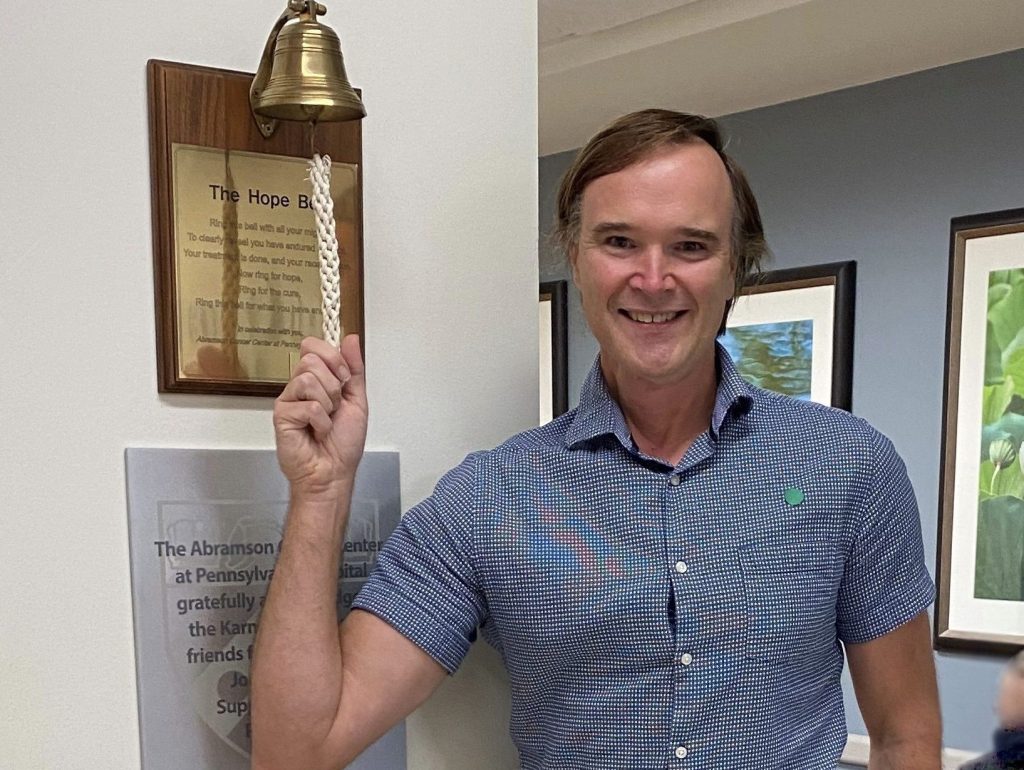
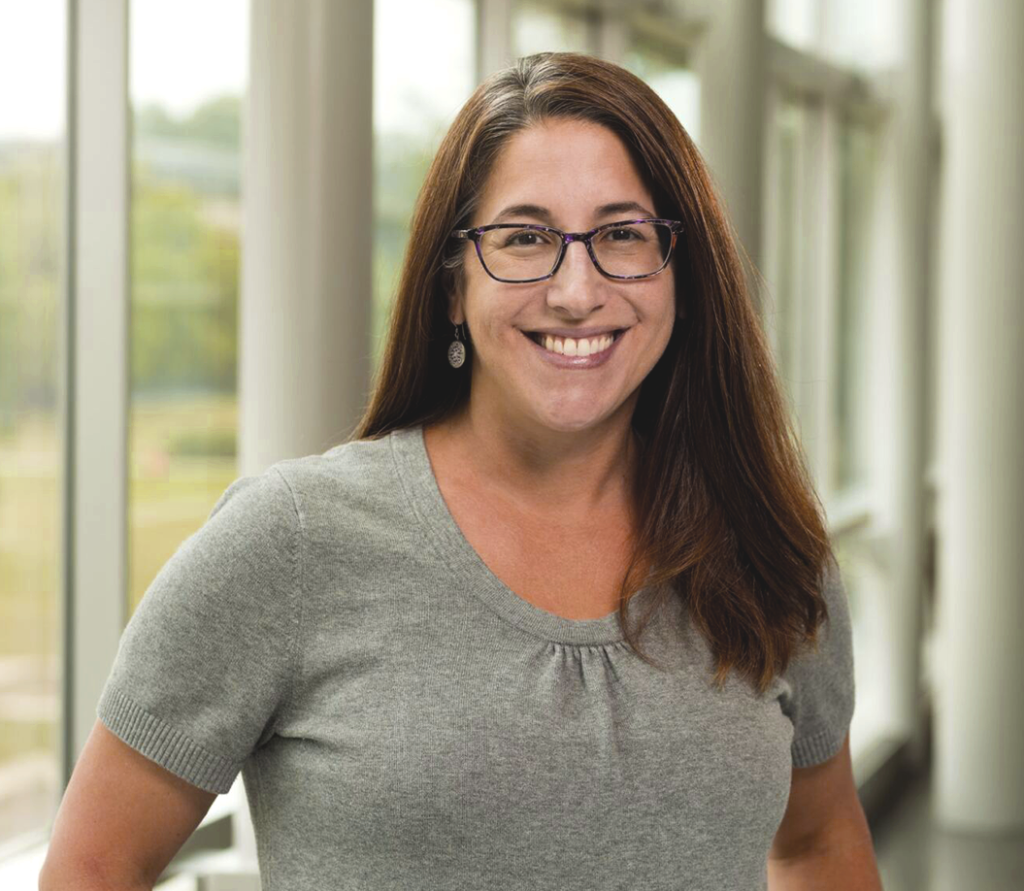
Chet Kitchen

Today, Kitchen’s cancer is in remission, but that doesn’t mean his patient journey is over.

“Even though you’re not physically battling cancer, it never really leaves you because it’s always somewhere in your mind,” he said. “But one of the things that’s really helped me emotionally through my survivorship is sharing my story.”

Health awareness

Understanding melanoma: The signs and risk factors

Learn more about how to monitor your skin for melanoma and ways to help prevent it

March 26, 2025

Share this article

Facebook icon

.st0{fill:#00857C;} X icon

Linkedin icon

Email icon

woman-child-field-of-flowers

What is melanoma?

Melanoma is a form of skin cancer. Characterized by the uncontrolled growth of pigment-producing cells, melanoma accounted for approximately 1.7% of new cancer cases worldwide in 2022.

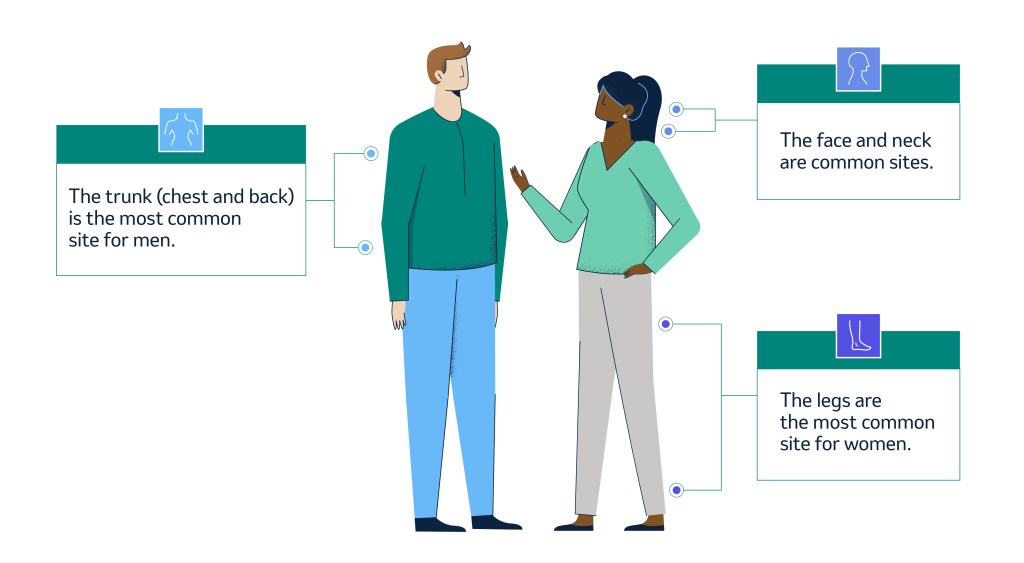
Exposure to ultraviolent (UV) radiation, either from the sun or other sources such as tanning beds and sunlamps, is a major risk factor for skin cancers, including melanoma. While melanoma can occur anywhere on the skin, including areas without sun exposure, it’s more likely to start in certain locations, like the face and neck, legs (most common in women), and chest and back (most common in men).

Illustration of a man and woman and the most common locations of melanoma

The risk of melanoma generally increases with age and incidence is greater among older populations. However, even among patients younger than 30 years, melanoma is one of the most common cancers, especially in young women.

Worldwide, the melanoma diagnosis rate has risen over the past two decades

331,000+

Estimated number of new melanoma cases worldwide in 2022

Signs of cancerous moles

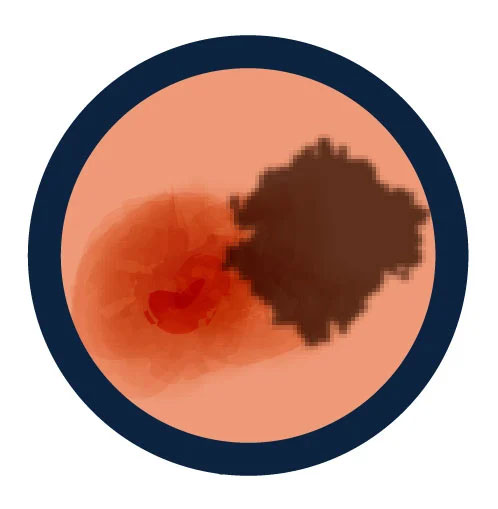
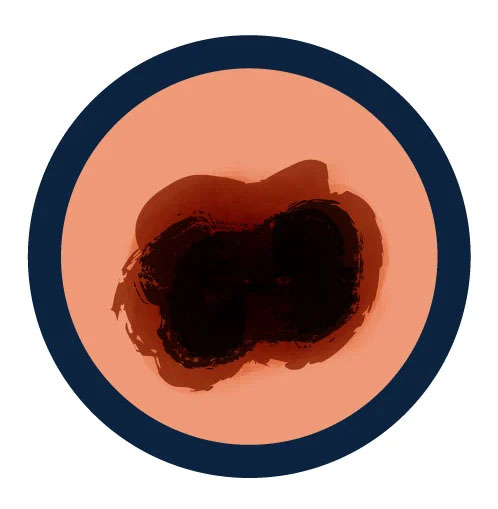
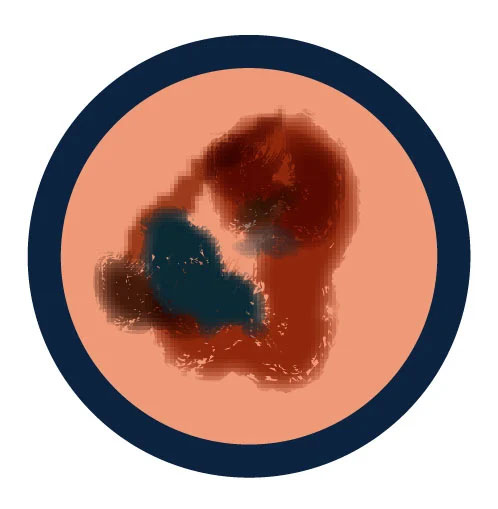
A new spot on the skin or a spot that is changing in size, shape or color, or one that looks different, is an important warning sign of melanoma and should be checked by a doctor. The ABCDE rule can be used as a guide to help identify the warning signs of melanoma:

Illustration of Asymmetry

A is for Asymmetry

One half of a mole or spot does not match the other.

Illustration of border

B is for Border

The edges of the spot are irregular, scalloped or poorly defined.

Illustration of color

C is for Color

The color of the spot is not the same all over and may include different shades of brown or black, sometimes with patches of pink, red, white or blue.

Illustration of diameter

D is for Diameter

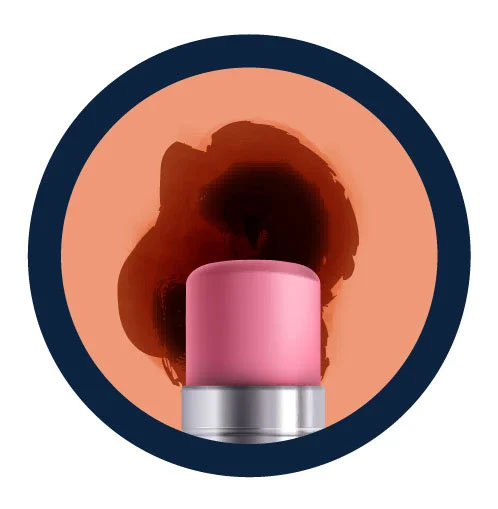
The spot is larger than 6 millimeters across. Melanoma is usually larger than 6 millimeters in size (about 1/4-inch or the size of a pencil eraser) when diagnosed. However, it can sometimes be smaller.

E is for Evolving

The mole is changing in size, shape, or color.

Illustration of evolving

Any of these warning signs should be discussed with a doctor, especially if you feel you are at risk for melanoma.

Causes of melanoma

There are many risk factors and causes of melanoma, including:

  • UV light on your skin, such as from the sun or a tanning bed (the most common risk factor for most cases of melanoma)
  • Age — melanoma is more common in older people, but younger people are also at risk. Melanoma is one of the most common cancers in people younger than 30 years (especially among women)
  • Moles — having many moles, irregular or large moles, or atypical moles
  • Personal or family history – Melanoma can be genetic and having a relative with melanoma can increase your risk
  • Fair skin or a fair complexion, a lot of freckles and/or light-colored hair and eyes

Ways to lower your risk of melanoma

Melanoma can’t be entirely prevented, but there are ways to lower your risk. The number one way to lower risk is to protect against UV rays, which damage the DNA of skin cells and impact the genes that control skin cell growth. That’s why it’s important to avoid tanning beds, booths, sunlamps and other artificial sources of UV radiation. However, the top source of UV rays is the sun. That’s why it’s important to practice sun safety every time you go outside, even on cloudy days when UV rays can still shine through. Here are a few ways to protect yourself:

illustration of beach chair and umbrella on sand
Seek shade

UV exposure is greatest between the hours of 10 a.m. and 4 p.m. If you need to be outside during these hours, seek shade – under a tree, an umbrella or an awning.

illustration of person wearing big beach hat
Wear a hat

Try to find a hat with a wide brim – at least 2 or 3 inches wide – to protect your face, top of the head, ears and neck.

illustration of person holding long sleeve shirt
Cover up

Choose clothing with a tight knit or weave, and avoid shirts that you can see through. Remember, if light is getting through, then UV rays are too.

illustration of adult applying sunscreen to a child
Use sunscreen

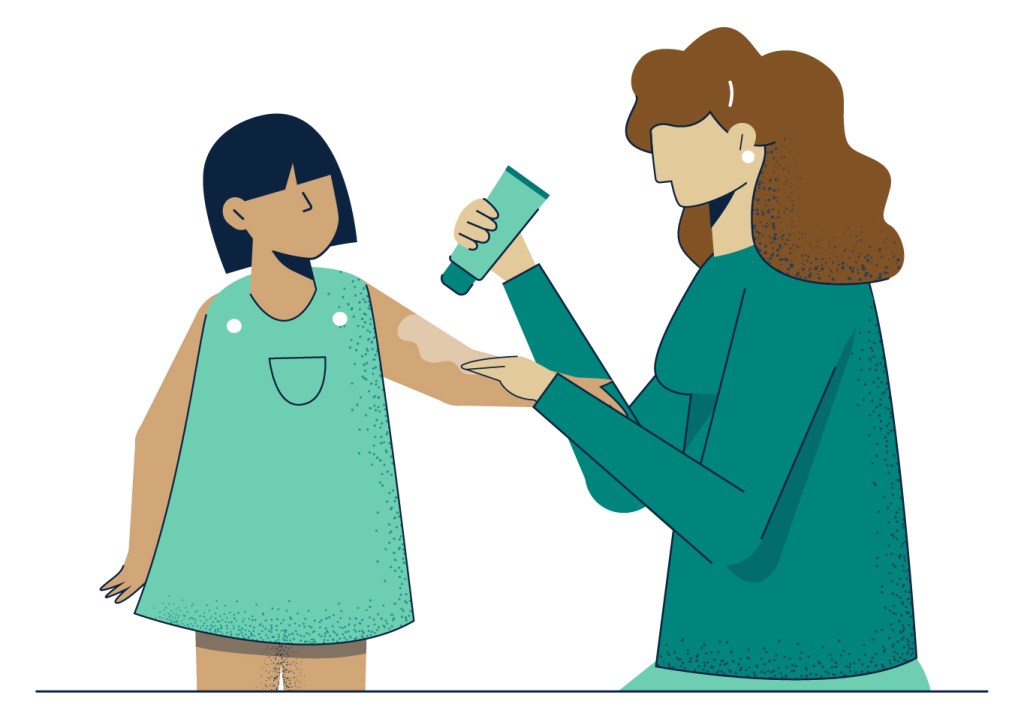
For extended outdoor activity, use a water-resistant, broad spectrum sunscreen with an SPF of 30 or higher.

illustration of hand holding sunglasses
Wear sunglasses

Protect your eyes and the sensitive skin around them. Pick a pair of sunglasses that will block as close to 100 percent of both UVA and UVB rays as possible.

Our people

A personal commitment to public health

Stories of research and clinical care from two leading experts in pneumococcal and pediatric infectious disease

March 19, 2025

Share this article

Facebook icon

.st0{fill:#00857C;} X icon

Linkedin icon

Email icon

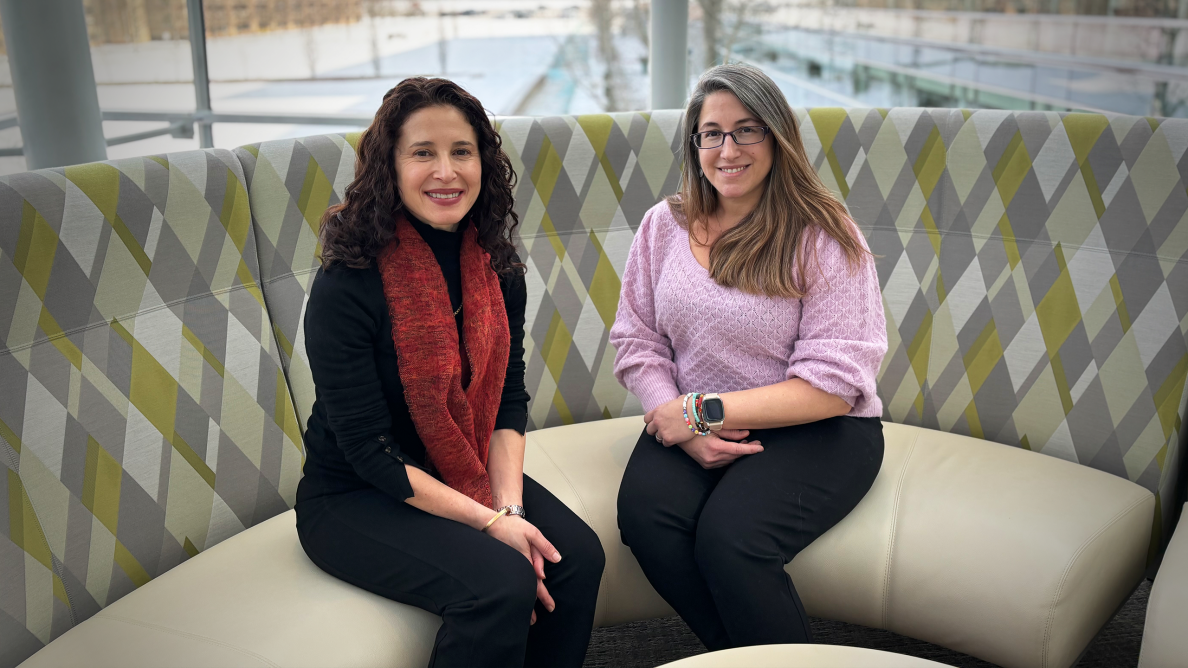
two women sitting down in round sofa

Nearly all of us have caught a seasonal cold, but some infectious diseases can pose significant health risks. Research plays a critical role in advancing prevention and treatment strategies for infectious diseases.

Our researchers are at the forefront of scientific innovation, working to address the diseases that threaten our most vulnerable populations around the world. Heather Platt, M.D., and Marissa Wilck, M.D., two Merck scientists specializing in pneumococcal and pediatric infectious diseases, shared their journeys into medicine and their reflections on the critical role research plays in improving public health.

What drew you to a career in infectious disease research?

Dr. Wilck: “I grew up in rural South Africa and had to choose a career at 18. Knowing amazingly little about what it would encompass, I chose med school because of my love of science and wanted to do something meaningful with my life. In my clinical years, I saw infectious diseases all around me, which drove me to specialize in infectious diseases.”

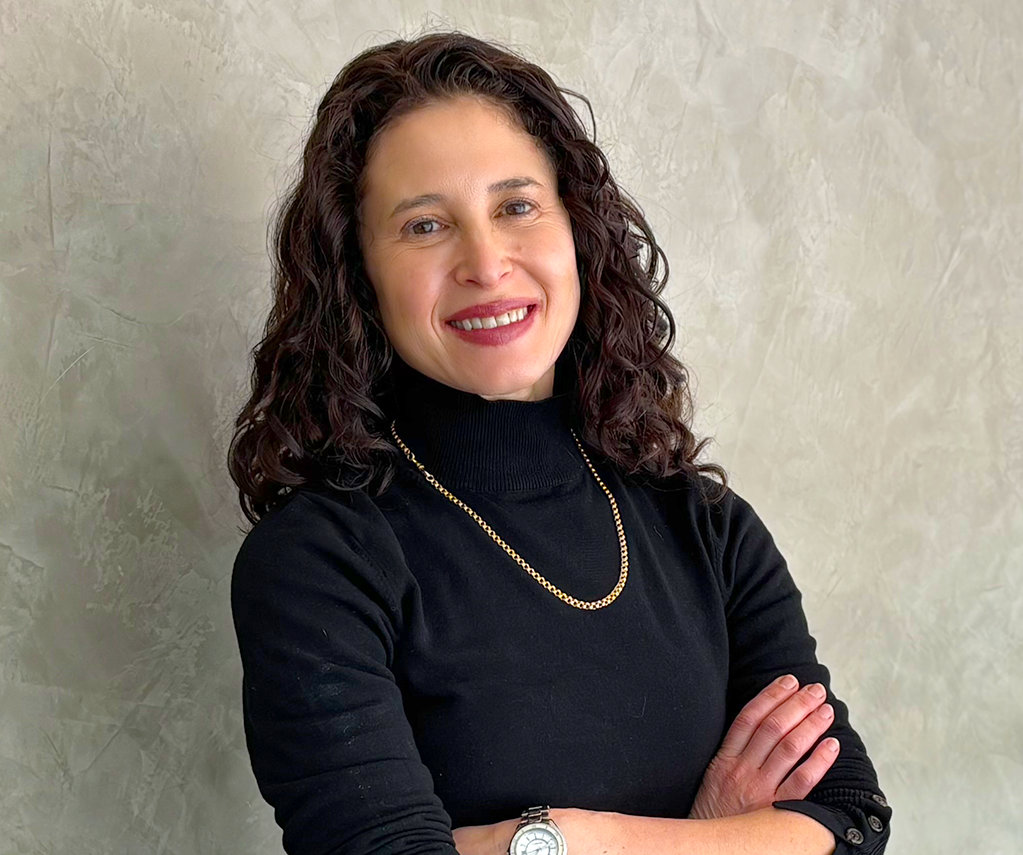
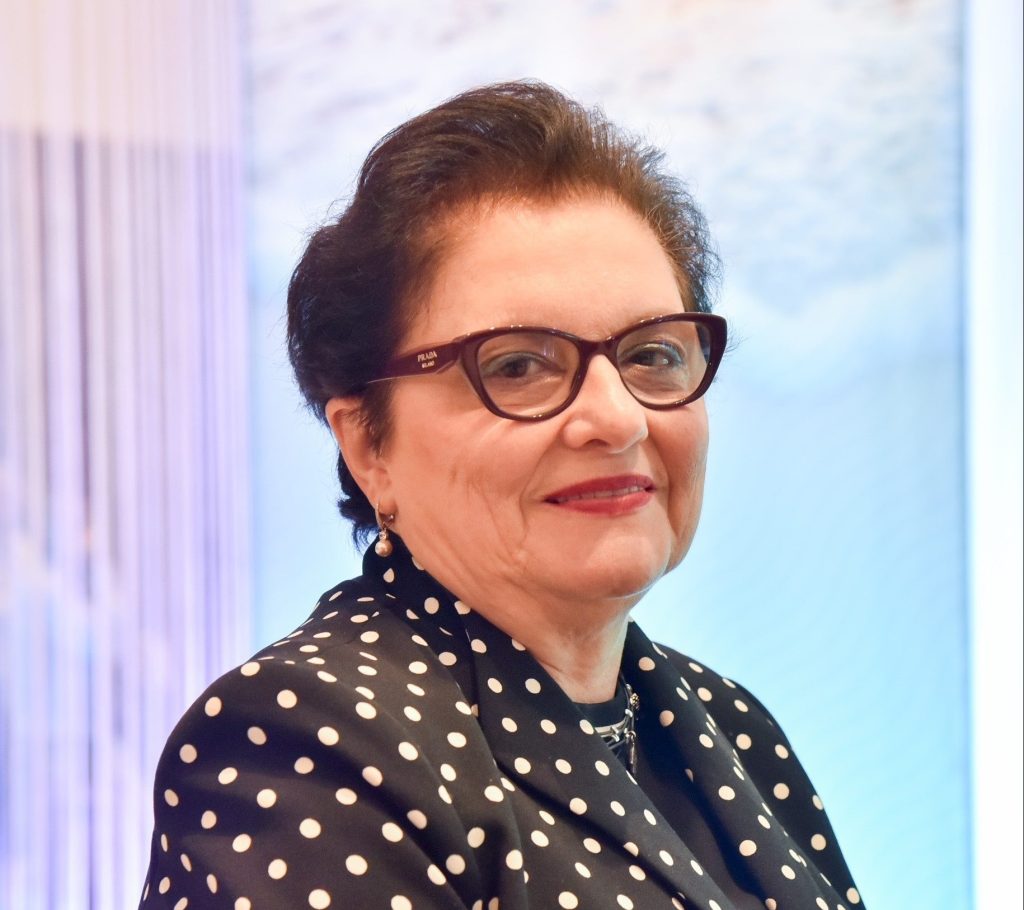
Dr. Marissa Wilck

Dr. Platt: “I chose internal medicine for my residency because I loved learning the broad scope and it allowed me to explore a variety of interests, particularly in infectious diseases.

One of my first patients during my internship year was a 75-year-old lady who had pneumonia and was brought into the ICU because her blood pressure was starting to drop. Within an hour, she needed full support for breathing and blood pressure with central lines and intubation. That was a pivotal moment for me to understand the complexity and impact of infectious diseases like pneumococcal disease. I later completed a fellowship in infectious diseases and witnessed advancements that made me want to pursue research.”

Are there any common misconceptions about infectious diseases like pneumococcal disease that you aim to overcome?

Platt: “Anyone can get pneumococcal disease. You’re at increased risk depending on your age or certain medical conditions. Some people can become very ill, very quickly. I think Marissa and I have both seen serious cases of complications from pneumococcal disease, like pneumonia and meningitis.”

Wilck: “In my clinical years, I remember seeing previously healthy people becoming very sick with pneumococcal disease. I have a particular patient in mind that I think about; I remember looking at him and thinking, ‘How can this strong man who was healthy just two or three weeks ago get so sick from this bacteria?’

SEE ALSO: Facts about invasive pneumococcal disease and how infection spreads

A look at the numbers

  • Approximately 13.7 million people worldwide died from infectious diseases in 2019.
  • Infections such as pneumococcal disease can lead to potentially severe health issues, like pneumonia, sepsis and meningitis.
  • Pneumonia impacts millions of people worldwide each year.

What makes infectious disease research unique compared to other areas of medical research?

Wilck: “I find infectious disease research fascinating because it encompasses many aspects of human health and society. Infectious diseases affect everyone, and the social and economic impacts touch all communities. To me, this has reinforced the critical importance of researching prevention measures. We have the opportunity to make such a difference.”

How do we balance research in prevention versus treatment?

Dr. Heather Platt

Dr. Heather Platt

Platt: “There’s a lot of satisfaction that comes from knowing that you can be a part of preventing disease. But as infectious disease physicians, we see how prevention and treatment both have a role. Choosing to spend time on prevention strategies is as worthy as the time that our colleagues are spending on researching treatments for these diseases. We can put our collective heads together because we’re all fighting for the same thing.”

What inspires you about our team?

Wilck: “Merck has such a deep history and legacy in infectious disease research and innovation. As a team, we can make things happen in a way that we could never do as individuals. I’m proud to be part of that effort.”

Platt: “At Merck we have the opportunity to work in different therapeutic areas, and that allows me to appreciate the different elements of research that are needed in order to improve the burden of these infectious diseases. It isn’t just one product or one patient. Marissa and I have crisscrossed paths in our research in pneumococcal and pediatric infectious diseases at Merck, but we’ve both had the opportunity to positively contribute to public health. It’s an honor and a privilege to be a part of offering prevention options.”

We’ve been working to combat global health threats caused by infectious diseases for more than a century. Learn more about our work in infectious disease research.

Health awareness

VIDEO: Living with pulmonary arterial hypertension

One woman’s story shows the power of knowledge and support for patients with pulmonary arterial hypertension (PAH)

March 18, 2025

Share this article

Facebook icon

.st0{fill:#00857C;} X icon

Linkedin icon

Email icon

Pulmonary arterial hypertension (PAH) entered Colleen’s life unexpectedly. She was 35 when she noticed she became short of breath easily. She thought it was due to the weight she gained during her recent pregnancy. A year later, Colleen lost the weight but was still gasping for breath after climbing a few flights of stairs. Colleen wasn’t only feeling fatigued; she was worried. She’d later learn these were symptoms of PAH.

Colleen was first diagnosed with asthma, but her condition continued to worsen. She searched for an answer while daily tasks became more difficult. It took two and a half years for Colleen to be referred to a cardiologist who properly diagnosed her with PAH, one of the five different types of a broader condition called pulmonary hypertension (PH).

What is pulmonary arterial hypertension (PAH)?

PAH is a rare and life-threatening condition that progressively worsens. It is a type of high blood pressure in the small arteries of the lungs. This condition occurs when these vessels thicken, narrowing the space for blood to flow and leading to increased pressure in the pulmonary circulation. As a result, the right side of the heart must work harder to pump blood through these arteries. Over time, the right side of the heart can become weakened and lose function.

PAH has similar symptoms to other common lung diseases, such as asthma, which can make it difficult to diagnose. Currently, there are approximately 1,000 people in the U.S. diagnosed with PAH each year.

Recognizing the signs and symptoms of PAH

The exact cause of PAH is unknown, and most people with PAH have no known family history of the disease. People may not notice any early-stage symptoms of PAH, but as the disease progresses, they may experience common symptoms, such as increased shortness of breath, peripheral edema (swelling of the feet and/or legs), fatigue, dizziness, fainting spells, and heart palpitations (racing heart).

PAH can hinder a person’s physical abilities and impact everyday tasks.

“Living with pulmonary arterial hypertension isn’t easy.”

  • Colleen, patient with PAH

“I had to purchase a scooter to do outside activities with my children. I couldn’t perform basic functions for myself and my family or make it to the sidelines of a baseball field to watch my son play. I was truly relegated to living on the sidelines myself. But through it all, I’ve never given up,” said Colleen.

Raising awareness for PAH

In addition to working with her doctor, Colleen found comfort through her support system. Since her diagnosis, Colleen has dedicated her life to raising awareness of PAH and helping others living with the disease. “It’s important for patients and the community to have knowledge and encourage each other. Whatever we can do to lift the community and spread awareness of this devastating disease is appreciated,” she added.

Colleen and her support group holding a hope sign
Health awareness

Sarampión: signos y síntomas

Obtenga más información sobre qué es el virus del sarampión y cómo se propaga

February 19, 2025

Share this article

Facebook icon

.st0{fill:#00857C;} X icon

Linkedin icon

Email icon

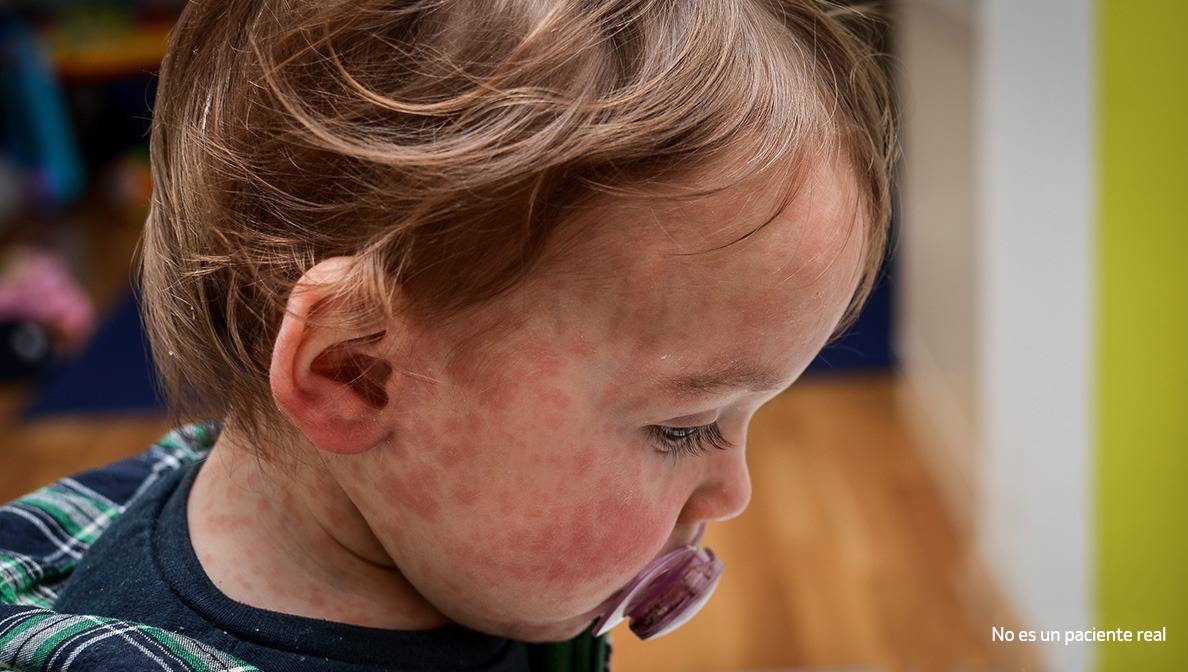
Little girl with measles
mom holding child with measles--

¿Qué es el sarampión?

El sarampión es una enfermedad viral altamente contagiosa que puede afectar a personas de todas las edades, pero es más común en los niños. El virus vive en la mucosidad de la nariz y en la garganta de una persona infectada.

El sarampión se propaga por el aire cuando una persona infectada tose o estornuda. Los síntomas aparecen entre 7 y 14 días después del contacto con el virus.

Los síntomas comunes del sarampión incluyen los siguientes:

Fiebre alta

(puede subir repentinamente a más de 104 °F)

Tos

Moqueo

Ojos rojos y llorosos

(conjuntivitis)

Manchas en la boca

(2-3 días después de que comiencen los síntomas)

Erupción

(3-5 días después de que comiencen los síntomas)

Cómo se propaga el sarampión

icon
¿El sarampión se transmite por el aire?

El virus del sarampión puede permanecer hasta dos horas en el ambiente después de que una persona infectada abandona un sitio.

icon
¿Qué tan contagioso es el sarampión?

Si una persona tiene sarampión, hasta el 90% de las personas no vacunadas que se encuentren cerca de ella también se infectarán.

icon
¿Por cuánto tiempo es contagioso el sarampión?

Las personas infectadas pueden transmitir el sarampión a otras entre cuatro días antes y cuatro días después de que aparezca la erupción

icon
¿Cuánto dura el período de incubación del sarampión?

Después de estar expuesto al virus del sarampión, este puede incubarse por hasta 21 días.

icon
¿El sarampión causa complicaciones?

El sarampión puede causar complicaciones de salud. Las más comunes son las infecciones de oído y la diarrea. Las complicaciones graves incluyen neumonía y encefalitis (inflamación del cerebro). El sarampión puede afectar la vida diaria de los pacientes y de sus cuidadores (por ejemplo, puede dar lugar a una pérdida de horas de trabajo o días de escuela).

El sarampión puede ser grave y causar complicaciones 

  • Aproximadamente 1 de cada 5 personas no vacunadas en los EE. UU. que contraen sarampión se hospitalizan.
  • Hasta 1 de cada 20 niños con sarampión contrae neumonía, que es la causa más común de muerte por sarampión en niños pequeños.
  • Aproximadamente entre 1 y 3 de cada 1,000 niños que se infectan de sarampión morirán por complicaciones respiratorias y neurológicas.

Brotes de sarampión

Antes de la disponibilidad de la vacuna en 1963, se estima que entre 3 y 4 millones de estadounidenses contraían sarampión cada año, y se calcula que 48,000 personas en Estados Unidos se hospitalizaban y se producían aproximadamente entre 400 y 500 muertes al año.

icon

El sarampión endémico (que ocurre regularmente dentro de un área o una comunidad) se declaró erradicado en los EE. UU. en el año 2000.

icon

En 2019, se registró el mayor número de casos de sarampión notificados en Estados Unidos desde 1992.

icon

En 2024, se han producido brotes continuos de sarampión. Hasta julio, se han notificado 13 brotes de sarampión en los Estados Unidos.

Cuando usted se contagia de sarampión, hasta el 90% de las personas a su alrededor que no estén vacunadas también se infectarán.

En los Estados Unidos, los casos de sarampión pueden originarse en viajes internacionales, ya que la enfermedad sigue siendo común en muchas partes del mundo. Por lo general, 2 de cada 3 viajeros con sarampión son estadounidenses no vacunados que reingresan al país.

Como lo demuestran los brotes recientes en todo el país, el sarampión se puede propagar rápidamente y las personas infectadas pueden contagiar a personas que no son inmunes.

Innovation

Our Q4 and full-year 2024 financial results

February 4, 2025

Share this article

Facebook icon

.st0{fill:#00857C;} X icon

Linkedin icon

Email icon

illustration of people on top of hexagon shapes

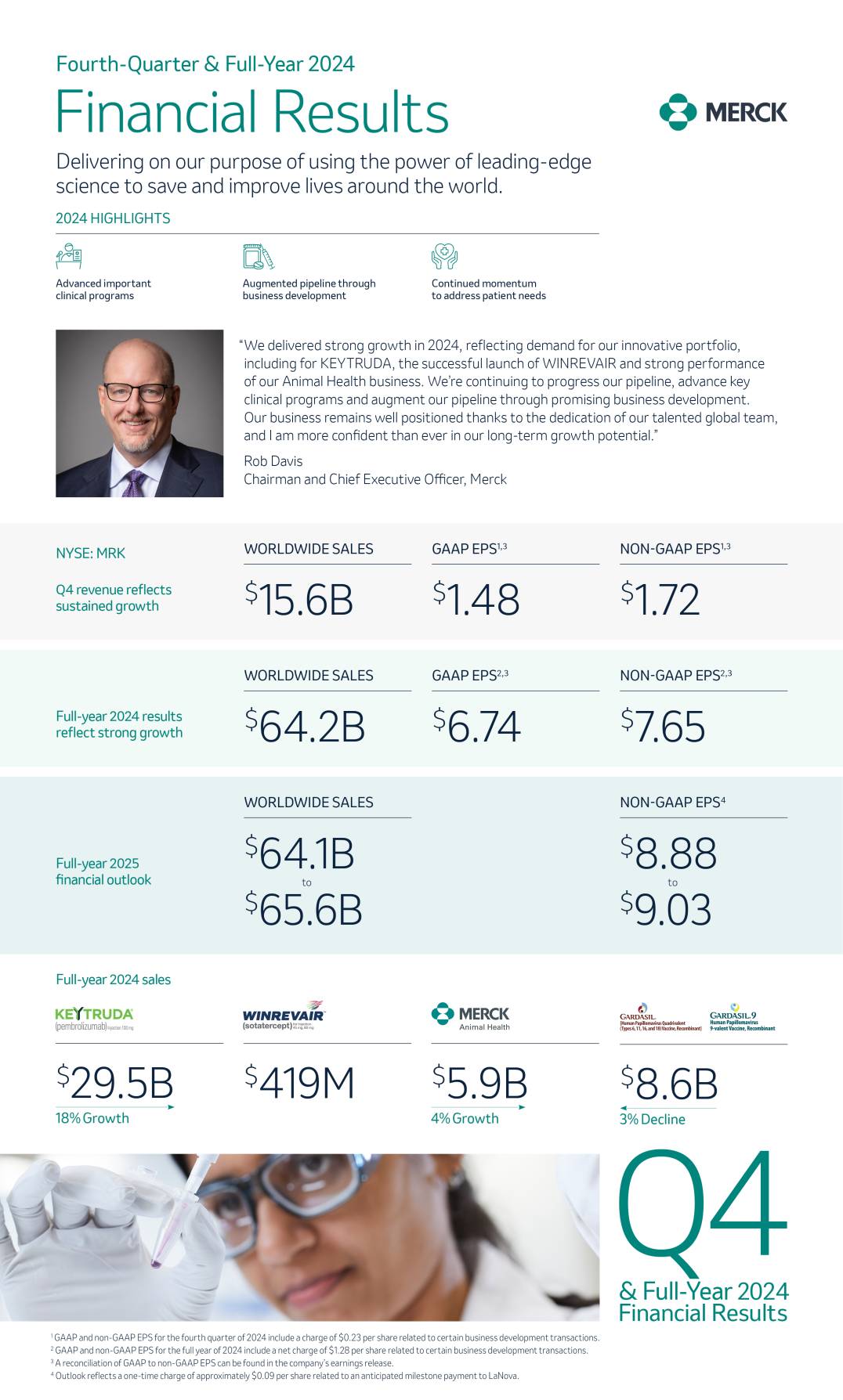
Merck’s (NYSE: MRK) Q4 and full-year 2024 results reflect strong growth. Our company announced Q4 worldwide sales of $15.6 billion, an increase of 7% from Q4 2023. Full-year 2024 worldwide sales were $64.2 billion, an increase of 7% from full-year 2023. ​

​“We delivered strong growth in 2024, reflecting demand for our innovative portfolio, including for KEYTRUDA, the successful launch of WINREVAIR and strong performance of our Animal Health business,” said Rob Davis, chairman and chief executive officer. “We’re continuing to progress our pipeline, advance key clinical programs and augment our pipeline through promising business development. Our business remains well positioned thanks to the dedication of our talented global team, and I am more confident than ever in our long-term growth potential.”​

​Merck anticipates full-year 2025 worldwide sales to be between $64.1 billion and $65.6 billion.​

Find more details on Q4 and full-year 2024 results below.​

q4 2024 earning

Download infographic

Innovation

Our researchers incorporate LLMs to accelerate drug discovery and development

What are artificial intelligence (AI) agents? They're intelligent systems combining large language models (LLM), AI models and tools to iteratively plan, execute and optimize tasks

February 3, 2025

Share this article

Facebook icon

.st0{fill:#00857C;} X icon

Linkedin icon

Email icon

illustration of octopus multitasking

Did you know that LLMs can be leveraged as master multitaskers? These LLM-based multitaskers, often called AI agents, can execute different tasks simultaneously. Having a team of high-performing AI assistants that can each play different roles ultimately helps researchers at Merck Research Labs (MRL) focus on critical drug discovery and development.

In today’s data-driven world, AI agents are emerging as a powerful tool for researchers and scientists to aid them in navigating the complexities of large data sets, refining hypotheses and executing both repetitive and differentiated tasks efficiently. Done manually, that kind of data gathering and analysis costs time and money.

Merck researchers use AI to augment human ability

A long-standing ambition for AI is to help find major scientific discoveries, learn on its own and acquire knowledge autonomously. This is what some call an “AI scientist.” While this concept is aspirational, advances in agent-based AI can help pave the way for the development of AI agents as conversable systems capable of reflective learning and reasoning that coordinate LLMs, machine learning (ML) tools, or even combinations of them.

Rather than taking humans out of the discovery process, AI can augment human ability to break down a problem into manageable subtasks, which can then be addressed by AI agents with specialized functions for targeted problem solving and integration of scientific knowledge. One significant advantage of these collaborative systems is their capacity for automation. Repetitive tasks, such as data cleaning or preliminary analysis, can be handled by AI agents, freeing our scientists to focus on higher level work and strategic decision making.

Agents help capitalize on Merck’s long-standing investments in AI/ML by rapidly accelerating the speed of our human researchers at scale.

person on white coat looking at the screen

Advance your data science career with us

We’re looking for scientists and technologists who are passionate about making a difference for patients.

Health awareness

Make time to get screened for cancer

Find out why it's important to follow cancer screening recommendations

January 15, 2025

Share this article

Facebook icon

.st0{fill:#00857C;} X icon

Linkedin icon

Email icon

We’ve all had the feeling that there aren’t enough hours in the day. In between everything else on the to-do list, it can feel hard to make your health and annual appointments a priority. However, it’s important to take control of your health and talk to your doctor about what cancer screenings might be recommended for you.

Why timing matters in cancer screening

Time is important with a cancer diagnosis so that treatment can be started early, before cancer has spread to other parts of the body. Cancer screenings can increase the chance of finding disease before a person has symptoms or when cancer is still in earlier stages.

There are screening guidelines for many types of cancer, such as breast, colorectal and lung cancer, as well as melanoma. Screening recommendations often take into consideration a few factors, such as age, family history and lifestyle. Your doctor can help you identify which screenings might be right for you.

As a leader in oncology, we’re committed to addressing the global impact of cancer.

“Through our work to increase access to screening and our other initiatives and programs, we appreciate the importance of finding disease early, before it has spread to help enable early treatment, because we believe people with cancer deserve more,” said Linda Kollmar, associate vice president, medical affairs, value and implementation.

So, make time now to talk to your doctor and to find out if you’re eligible for cancer screening.

We’re working to help address other barriers to cancer screening

Raising awareness about cancer screening is just one way our company works to help improve lives. We also strive to help address barriers to screening and treatment, which is why we work with partners around the globe to support public health initiatives that support recommended screening and create access to high quality cancer care for all patients.

Our support of the American Cancer Society’s Get Screened initiative makes it possible for community members to be screened for breast, cervical, colorectal and lung cancer who might not have access otherwise. And working with City Cancer Challenge, we support the Patient Navigation Program in Kigali, Rwanda to train nurses as patient navigators who can help people understand health information more easily and gain access to health care options more quickly.

Sustainability

In memory of President Jimmy Carter, 1924–2024

Honoring a life and legacy of profound impact for global health

December 29, 2024

Share this article

Facebook icon

.st0{fill:#00857C;} X icon

Linkedin icon

Email icon

Former President Jimmy Carter and retired Merck CEO Roy Vagelos meet with people affected by river blindness

Former President Jimmy Carter exemplified a life of service, first through his governorship and presidency, and later through the Carter Center and its commitment to improving the health and well-being of those most in need. We are privileged to have worked side-by-side with President Carter and the Carter Center on its ongoing work to eliminate river blindness in countries throughout Africa and Latin America.  

Over decades of our partnership through the Mectizan® Donation Program, the Carter Center has distributed more than 500 million treatments in our shared efforts to donate Mectizan — as much as needed, for as long as needed. 

While President Carter did not want to take credit for the program, all of us at Merck know it was his leadership and commitment to global health that made this a reality.

We share in the grief of all those whose lives have been touched by President Carter. They are a living testament to his compassion, selflessness and generosity.

President Carter’s memory will guide and inspire us as we continue our work for patients and communities. 

May he rest in the peace he wished for the world.

Pictured above: Jimmy Carter and retired Merck CEO Dr. Roy Vagelos meet with people affected by river blindness, 1994.

Innovation

Building on our understanding of gynecologic cancers

How we’re driving research forward for women with common types of gynecologic cancer

December 16, 2024

Share this article

Facebook icon

.st0{fill:#00857C;} X icon

Linkedin icon

Email icon

patient and doctor

By the numbers, the impact of gynecologic cancers feels overwhelming. The term “gynecologic cancers” primarily refers to cancers of three organs: the uterus, ovaries and cervix. As of 2022, these gynecologic cancers are some of the most commonly occurring cancer types for women worldwide. Even with advances in prevention and treatment, nearly 700,000 are projected to die from these diseases every year.

“To truly understand where we can begin to make progress, we need to look beyond the numbers,” said Dr. Gursel Aktan, vice president, global clinical development.

Understanding the trend

While “gynecologic cancers” primarily refers to the three cancer types mentioned above, it may also include cancers of the fallopian tube, vagina, and vulva.

Dr. Gursel Aktan

“While the gynecologic cancer rates vary from country to country, the overall incidence rates of endometrial and cervical cancers have increased over time.”

  • Dr. Gursel Aktan

Endometrial cancer, which affects the lining of the uterus, is the most common gynecologic cancer in developed countries. Incidence rates for cervical and endometrial cancers, which mainly affect post-menopausal women, have been rising globally over the last two decades. The highest rates of diagnosis and death from gynecologic cancers were found in Eastern and Southern Africa and Melanesia.

“Unfortunately, many women may not recognize their symptoms as abnormal until their tumors are larger or may have spread,” said Dr. Aktan.

Building on what we have learned

“As our understanding of cancer continues to improve, there have been meaningful advances in cancer therapy, but we still have work to do to achieve our goal of helping more patients,” said Dr. Aktan.

To build on that momentum, we’re driving forward research focused on novel approaches for patients with certain gynecologic cancers with ~12 clinical trials for ~8,000 patients around the world. This work is grounded in our company’s three key focus areas in oncology research:

  • Evaluating combinations that play different roles in adjusting the immune response.
  • Precision molecular targeting to impact pathways that drive cancer growth.
  • Investigating ways to increase cancer cell sensitivity to immune responses.

“We’re also still learning about the right sequence in which to use treatments, and the truth is, the answers may be different tumor by tumor, patient by patient,” said Dr. Aktan.

“The better we understand how we can use these approaches to further cancer care, the closer we move toward our ultimate goal of supporting patients touched by cancer.”

  • Dr. Gursel Aktan

Learn more about our work in oncology.